
New this week: 3 bars you won't find on Google Maps →

The ultimate itinerary for first-timers

Ho Chi Minh City offers a dynamic blend of French colonial architecture, rich war history, and vibrant street life. This 4-day Ho Chi Minh City itinerary explores these facets, covering 33 distinct places. Visitors can explore historical sites and local culture.

The guide helps travelers understand the city’s past and present. It provides a structured plan for exploring various districts and experiences. This focus on key cultural and historical landmarks makes for an engaging trip.
🎬 Guide based on a video by Trip Moitowatch the video

The Pins

01

Start your Ho Chi Minh City adventure at Bánh Mì Huynh Hoa.

Bánh Mì Huynh Hoa

Vietnamese Cuisine · District 1, Ho Chi Minh City

06:00–22:00 daily 0962455517

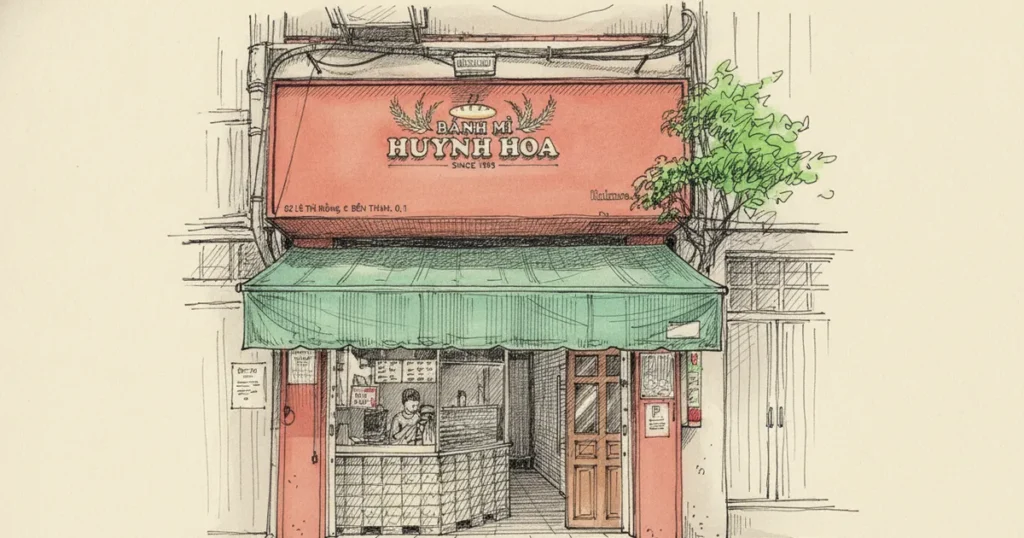
Bánh Mì Huynh Hoa operates a popular bánh mì stall. It sits on Lê Thị Riêng street in District 1. Ho Chi Minh City locals know it for its substantial sandwiches. Each baguette holds many layers of ingredients. These include cold cuts, house-made pâté, and butter. The standard sandwich offers chả lụa, jambon, and pork floss. Pickled vegetables, cucumber, cilantro, and fresh chili complete each order.

The business serves customers from a street-front counter. Staff build sandwiches to order in an assembly line. A continuous queue of customers and drivers lines up. The stall sees activity throughout its opening hours. It offers no designated seating area. A sandwich here represents a premium street food price point. The stall has served customers for over 35 years.

Founder Mrs. Lê Kim Hoa established the business. She continued a family street vending tradition. The shop uses a proprietary pâté recipe. All daily ingredients sell out each day. No items remain overnight. Besides its main offering, the stall sells pork floss and cơm cháy. It provides a vacuum-sealing service for travelers.

Bánh Mì Huynh Hoa ranks among Ho Chi Minh City’s food scene favorites. International press and food blogs often mention it. Locals also call the business “Bánh mì O Môi.” The stall’s consistent process defines its reputation. Its ingredient-heavy sandwiches maintain its renown for decades.

Open in Google Maps ↗

26 Lê Thị Riêng, Phường Bến Thành, Quận 1, Thành phố Hồ Chí Minh, Vietnam

3 insider tips

Trip Moito · curator · Bánh Mì Huynh Hoa

Arrive early to experience this popular spot. Order the bánh mì sandwich. It features multiple cold cuts, pâté, and fresh pickled vegetables.

Mr.Pin · curator · Bánh Mì Huynh Hoa

If you are looking for a bánh mì that offers generous fillings, this popular stall on Lê Thị Riêng street is a prime destination. Locals frequent Bánh Mì Huynh Hoa for its substantial sandwiches, which include a rich variety of ingredients packed into each crispy baguette. It is an ideal stop for a hearty, authentic snack or a quick meal in District 1.

Sol Life · curator · Bánh Mì Huynh Hoa

This spot serves a large, deconstructed bánh mì. It is recommended to buy one to share. A small sitting area is available for eating.

1 / 3
02

Afterward, walk to the Notre Dame Cathedral of Saigon.

Notre Dame Cathedral of Saigon

Landmark · District 1, Ho Chi Minh City

The cathedral is closed to tourists for renovation. It remains open for mass: 05:30, 17:30 Monday–Saturday; multiple services on Sunday. +84823721439

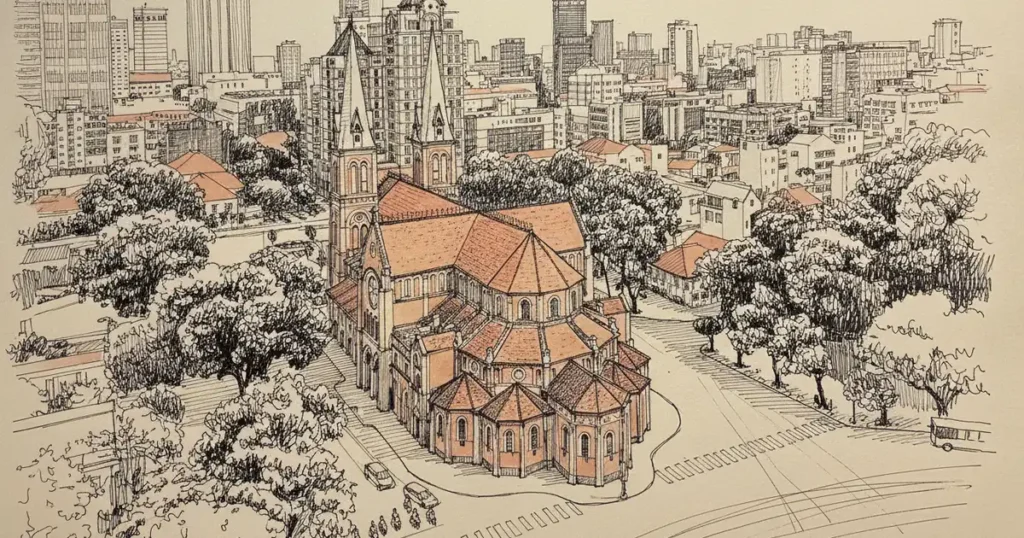
Notre Dame Cathedral of Saigon sits on Công xã Paris. This Catholic cathedral is in District 1, Ho Chi Minh City. Locals know its official name as the Cathedral Basilica of Our Lady of the Immaculate Conception. The cathedral stands prominently in Paris Commune Square. It sits directly opposite the Saigon Central Post Office.

French architect J. Bourard designed this iconic structure. Construction began on October 7, 1877. Workers completed the cathedral, and it opened on April 11, 1880. All original building materials arrived from France. The exterior walls showcase distinctive red bricks. These bricks came from Marseille and retain their original color naturally.

The cathedral’s design blends Neo-Romanesque and Gothic architecture. The structure measures 93 meters long. It also spans 35 meters wide. Its main dome reaches 21 meters high. In 1895, architect Gardes added two bell towers. The towers elevated the cathedral’s total height to 60.5 meters. Six bronze bells hang inside these two towers. A granite statue of Our Lady of Peace stands before the cathedral. Workers installed it in 1959.

The Vatican granted the cathedral basilica status in 1962. It remains an active worship place for the local Catholic community. The cathedral is currently undergoing a major restoration. During this period, interior access for general tourism is closed. The church remains open for people attending daily mass services.

Open in Google Maps ↗

1 Công xã Paris, Bến Nghé, Quận 1, Thành phố Hồ Chí Minh, Vietnam

3 insider tips

Trip Moito · curator · Notre Dame Cathedral of Saigon

Observe the cathedral's red bricks and stained-glass windows. These materials were imported from France. View the twin towers rising 60 meters.

Mei Time · curator · Notre Dame Cathedral of Saigon

The cathedral is a Romanesque Revival landmark. It is currently undergoing restoration. Anticipate its full restoration, expected around 2027.

1 / 3
03

Continue your walk to the Saigon Central Post Office.

Saigon Central Post Office

Landmark · District 1, Ho Chi Minh City

07:00–19:00 daily +842838221677

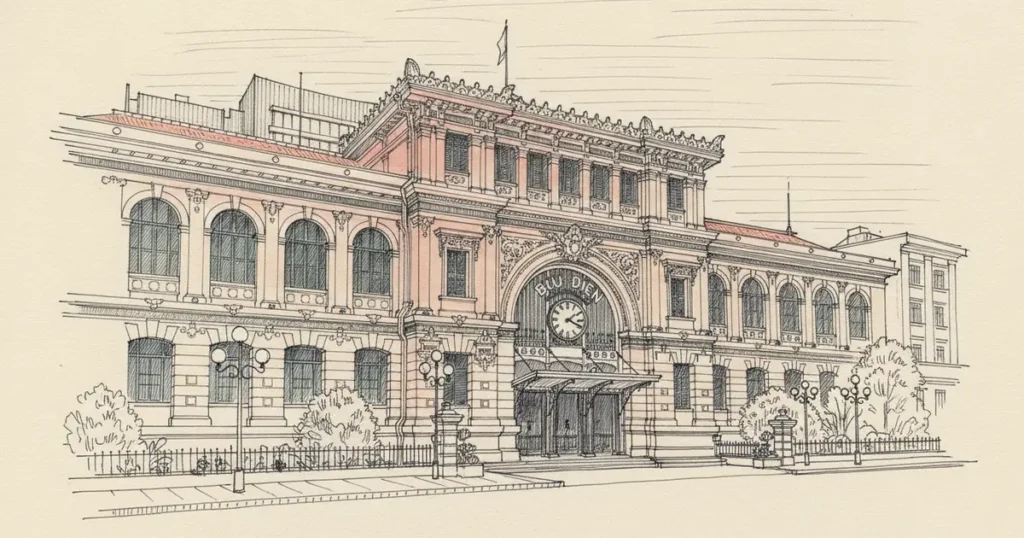
Saigon Central Post Office offers full postal services. This historic building sits on Công xã Paris Square. It is located in District 1, Ho Chi Minh City. The building stands opposite the Notre Dame Cathedral. Construction happened from 1886 to 1891. This was during the French colonial period. Its architecture blends Gothic, Renaissance, and French colonial styles. It serves both locals and tourists. The post office functions as a tourist attraction.

The exterior displays a large clock. It sits prominently on the main facade. Bright yellow walls feature green-shuttered windows. The building’s front lists names of French inventors. These include Benjamin Franklin and Alessandro Volta. Many attribute the design to Gustave Eiffel. However, records also credit French architect Alfred Foulhoux. His associate Auguste-Henri Villedieu also contributed. The structure became French Indochina’s main communication hub.

Inside, the main hall features a high, vaulted ceiling. Exposed ironwork is visible. The structure evokes a 19th-century European railway station. Ornate, patterned tile floors cover the grand interior. Original wooden telephone booths remain. A large Ho Chi Minh portrait hangs at the hall’s end. Two large, hand-painted maps adorn the walls. One map shows Southern Vietnam and Cambodia’s 1936 telegraph lines. The other depicts Saigon and its 1892 surroundings.

The post office continues its role in city life. Service counters line the main hall. Staff handle mail and parcels there. Visitors buy stamps and send international postcards. The building also houses souvenir stalls. It provides areas for public services. Its central location makes it a focal point. Visitors explore the area’s historical landmarks from here.

Open in Google Maps ↗

2 Công xã Paris, Bến Nghé, Quận 1, Thành phố Hồ Chí Minh, Vietnam

3 insider tips

Trip Moito · curator · Saigon Central Post Office

Note the building's design by French architect Marie Alfred Foulhoux. Admire the high arch ceilings and Victorian-era wooden phone booths.

Mei Time · curator · Saigon Central Post Office

This French colonial building features various architectural influences. The high, airy dome provides a comfortable experience. You can send postcards or buy souvenirs.

Sol Life · curator · Saigon Central Post Office

This building remains a functioning post office. Purchase postcards and souvenirs here. You can mail items on the spot for a special memory.

1 / 3
04

Next, visit Ho Chi Minh City Book Street.

Ho Chi Minh City Book Street

Landmark · District 1, Ho Chi Minh City

08:00–21:00 (Monday-Friday), 08:00–21:30 (Saturday-Sunday)

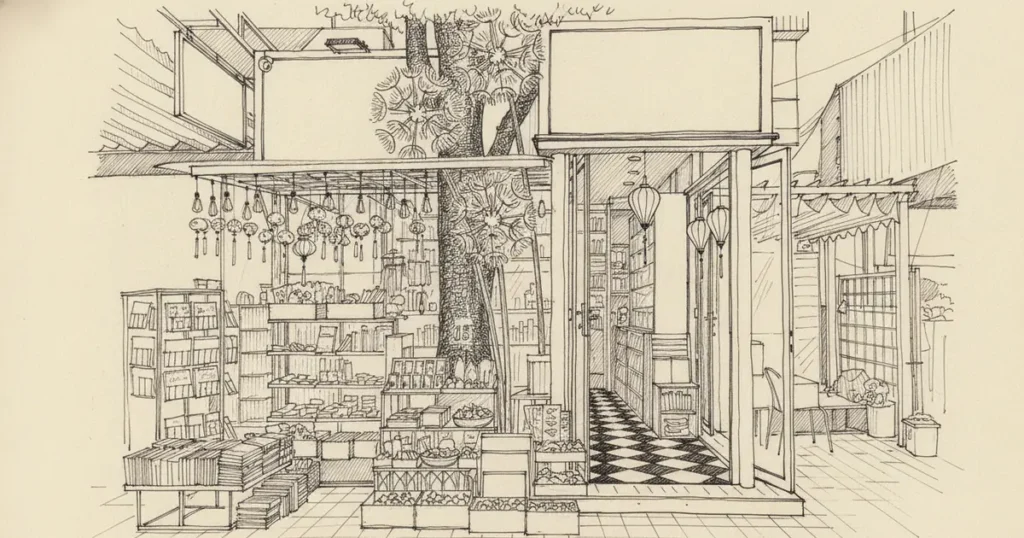
Ho Chi Minh City Book Street sits on Nguyễn Văn Bình Street in District 1. This cultural space welcomes only pedestrians. The street stretches about 140 meters. It functions as an open-air center for literature. The street officially opened on January 9, 2016. It neighbors two city landmarks. Visitors find the Saigon Central Post Office here. The Notre-Dame Cathedral Basilica of Saigon also sits nearby. No vehicles access the street.

The street features over 20 book stalls. Many of Vietnam’s major publishing houses operate these shops. These include Kim Đồng Publishing House and Nhã Nam. The Ho Chi Minh City General Publishing House also has a presence. The book selections offer diverse Vietnamese genres. Some shops also provide titles in foreign languages. These languages include English and French. Vendors also sell stationery and souvenirs.

Several small cafés line the street. They offer both indoor and outdoor seating. Establishments like Phuong Nam Book Cafe and Dep Cafe provide reading spaces. The street’s design incorporates green spaces. Large trees offer shade over wooden benches. The area regularly hosts cultural events. These events include book launches. Author signings and exhibitions also take place here. The street nurtures a public reading culture.

Historically, the street had many names. Locals called it Hongkong Street during French rule. It became Cardis in 1897. Then it was Nguyễn Hậu in 1955. The city adopted Nguyễn Văn Bình in 2000. Its transformation into a book street created a distinct cultural destination. It attracts local residents and international visitors.

Open in Google Maps ↗

Đường Nguyễn Văn Bình, Bến Nghé, Quận 1, Thành phố Hồ Chí Minh, Vietnam

4 insider tips

Trip Moito · curator · Ho Chi Minh City Book Street

Explore this pedestrian walkway. It is lined with bookstores and cafes. This street connects the city's colonial past with modern Vietnamese culture.

losterah · curator · Ho Chi Minh City Book Street

This street offers a calm break from city traffic. It is lined with bookstores, cafes, and souvenir shops. The street is small, so you can see it in about an hour.

Mei Time · curator · Ho Chi Minh City Book Street

This walking street is in the city center and is lined with bookstores. It is clean and shaded by trees. You can find English books and unique editions here.

Sol Life · curator · Ho Chi Minh City Book Street

This street is near the post office. It features many small bookstores. You can find a wide range of Vietnamese literature, postcards, and notebooks.

1 / 4
05

Proceed to the Independence Palace.

Independence Palace

Landmark · District 1, Ho Chi Minh City

08:00–15:30 daily 028 3822 3652

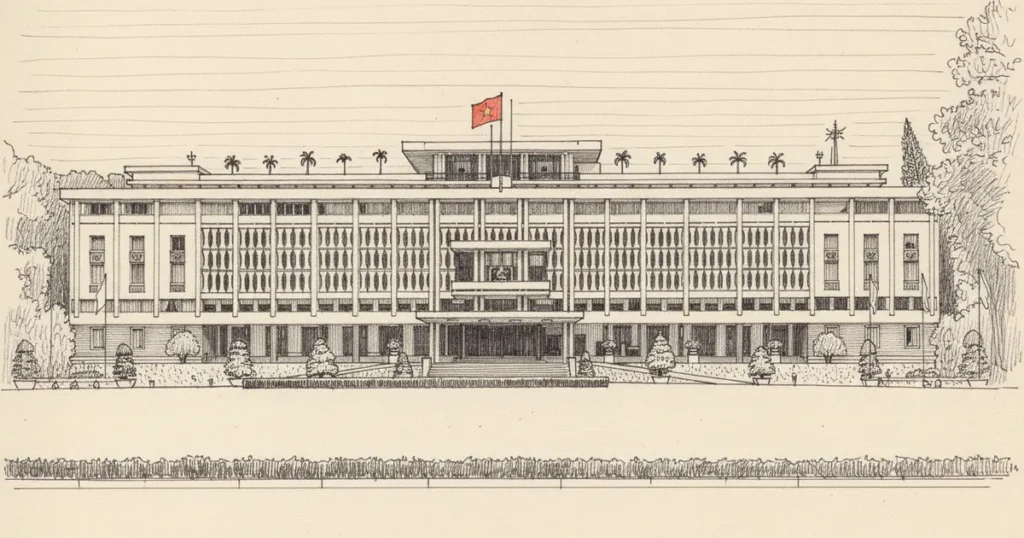
Independence Palace is a historic landmark. It sits on Nam Kỳ Khởi Nghĩa Street in District 1. Locals also call it Reunification Convention Hall. The palace grounds encompass four major streets. These include Nguyễn Thị Minh Khai and Nguyễn Du. It occupies the former site of Norodom Palace. French builders originally constructed that structure.

The current building opened its doors in 1966. Architect Ngô Viết Thụ created its design. He worked after the original palace suffered a bombing in 1962. His vision blends modernist architecture. It also incorporates traditional Eastern philosophy. The palace housed the president of South Vietnam. It served as both a residence and workplace. Presidential reception halls are inside. Government meeting rooms also feature. A basement command bunker networks tunnels. It contains war rooms and vintage communications equipment. A helipad occupies the building’s roof.

The palace holds major historical significance for Vietnam. It marked the end of the Vietnam War. This event occurred on April 30, 1975. North Vietnamese army tanks crashed through its gates. This moment signaled the Fall of Saigon. It brought about the reunification of North and South Vietnam. The palace now displays two original tanks. Visitors find them on the palace lawns. After reunification, the building became Reunification Hall.

Today, Independence Palace functions as a public museum. It also hosts government functions. The building and its rooms remain preserved. They appear as they did in 1975. Vietnam’s government designated it a Special National Monument. The site ranks among Ho Chi Minh City’s prominent historical attractions. It sits near the Notre Dame Cathedral. The Central Post Office is also nearby.

Open in Google Maps ↗

135 Nam Kỳ Khởi Nghĩa, Phường Bến Thành, Quận 1, Thành phố Hồ Chí Minh, Vietnam

1 insider tip

Trip Moito · curator · Independence Palace

See the historic government building. This site marks where North Vietnamese tank 843 crashed through the gates. This event ended the Vietnam War.

06

Then, move to the War Remnants Museum.

War Remnants Museum

Landmark · District 1, Ho Chi Minh City

07:30–17:30 daily

The War Remnants Museum is a historical museum on Võ Văn Tấn Street in District 3, Ho Chi Minh City. It primarily documents the Vietnam War from a Vietnamese perspective. The museum first opened to the public on September 4, 1975. It occupies the former United States Information Agency building. The museum was originally named the “Exhibition House for U.S. and Puppet Crimes.” Its name changed in 1995 following normalized relations with the United States.

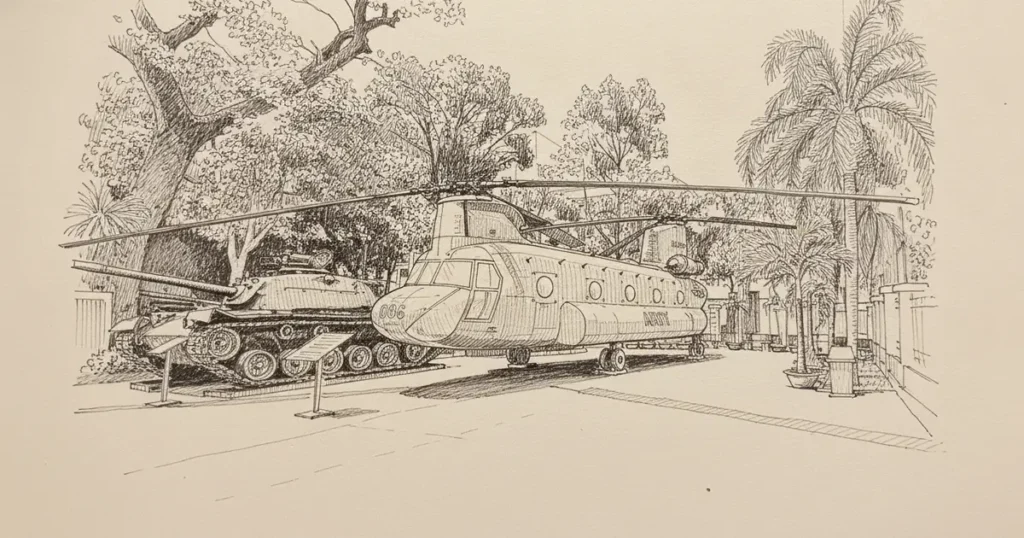
The museum’s collection includes over 20,000 documents, films, and artifacts. The exhibition space is divided into indoor themed rooms and an outdoor courtyard. The outdoor area displays large military hardware. Items include an F-5A fighter jet, a UH-1 “Huey” helicopter, and an M48 Patton tank. Several pieces of unexploded ordnance are also part of the collection. A replica of the “tiger cages” used at Côn Đảo Prison is another key outdoor exhibit.

Inside, the museum’s galleries contain photographic collections and artifacts across several floors. Thematic exhibits cover topics such as international anti-war movements. Other displays detail the effects of chemical agents like Agent Orange. Photographic exhibits present graphic images of conflict and its impact on civilians. One gallery, titled Requiem, showcases work by photojournalists killed during the war. The museum also displays a French guillotine used for executions.

The institution ranks among the most visited museums in Vietnam. It presents a curated narrative of the war’s consequences and Vietnamese resistance. The exhibits provide historical context on the First Indochina War as well. The museum is a short walk from other city landmarks, including the Independence Palace. It attracts a large number of international and domestic visitors annually.

Open in Google Maps ↗

28 Võ Văn Tấn, Phường 6, Quận 3, Thành phố Hồ Chí Minh, Vietnam

2 insider tips

Trip Moito · curator · War Remnants Museum

View intense photographs and artifacts. Exhibits cover Agent Orange effects and prisoner conditions. Actual tiger cages are on display.

losterah · curator · War Remnants Museum

Dedicate at least a couple of hours here to understand Vietnam's history. This important museum provides context for the country's resilience.

1 / 2
07

For lunch, go to Nhà Tú.

Nhà Tú

Vietnamese Cuisine · Bình Chánh District, Ho Chi Minh City

10:00-22:30 daily +842839305069

Nhà Tú brings home-style Vietnamese cooking to District 3. The restaurant sits on Võ Văn Tần in Ho Chi Minh City. Owner Tú Đặng opened the venue in 2017. She recreates dishes from her childhood. The menu highlights traditional family meals. It features flavors from southern and western Vietnam.

The Michelin Guide gave Nhà Tú a Bib Gourmand award. Its menu lists dishes for sharing with rice. Steamed snails with minced pork and lemongrass are a signature item. Locals also enjoy the mixed vegetables. This dish comes with a fish sauce reduction and pork crackling. The kitchen prepares hot pots too. The Lẩu Nhà Tú features oysters and crab.

The restaurant occupies a narrow, three-story house. It tucks into an alley. Wooden chairs, Art Deco furniture, and bamboo lanterns fill the space. Many green plants decorate the interior. They create a garden-like setting. The first floor offers air-conditioning. Upper floors provide fan-cooled seating. A top-floor balcony gives an open-air feel.

Nhà Tú offers a quiet escape. It sits away from the main street. The name translates to “Tú’s Home.” This reflects its intended atmosphere. Local office workers and international visitors frequent the spot. The War Remnants Museum is a short walk away.

Open in Google Maps ↗

129/4 Võ Văn Tần, Phường Võ Thị Sáu, Quận 3, Thành phố Hồ Chí Minh, Vietnam

2 insider tips

Trip Moito · curator · Nhà Tú

Try the steamed snails stuffed with minced pork and mixed vegetables. This family-run restaurant serves authentic Vietnamese comfort food.

Mr.Pin · curator · Nhà Tú

If you are interested in experiencing home-style Vietnamese cooking with a personal story, Nhà Tú in District 3 is a good choice. Owner Tú Đặng opened the venue in 2017 to recreate dishes from her childhood. The menu highlights traditional flavors, offering a glimpse into authentic family recipes on Võ Văn Tần street.

1 / 2
08

After lunch, relax at Tao Đàn Park.

Tao Đàn Park

Landmark · District 3, Ho Chi Minh City

07:00-22:00 daily

Tao Đàn Park is a public park on Nguyễn Thị Minh Khai street in District 1, Ho Chi Minh City. The park covers ten hectares of green space behind the Reunification Palace. It contains over 1,000 mature trees, providing extensive shade. Residents use the park for daily activities like tai chi, badminton, and jogging. Paved pathways cross the lawns and gardens, connecting different areas of the park.

The grounds feature several historical and cultural structures. The Hung Kings Memorial Temple stands within the park. This temple honors the legendary founders of the Vietnamese nation. A small replica of a Cham tower is also present. The park contains a cluster of tombs dating to 1895. These graves belong to historical figures Mr. Lam Tam Lang and Mrs. Mai Thi Xa. A dedicated children’s playground offers slides, swings, and other equipment.

A specific area of the park functions as a bird cafe. Local bird owners gather here in the early mornings. They hang cages with songbirds from tree branches and hooks. This tradition dates back to the mid-1950s. The park also hosts the city’s annual Spring Flower Festival during the Tet holiday. This event gathers bonsai artists and gardeners from across the region to display their work.

The park’s history began as the garden of the French Governor’s Palace. The French administration separated the land in 1869, creating a public garden called Jardin de la Ville. It received its current name, Tao Đàn, after 1954. After 1975, authorities designated it the Tao Đàn Cultural Park. The park is bounded by four major streets: Nguyễn Thị Minh Khai, Huyen Tran Cong Chua, Nguyen Du, and Cach Mang Thang Tam.

Open in Google Maps ↗

55C Nguyễn Thị Minh Khai, Phường Bến Thành, Quận 1, Thành phố Hồ Chí Minh, Vietnam

1 insider tip

Trip Moito · curator · Tao Đàn Park

Observe locals practicing Tai Chi or playing badminton. The park offers a peaceful space. It shows authentic Vietnamese culture.

09

From the park, head to 3T Cà Phê Trứng.

3T Cà Phê Trứng

Coffee · District 1, Ho Chi Minh City

07:00–23:00 daily 0866801599

3T Cà Phê Trứng offers traditional egg coffee. This specialty coffee chain operates multiple locations in Ho Chi Minh City. Hoang Trinh Vuong Company Limited owns the brand. Locals know it for its signature cà phê trứng. Hanoi originally created this unique drink. They prepare it with a strong Vietnamese robusta coffee. A rich, creamy layer of whisked egg yolk foam tops the coffee.

The menu lists many choices. It includes modern variations like egg cacao and egg matcha. The chain also serves other Vietnamese coffee styles. Guests find bạc xỉu and cà phê sữa đá available. A selection of fruit teas, juices, and milk teas adds to the offerings. Each drink arrives in a bowl of warm water. This keeps the signature egg coffee at the right temperature.

The founder opened the first location in 2015. It sits on Hoàng Sa street. The initial goal was to introduce egg coffee. They brought this northern specialty to southern Vietnam. The brand creates nostalgic spaces. Each branch features vintage-inspired decor. Wood furniture, encaustic floor tiles, and warm lighting evoke old Saigon.

3T Cà Phê Trứng locations offer distinct designs. Some interiors reflect classic Vietnamese house styles. Others blend these elements with modern touches. The chain has become a recognized name. It focuses specifically on egg-based coffee drinks. This makes it unique within the city’s cafe scene.

2 insider tips

Trip Moito · curator · 3T Cà Phê Trứng

Order the famous Vietnamese egg coffee. This cultural phenomenon uses whisked egg yolks, sugar, and condensed milk. It is layered over strong Vietnamese coffee.

Mr.Pin · curator · 3T Cà Phê Trứng

3T Cà Phê Trứng is known for its signature cà phê trứng, or egg coffee, a rich and creamy Hanoi-style specialty. As a local chain, it provides a consistent and authentic experience. This is a must-try for anyone looking to experience a classic aspect of Vietnamese coffee culture.

1 / 2
10

In the evening, visit Vĩnh Khánh Food Street.

Vĩnh Khánh Food Street

Vietnamese Cuisine · District 4, Ho Chi Minh City

Vĩnh Khánh Food Street sits on Vĩnh Khánh Street in District 4. It is a designated culinary destination. Ho Chi Minh City officially recognized it in March 2018. The street stretches for about one kilometer. It connects to Bến Vân Đồn street. Locals know it for its many seafood and snail vendors.

The area specializes in Vietnamese seafood, or ‘ốc’. Restaurants and stalls offer many varieties of snails and shellfish. Vendors grill them with scallion oil. They also stir-fry them with tamarind. Other preparations include steaming with lemongrass. Signature offerings include chili-covered crab claws. Guests enjoy grilled scallops with peanuts. Mantis shrimp also feature on menus. Many vendors serve Vietnamese hot pot, or lẩu. They also provide charcoal-grilled meats.

Dining here means open-air seating along the sidewalks. Guests sit at low plastic tables. They use small stools. Most vendors operate from stalls or small restaurant fronts. The street becomes lively in the evening. Charcoal grills are set up then. The atmosphere is energetic. Vendors serve food late into the night.

Historically, the area was a local gathering spot. It evolved into a food destination in the early 2000s. Its closeness to the Saigon River influenced its fresh seafood focus. The street is a short distance from District 1. It sits across the Khánh Hội Bridge. It attracts many local customers. International visitors also come to dine.

Open in Google Maps ↗

Vĩnh Khánh, District 4, Ho Chi Minh City, Vietnam

3 insider tips

Trip Moito · curator · Vĩnh Khánh Food Street

Experience this local food paradise. Try grilled seafood, Vietnamese hot pot, and Bánh Xèo. Eat at plastic tables on the street.

losterah · curator · Vĩnh Khánh Food Street

This lively street offers snails, prawns, clams, and grilled seafood. Enjoy cold drinks on plastic chairs. This place captures an authentic Saigon experience.

Mr.Pin · curator · Vĩnh Khánh Food Street

For a complete immersion into Ho Chi Minh City's street food culture, Vĩnh Khánh Food Street in District 4 is a recognized culinary destination. Officially recognized in March 2018, this one-kilometer stretch offers a diverse range of local food. It is an excellent choice for those who want to explore multiple authentic dishes in a lively, dedicated street food environment.

1 / 3
11

Next, explore Hồ Thị Kỷ Food Street.

Hồ Thị Kỷ Food Street

Vietnamese Cuisine · Bình Chánh District, Ho Chi Minh City

15:00-23:00 daily

Hồ Thị Kỷ Food Street sits in an alley. It branches off Hồ Thị Kỷ Street in District 10. This Ho Chi Minh City market comes alive each evening. It stays busy throughout the night. The Hồ Thị Kỷ Flower Market stands next door. This wholesale flower market opened in 1987. It ranks among the city’s largest and oldest.

Many vendors sell snacks and meals here. Visitors find a wide array of Vietnamese street food. Several stalls specialize in grilled or fried items. They offer grilled meat and seafood skewers. Diners enjoy pan-fried rice cakes (bột chiên). Mixed rice paper (bánh tráng trộn) is another favorite. Locals know this market for its Cambodian-influenced dishes. Vendors prepare Cambodian noodle soup (bún num bò chóc). They also serve various sweet soups (chè).

The market occupies a narrow, bustling alleyway. Food stalls line both sides. Most vendors operate small storefronts. Others use mobile carts. Seating options are often simple. Small plastic stools and tables fill the pavement. The area gets very lively after sunset. It draws a crowd of local residents. Food prices remain quite affordable.

The food street’s residential setting adds to its local feel. It serves as a social center for neighbors. Food enthusiasts also make it a destination. Food stalls blend with the 24/7 flower market. This creates a unique atmosphere. Grilled food aromas mix with fresh flower fragrances. The adjacent market provides these scents.

Open in Google Maps ↗

Hẻm 52 Hồ Thị Kỷ, Phường 1, Quận 10, Thành phố Hồ Chí Minh

2 insider tips

Trip Moito · curator · Hồ Thị Kỷ Food Street

This street comes alive after dark. It focuses on snacks and social eating. Discover dishes not found in regular restaurants here.

Mr.Pin · curator · Hồ Thị Kỷ Food Street

For an immersive local food experience that comes alive in the evening, Hồ Thị Kỷ Food Street, next to the Hồ Thị Kỷ Flower Market, is an interesting destination. This market in District 10 stays busy throughout the night, offering a wide array of street eats. It is suitable for those who enjoy exploring various dishes in a dynamic, open-air setting.

1 / 2
12

Conclude your day at Nguyen Hue Walking Street.

Nguyen Hue Walking Street

Landmark · District 1, Ho Chi Minh City

Open 24/7

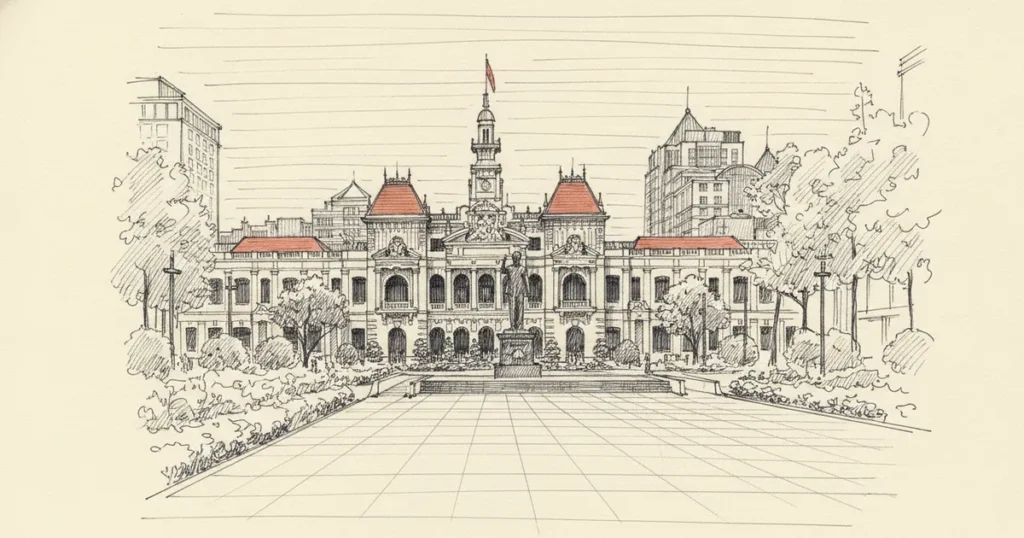
Nguyen Hue Walking Street offers a broad pedestrian boulevard. It sits on Nguyễn Huệ in District 1, Ho Chi Minh City. This street connects the Ho Chi Minh City Hall and the Saigon River. It opened as a pedestrian-only space in April 2015. The boulevard measures about 670 meters long. It is also 64 meters wide. It occupies the site of a former waterway. Locals called it the Charner Canal. The French colonial administration filled the canal in 1887. This created a grand thoroughfare.

The street provides a central public square for the city. It hosts cultural events and public celebrations. Street performances also take place here. A large Ho Chi Minh statue stands near City Hall. Commercial buildings, hotels, and shops flank the boulevard. Notable landmarks include the Rex Hotel. Visitors also see the historic Cafe Apartment building at 42 Nguyen Hue. This former residential block now holds many independent cafes and boutiques.

During the Lunar New Year, the boulevard becomes Nguyen Hue Flower Street. This annual tradition dates back to 2004. It features elaborate floral displays and themed installations. Fountains and public seating equip the street. It functions as a popular gathering place for residents. It also offers a starting point for visitors. The city closes the entire street to vehicle traffic on weekend evenings.

The boulevard’s design provides an open, landscaped space. It sits in the city’s dense urban core. It links several historic and commercial attractions. The Saigon Opera House is a short walk away. Đồng Khởi Street is also nearby. At its southern end, the street opens to Bạch Đằng Wharf. This offers waterfront views on the Saigon River.

Open in Google Maps ↗

Đường Nguyễn Huệ, Bến Nghé, Quận 1, Thành phố Hồ Chí Minh, Vietnam

2 insider tips

Trip Moito · curator · Nguyen Hue Walking Street

Walk this pedestrian street as the sun sets. It connects iconic locations like City Hall and the Cafe Apartment. Enjoy street performers and food vendors.

Mei Time · curator · Nguyen Hue Walking Street

This street is ideal for experiencing Ho Chi Minh City at night. You can order food like Banh Mi Ba Huynh for a local street food experience. It is a lively area.

1 / 2
13

Begin your next day at Cheo Leo Cafe.

Cheo Leo Cafe

Coffee · Bình Chánh District, Ho Chi Minh City

06:00-18:00 daily +84369626363

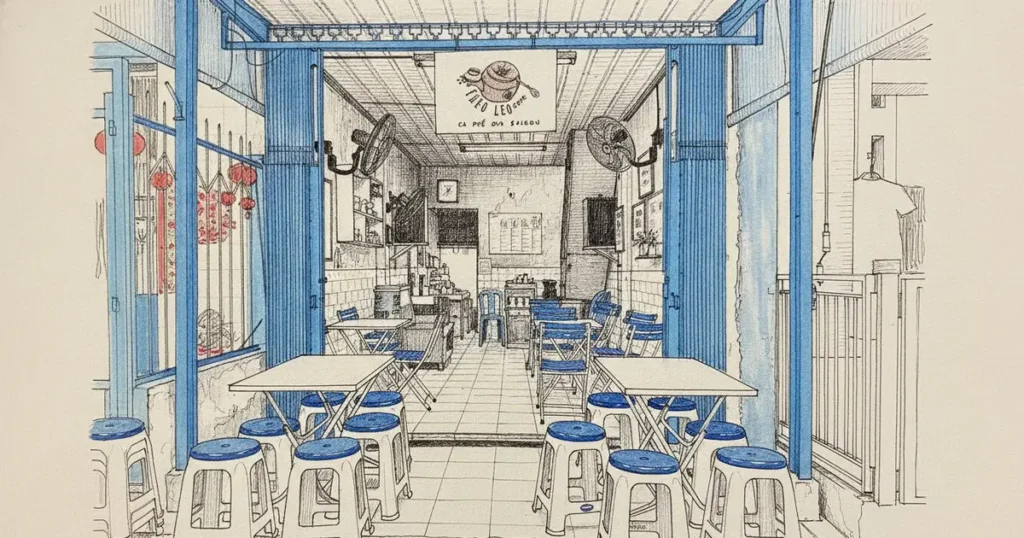
Cheo Leo Cafe is a coffee shop on Nguyễn Thiện Thuật in District 3, Ho Chi Minh City, that serves coffee brewed in a traditional style. Vinh Ngo founded the cafe in 1938, making it one of the city’s oldest coffee establishments. The founder’s daughters continue to operate the business. The cafe sits deep inside a narrow alley within the Bàn Cờ neighborhood.

The name Cheo Leo translates to “isolated” or “perched high up.” This name reflected its original solitary location in a then-undeveloped area. The cafe retains a simple interior with basic tables and stools. It has purposefully avoided modern renovations over the decades. The space maintains the appearance it has had for many years.

Cheo Leo Cafe employs a traditional brewing method using a cloth net filter, known as a “vợt,” and clay pots. This technique has its roots in the local Chinese community and is now rare in the city. The coffee brews over a charcoal stove, which provides low, consistent heat. The menu features classic Vietnamese coffee drinks, including cà phê sữa đá and bạc xỉu.

Historically, the cafe was a popular gathering place for students from prominent nearby schools. Today, it attracts a mix of older regulars and younger patrons. The shop preserves a specific coffee-making heritage passed down through generations. Its continued use of the clay pot and cloth filter method distinguishes it from modern cafes.

Open in Google Maps ↗

109/36 Nguyễn Thiện Thuật, Phường 2, Quận 3, Thành phố Hồ Chí Minh, Vietnam

2 insider tips

Trip Moito · curator · Cheo Leo Cafe

Visit the oldest cafe in Ho Chi Minh City. Try their traditional iced coffee with condensed milk. It offers a peaceful spot.

Mr.Pin · curator · Cheo Leo Cafe

Step into Cheo Leo Cafe in District 3, a venerable establishment founded in 1938. This is where you can experience coffee brewed in a traditional style, a testament to enduring Vietnamese coffee culture. The cafe's long history gives it a singular atmosphere, making it a compelling stop for historical immersion.

1 / 2
14

Alternatively, visit Soo Cafe.

Soo Cafe

Coffee · District 1, Ho Chi Minh City

08:00-23:00 daily +84899312386

Soo Cafe is a coffee shop on Phan Chu Trinh street in District 1, Ho Chi Minh City, located next to Bến Thành Market. The cafe occupies the second floor of an older building, accessible via a narrow ground-floor entryway. The interior design has Korean-inspired minimalist elements. A large, wall-to-wall bookshelf is a central feature of the decor.

The venue serves a menu of espresso-based coffees, teas, and juices. It also prepares Vietnamese specialty drinks, including egg coffee and phin-brewed coffee. The cafe offers a selection of light snacks and pastries to accompany the beverages. The space provides seating for individuals and small groups. Power outlets and Wi-Fi are available for customer use.

The atmosphere is generally quiet, with soft music often playing. The decor combines vintage-style wooden furniture with warm lighting. This creates a calm environment suited for reading or working. The cafe’s location makes it a convenient stop near the central market. It attracts both local residents and tourists visiting the area.

Soo Cafe operates with long daily hours, opening in the morning and closing late in the evening. The space includes both indoor seating and a small balcony area. The setting is designed to be a retreat from the busy streets of the city center. The cafe maintains a consistent and calm ambiance throughout the day.

Open in Google Maps ↗

35 Phan Chu Trinh, Phường Bến Thành, Quận 1, Thành phố Hồ Chí Minh, Vietnam

2 insider tips

Trip Moito · curator · Soo Cafe

This local favorite offers Vietnamese egg coffee. It is a foamy drink. The cafe provides a setting away from market chaos.

Mr.Pin · curator · Soo Cafe

Soo Cafe on Phan Kế Bính Street in District 1 spans two floors, offering both indoor and outdoor seating. Its minimalist, Korean-inspired design creates a bright and contemporary setting. This cafe provides a comfortable and stylish environment to enjoy specialty coffee, suitable for various group sizes.

1 / 2
15

Next, explore Chợ Bình Tây in Chinatown.

Chợ Bình Tây (Bình Tây Market)

Landmark · District 5, Ho Chi Minh City

06:00-18:00 daily +84 28 3857 1512

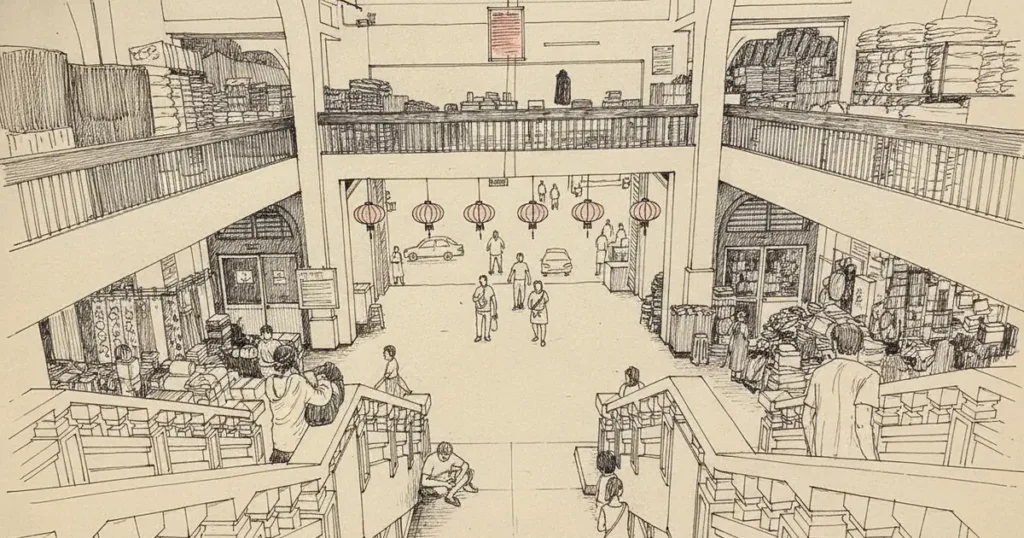
Chợ Bình Tây is a wholesale market on Tháp Mười street in District 6, Ho Chi Minh City. The market is a central landmark of Cholon, the city’s historic Chinatown. A Chinese businessman named Quách Đàm funded the market’s construction. The building work began in 1928 and finished in 1930. The market primarily serves wholesale traders and local residents.

The building’s design blends French colonial engineering with traditional Chinese architectural styles. It features a prominent clock tower above the main entrance. A large, open-air courtyard sits at the center of the market complex. This courtyard contains a memorial bust honoring the market’s founder, Quách Đàm. The structure has a symmetrical layout with high ceilings and wide corridors. The market has twelve entrance gates, both main and auxiliary.

Bình Tây Market contains more than 2,300 stalls spread across two levels. Vendors sell a wide variety of goods, with a focus on bulk items. Key product categories include dried seafood, spices, and preserved foods. Stalls also offer textiles, kitchenware, and household goods. Other sections feature traditional Chinese medicinal herbs, nuts, and confectionery. The market is a major distribution hub for goods throughout southern Vietnam.

The market building is recognized as an architectural and artistic monument. It occupies a large city block, surrounded by four streets. The area around the market also features numerous food stalls. These vendors sell local Vietnamese and Chinese-Vietnamese dishes. The market is a significant commercial and cultural center for the local community.

Open in Google Maps ↗

57A Tháp Mười, Phường 2, Quận 6, Thành phố Hồ Chí Minh, Vietnam

1 insider tip
16

From the market, walk to Quan Âm Pagoda.

Quan Âm Pagoda

Landmark · District 5, Ho Chi Minh City

06:15-17:00 daily

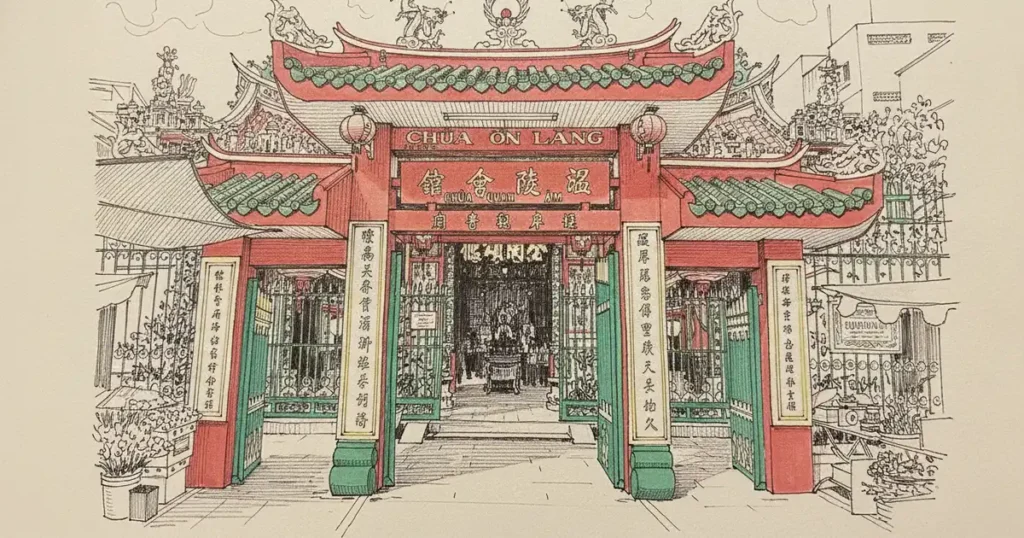
Quan Âm Pagoda sits on Lão Tử Street in Ho Chi Minh City’s District 5. This Chinese-style Buddhist temple is also Ôn Lăng Assembly Hall. It makes its home in the historic Cholon area. The temple primarily venerates Quan Âm. This bodhisattva of compassion is known as Guanyin in Chinese. Chinese immigrants from Fujian province established the pagoda. Its architecture reflects traditional Fujianese style. The complex features curved rooflines. Detailed ceramic fragments decorate them. These fragments depict scenes from Chinese folklore. The interior contains intricate carvings, statues, and altars. The layout creates a space for worship and community gathering.

The temple’s spiritual life blends multiple traditions. It incorporates Pure Land Buddhism. This focuses on Amitabha Buddha. Taoist deities and folk figures are also venerated in the halls. Worshippers pray to Thien Hau. She is the goddess of the sea. Thien Hau is a key figure for seafaring communities. This syncretism reflects the layered belief systems. They belong to the Chinese-Vietnamese community in Cholon. The air inside often smells of incense. Visitors and devotees light incense coils and sticks as offerings.

The pagoda serves as a significant cultural and religious center. It supports the local community. It hosts daily rituals. Major festivals occur throughout the lunar calendar. The structure features vibrant colors. These include red, gold, and green. Ornate decorations include lacquered panels. Carved wooden lotus flowers and traditional lanterns adorn the space. The temple has undergone several restorations. This preserved its historic character over the centuries. Vietnam recognizes it as a National Architectural Heritage Site. The space offers a quiet contrast. It stands apart from the busy Chinatown district streets.

Open in Google Maps ↗

12 Lão Tử, Phường 11, Quận 5, Thành phố Hồ Chí Minh, Vietnam

1 insider tip

Trip Moito · curator · Quan Âm Pagoda

Experience the incense-filled atmosphere. Locals pray to Guanyin, the goddess of mercy. The temple blends Buddhist and Taoist practices.

17

Continue to Chợ An Đông.

Chợ An Đông (An Đông Market)

Landmark · District 5, Ho Chi Minh City

07:00-18:00 daily

Chợ An Đông is a wholesale and retail market on An Dương Vương Street in District 5, Ho Chi Minh City. The market is a major center for fashion, textiles, and clothing. It primarily serves as a wholesale hub for retailers throughout Southern Vietnam. The indoor market building occupies a large city block in the historic Chợ Lớn area.

The market first opened in 1951 as a traditional trading space. A major reconstruction in 1991 transformed it into a multi-story commercial center. The building features a distinct concrete grid facade. It has long been a key commercial point for the local Chinese-Vietnamese community. The market contains over 2,700 individual stalls across several levels.

Each floor of Chợ An Đông specializes in different categories of goods. The basement level contains a food court. It also has vendors selling dried foods, packaged snacks, and jewelry. The ground floor focuses on textiles, with numerous stalls offering fabrics like silk and cotton. Upper floors feature ready-to-wear clothing for men, women, and children. Stalls sell everything from casual wear to traditional Vietnamese garments like the áo dài.

The market functions as a critical part of the city’s garment industry. Many local tailors and fashion designers source their materials here. Both wholesale and retail transactions occur daily. The market sits near other cultural sites within the city’s Chinatown, including the Thiên Hậu Pagoda.

Open in Google Maps ↗

34-36 An Dương Vương, Phường 9, Quận 5, Thành phố Hồ Chí Minh, Vietnam

1 insider tip
18

For lunch, try Bò Kho Gánh.

Bò Kho Gánh

Vietnamese Cuisine · District 5, Ho Chi Minh City

07:00-12:00, 14:00-22:00 daily +84937828984

Bò Kho Gánh prepares Vietnamese beef stew. This stall sits on Sư Vạn Hạnh street. Find it in District 10, Ho Chi Minh City. The stall specializes in one dish: bò kho. It offers a rich, aromatic beef stew. The business operates from the Ngô Gia Tự apartment complex. This old building was constructed before 1975.

The current owner’s grandfather created the recipe. The business opened in 1975. The kitchen slow-cooks the beef stew. It uses multiple cuts of meat. These include beef ribs, tendon, flank, and beef balls. The broth features lemongrass and star anise. Diners receive the stew hot in a stone bowl. They can pair it with fresh bread, rice, or noodles. The stall also provides a selection of condiments.

The Michelin Guide gave the venue a Bib Gourmand award. This recognition highlights good quality, affordable food. A family runs this business. The third generation currently manages it. Its name refers to a traditional carrying pole, or gánh. This reflects its history.

The setting is simple. It reflects a traditional street-food format. It attracts many local diners and visitors. Locals know it for its consistent single specialty dish. The business focuses on preserving a traditional Saigon flavor.

Open in Google Maps ↗

029 Lô H chung cư Ngô Gia Tự, Sư Vạn Hạnh, Phường 2, Quận 10, Thành phố Hồ Chí Minh, Vietnam

1 insider tip

Trip Moito · curator · Bò Kho Gánh

Order Vietnamese beef stew, a dish perfected since 1975. It features rich, aromatic stew with ribs, tendon, flank, and beef balls. Serve it with fresh bread or noodles.

19

In the evening, visit Cầu Ánh Sao.

Cầu Ánh Sao (Starlight Bridge / Rainbow Bridge)

Landmark · District 7, Ho Chi Minh City

Cầu Ánh Sao, or the Starlight Bridge, is a pedestrian bridge in the Phú Mỹ Hưng urban area of District 7, Ho Chi Minh City. The bridge crosses the Thầy Tiêu canal. It connects the Crescent (Hồ Bán Nguyệt) area with the Canal (Kênh Đào) district. The structure is exclusively for pedestrians and sightseeing. It stands as one of Vietnam’s first modern pedestrian bridges. Construction on the bridge began in May 2009. It officially opened to the public in late 2010.

The bridge measures 170 meters in length and 8.3 meters in width. Its design features a distinctive lighting system. LED lights embedded in the bridge’s surface illuminate upwards. This creates an effect resembling a starry sky for walkers. The sides of the bridge feature a system that continuously changes colors. A water spray system also operates from the railings, creating artificial waterfalls. The lighting system uses solar panels for power, installed on the side of the bridge.

Two public squares frame the bridge at each end. One square is designed to represent a crescent moon. The other square symbolizes the sun. These spaces provide open areas for visitors near the bridge. The surrounding area includes Crescent Mall and numerous restaurants and cafes. The bridge and its adjacent parks are popular public spaces, particularly in the evenings.

The Chinese company Gao Ge designed the bridge. The Sino-Pacific company handled its construction. The project received the Arthur G. Hayden medal from the International Bridge Conference in 2013. This award recognized its innovation for a bridge with a special purpose. The bridge has become a well-known landmark within the planned community of Phú Mỹ Hưng.

Open in Google Maps ↗

Khu đô thị Phú Mỹ Hưng, Quận 7, Thành phố Hồ Chí Minh, Vietnam

1 insider tip
20

Start your third day at Xa Loi Buddhist Temple.

Xa Loi Buddhist Temple

Ho Chi Minh City

08:00-11:00, 14:00-19:00 daily 02839300114

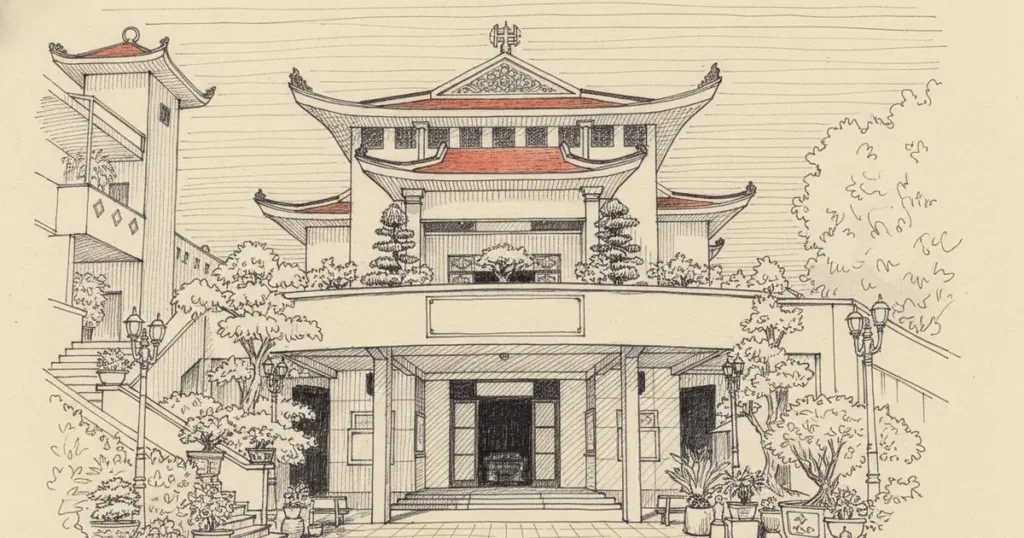
Xa Loi Buddhist Temple is a modern pagoda on Bà Huyện Thanh Quan Street in District 3, Ho Chi Minh City. The temple’s name, Xá Lợi, is the Vietnamese term for śarīra, or sacred Buddhist relics. Construction on the pagoda began in August 1956. Architects Nguyễn Văn Dương and Đỗ Bá Vinh designed the structure. The temple complex covers an area of 2,500 square meters. Its modern design places the main worship hall on an upper floor. A lecture hall and offices occupy the ground floor.

A prominent seven-story bell tower stands within the temple grounds. The tower rises 32 meters, ranking it among the tallest in Vietnam. The temple inaugurated the tower in 1961. Each of its seven octagonal floors venerates a different Buddha. A large bronze bell hangs on the highest floor. This bell weighs two tons and was modeled after the bell at Thiên Mụ Pagoda in Huế. The tower is a major landmark of the temple.

The main hall features a large, gilded statue of Sakyamuni Buddha. Artists from the Biên Hòa School of Fine Arts originally crafted the statue. A series of 15 large painted panels decorates the walls. These panels depict the life of the Buddha from his birth to his entry into nirvana. A jade tower shaped like a bodhi leaf sits high above the main statue, enshrining the sacred relics for which the temple is named.

Xa Loi Pagoda holds significant historical importance in the city. It served as the headquarters for the South Vietnam Buddhist Association. The temple became a center of Buddhist resistance during the 1963 political crisis. Forces loyal to President Ngô Đình Diệm raided the pagoda in August of that year. This event solidified the temple’s role as a key site in the country’s modern history.

Open in Google Maps ↗

89 Bà Huyện Thanh Quan, Phường Võ Thị Sáu, Quận 3, Thành phố Hồ Chí Minh, Vietnam

2 insider tips

Trip Moito · curator · Xa Loi Buddhist Temple

Explore peaceful meditation halls. Monks protested here during the 1960s. This offers insight into Vietnamese spiritual life.

What The Pho · curator · Xa Loi Buddhist Temple

Observe the temple's modern architectural style. It combines traditional Vietnamese elements with contemporary design. Look for the seven-story bell tower.

1 / 2
21

Then, visit Nhà Thờ Giáo Xứ Tân Định.

Nhà Thờ Giáo Xứ Tân Định

Film Photography · District 1, Ho Chi Minh City

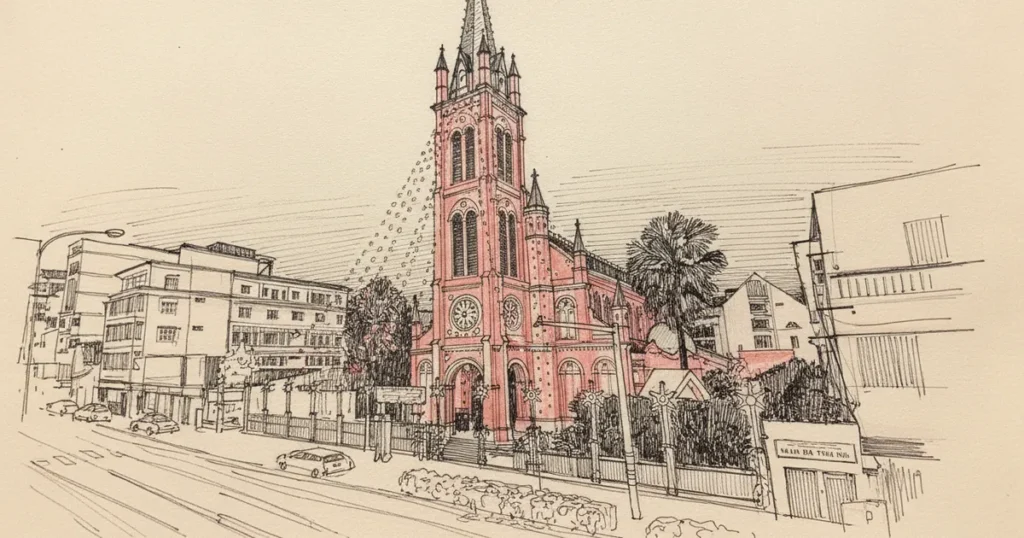
Tân Định Parish Church sits on Hai Bà Trưng Street. This Roman Catholic church is in District 3, Ho Chi Minh City. Locals know its official name as the Church of the Sacred Heart of Jesus. Its distinctive pastel-pink exterior and interior draw many visitors. Construction began in 1870. Workers completed the original structure in 1876. The building blends Romanesque, Gothic, and Renaissance styles.

A major renovation in 1957 gave the church its vibrant pink facade. White decorative details highlight its architectural features. The main facade features a prominent central tower. Two smaller bell towers flank it. The main tower reaches 52.6 meters high. It houses five bells. Arched windows and intricate carvings adorn the exterior. The church ranks as the second largest in Ho Chi Minh City. The Saigon Notre-Dame Basilica is larger.

Father Donatien Éveillard supervised the initial construction. This occurred during the French colonial period. The structure saw a significant reconstruction from 1896 to 1898. Further renovations in 1928 added the large front tower. Inside, two rows of Gothic-style columns guide eyes to the main altar. The interior space features high vaulted ceilings. The church remains an active worship place for local Catholics.

The parish grounds sit near the Tân Định Market. The church also established an orphanage and a school early on. Its founder, Father Éveillard, rests within the church nave. The site serves as a significant religious and historical landmark. It stands on a busy street. Its pink facade makes it a recognizable neighborhood feature.

Open in Google Maps ↗

289 Hai Bà Trưng, Phường 8, Quận 3, Thành phố Hồ Chí Minh, Vietnam

3 insider tips
1 / 3
22

Next, go to Vinhomes Central Park.

Vinhomes Central Park

Landmark · Bình Chánh District, Ho Chi Minh City

06:00-21:30 daily

Vinhomes Central Park sits on Nguyễn Hữu Cảnh Street. This large public park is in Bình Thạnh District. It is located within Ho Chi Minh City. The park serves as the main green space. It supports a mixed-use urban development. The development lines the Saigon River. It features landscaped gardens and walking paths. The park also offers recreational areas. Its design draws inspiration from New York City’s Central Park.

The park spans 14 hectares. It stretches over one kilometer. It follows the Saigon River’s western bank. Landmark 81 anchors the grounds. This building ranks as Vietnam’s tallest skyscraper. It houses a hotel, apartments, and an observation deck. The park’s landscape combines open lawns. It also includes manicured green spaces. A riverside promenade offers a walkway along the water.

The park includes a Japanese garden. This garden features a koi fish pond. Visitors find children’s playgrounds there. Outdoor fitness equipment is also available. Large, open grass fields host public activities. They also provide recreation space. The park provides numerous benches and vending machines. Paved pathways link its various sections. These include plazas and themed gardens.

The Vingroup corporation developed Vinhomes Central Park. It was part of a larger residential project. Construction began in 2014. The park opened in stages. It serves both local residents and the general public. It significantly adds to the city’s green spaces. The park symbolizes Ho Chi Minh City’s modern economic development.

Open in Google Maps ↗

208 Nguyễn Hữu Cảnh, Phường 22, Bình Thạnh, Thành phố Hồ Chí Minh, Vietnam

1 insider tip

Trip Moito · curator · Vinhomes Central Park

This modern park, with Landmark 81, shows Vietnam's rapid development. It symbolizes its transformation into a contemporary economy.

23

For a lively evening, head to Bùi Viện Street.

Bùi Viện Street

Nightlife · District 1, Ho Chi Minh City

Pedestrian-only hours: 19:00-02:00 Saturday-Sunday

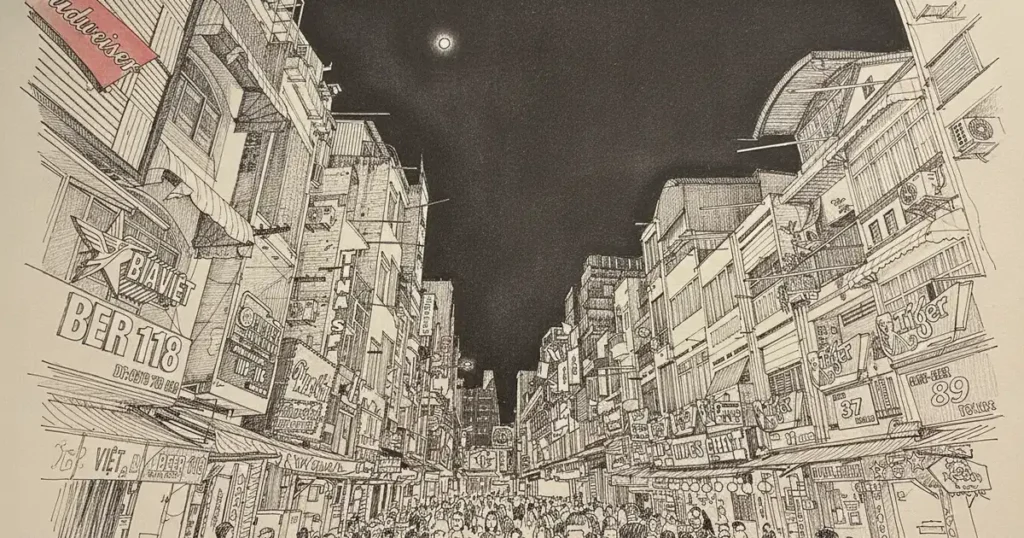
Bùi Viện Street creates a major nightlife and entertainment hub. It sits in Phạm Ngũ Lão Ward, District 1, Ho Chi Minh City. This street centers the area locals call the “Backpacker Quarter.” Adjacent Đề Thám and Phạm Ngũ Lão streets also join this area. Bùi Viện features many bars, pubs, and nightclubs. Restaurants, street food stalls, and souvenir shops also line the road.

On weekend evenings, the street becomes a pedestrian-only zone. Authorities ban vehicles from 7:00 PM to 2:00 AM on Saturdays and Sundays. During these hours, businesses expand onto the pavement. They offer outdoor seating. Street performers and live music acts appear along the road. Loud music from multiple venues fills the air. Neon lights and large crowds of tourists and locals define the atmosphere.

Historically, the area earned the name ‘International Intersection’ before 1975. It served as a district for newsrooms and printing houses. The street began attracting international travelers after the 1970s. The city officially designated Bùi Viện its second walking street on August 20, 2017. The street honors a 19th-century Vietnamese diplomat and reformer. Establishments include small, open-fronted beer stalls. It also features multi-level clubs and rooftop bars.

The street offers many food and drink options. Vendors sell local street food. Visitors find grilled skewers and seafood. Bars serve both local beer and international cocktails. The area caters heavily to tourists. Many services are available in English. It remains one of the city’s most active nightlife destinations. Businesses operate late into the night.

Open in Google Maps ↗

Đường Bùi Viện, Phường Phạm Ngũ Lão, Quận 1, Thành phố Hồ Chí Minh, Vietnam

2 insider tips

Trip Moito · curator · Bùi Viện Street

Experience Ho Chi Minh City's famous nightlife area. It is a vibrant, international hub. Enjoy rooftop bars, street beer vendors, and live music.

losterah · curator · Bùi Viện Street

This street is known for its loud and chaotic atmosphere. It is a unique experience. During the day, it has a different feel without the neon lights and music.

1 / 2
24

On your final day, begin at Hủ Tiếu Nam Vang Thành Đạt LNV.

Hủ Tiếu Nam Vang Thành Đạt LNV

Ho Chi Minh City

Hủ Tiếu Nam Vang Thành Đạt is a Vietnamese noodle soup restaurant at 34 Lê Văn Vang, Tân Bình District, Ho Chi Minh City. The restaurant specializes in Hủ Tiếu Nam Vang, a noodle soup of Cambodian-Chinese origin. It serves this specialty in two main styles. Customers can have the dish as a soup or as a dry noodle bowl with broth on the side.

The dish features thin, chewy rice noodles in a light, fragrant pork bone broth. A standard bowl includes a variety of toppings. These consist of sliced pork, poached prawns, pork liver, and sautéed minced pork. Soft-boiled quail eggs, fried garlic, and shallots complete the assembly. The restaurant provides fresh garnishes separately. These include Chinese celery, chives, lettuce, and bean sprouts.

The brand’s founders, Nguyễn Ngọc Bạn and his wife, opened their first location in 2015. They started the business in Tân Bình after years of working as restaurant servers. The original shop aimed to replicate the traditional flavors of the dish. From its first establishment, the brand grew into a chain with many branches across the city. The simple, functional interior design is consistent across locations.

Hủ Tiếu Nam Vang Thành Đạt is a well-known restaurant chain in Ho Chi Minh City. The menu centers on its signature noodle soup. The kitchen prepares each bowl to order for dine-in and takeaway customers. The brand is recognized for its consistent flavor profile and extensive presence throughout different districts.

Open in Google Maps ↗

34 Lê Văn Vang, Phường 13, Tân Bình, Thành phố Hồ Chí Minh, Vietnam

2 insider tips
1 / 2
25

Then, visit Little HaNoi Egg Coffee (Yersin).

Little HaNoi Egg Coffee (Yersin)

Ho Chi Minh City

08:00–22:00 daily +84869095345

Little HaNoi Egg Coffee is a cafe on Yersin street in District 1, Ho Chi Minh City, that specializes in Hanoi-style egg coffee. The cafe sits within a small alley, offering a menu centered on its signature beverage. This drink combines robust Vietnamese coffee with a whipped, creamy egg topping. The cafe prepares each egg coffee to order, serving it in both hot and iced versions.

Beyond its main offering, the menu includes traditional Vietnamese coffee, teas, and fruit juices. A complimentary cinnamon tea often accompanies drink orders. The food selection features items like Salmon Avocado Toast and other classic desserts. The cafe provides a specific set of instructions for guests on how to properly enjoy the egg coffee. The establishment operates from morning until late evening daily.

The interior design evokes a traditional Hanoi aesthetic. The space features yellow-painted walls, dark brown wooden furniture, and vintage decor elements. These elements include old televisions, cassette players, and black-and-white photographs. The ground floor holds the main seating area, while a mezzanine level functions as a quiet space with bookshelves. The decor incorporates Vietnamese cultural items, such as the nón lá, or conical leaf hat.

The cafe’s setting down a narrow laneway separates it from the main street’s activity. This Yersin street location is one of several branches of the Little HaNoi Egg Coffee brand. The venue attracts both locals and tourists seeking a specific Northern Vietnamese coffee experience. The space is arranged to accommodate individuals and small groups.

Open in Google Maps ↗

119/5 Đ. Yersin, Phường Phạm Ngũ Lão, Quận 1, Thành phố Hồ Chí Minh, Vietnam

3 insider tips

Mr.Pin · curator · Little HaNoi Egg Coffee (Yersin)

Tucked away in a small alley on Yersin street in District 1, Little HaNoi Egg Coffee focuses entirely on its signature Hanoi-style egg coffee. This specialized approach ensures a consistently high-quality rendition of the creamy beverage. It is a good option for those seeking an authentic taste of this unique coffee variant.

Mei Time · curator · Little HaNoi Egg Coffee (Yersin)

Try the iced egg coffee here, a Hanoi-inspired specialty. The cafe has a cozy atmosphere and is good for taking photos. It also serves cinnamon tea on the side.

1 / 3
26

Next, explore the Saigon Zoo and Botanical Garden.

Saigon Zoo and Botanical Garden

Landmark · District 1, Ho Chi Minh City

07:00-18:30 daily +842838291425

Saigon Zoo and Botanical Garden is a zoological park and conservation site on Nguyễn Bỉnh Khiêm Street in District 1, Ho Chi Minh City. The institution ranks among the oldest continuously operating zoos in the world. French admiral Pierre-Paul de La Grandière commissioned its creation in 1864. The site first opened to the public in 1869. It functions as a space for recreation, education, and scientific research.

The grounds cover over 20 hectares in the city center, near the Thị Nghè Channel. The zoo houses hundreds of animal species. These include mammals, reptiles, and birds from various continents. Notable animals include white Bengal tigers, Asian elephants, clouded leopards, and numerous primate species. The park participates in conservation and breeding programs for endangered species. It achieved the first captive breeding of the crested argus pheasant.

The botanical section contains thousands of trees and plants. Some specimens are over a century old. The collection features a dedicated orchid garden, a cactus garden, and many species of tropical flora. The grounds provide significant green space within the urban landscape of District 1. Paved paths connect the various animal enclosures and plant displays. Lakes with different fish and lotus species are also part of the landscape.

Two significant cultural structures stand within the park’s boundaries. The Museum of Vietnamese History is located on the premises. It displays artifacts from Vietnam’s prehistoric era to the modern day. A temple dedicated to the Hùng Kings also occupies the site. This temple was originally built as a monument to Indochinese soldiers who died in World War I.

Open in Google Maps ↗

2 Nguyễn Bỉnh Khiêm, Bến Nghé, Quận 1, Thành phố Hồ Chí Minh, Vietnam

1 insider tip
27

From the zoo, proceed to Chùa Pháp Hoa.

Chùa Pháp Hoa

Ho Chi Minh City

06:00–11:30, 13:30–21:00 daily

Chùa Pháp Hoa sits on Trường Sa street. This Buddhist temple is in District 3, Ho Chi Minh City. It lies alongside the Nhiêu Lộc – Thị Nghè canal. Hòa thượng Đạo Hạ Thanh founded the temple in 1928. The temple follows the Northern Buddhist (Bắc tông) tradition. Its waterside location provides a distinct urban setting. The main ceremonial hall contains important Buddhist statues. You will see Buddha Shakyamuni, Avalokiteshvara Bodhisattva, and Ksitigarbha Bodhisattva. Carvers made these statues from jackfruit wood. A golden lacquer finishes each piece.

The temple structure has undergone several major renovations. Restorations took place in 1932, 1965, 1990, and 1993. These efforts maintained the temple’s integrity and appearance. In 2015, the Department of Culture, Sports and Tourism recognized Chùa Pháp Hoa. It became a city-level Historical Monument. The temple complex includes multi-story buildings. These serve as monk residences and house administrative offices. Greenery and potted plants fill the temple grounds.

Locals know Chùa Pháp Hoa for its annual Vesak (Phật Đản) celebration. This event marks the Buddha’s birth. During the festival, thousands of lanterns decorate the temple. They also adorn the adjacent canal. Releasing flower lanterns onto the canal’s water is a key part of the celebration. The temple also holds ceremonies for other important dates. These include the Vu Lan festival and the Lunar New Year (Tết). Illuminations light the temple’s facade and grounds at night. This creates a prominent visual along the canal.

Open in Google Maps ↗

870 Trường Sa, Phường 14, Quận 3, Thành phố Hồ Chí Minh, Vietnam

2 insider tips

Trip Moito · curator · Chùa Pháp Hoa

This temple showcases unique Buddhist architecture. It is inspired by northern Vietnamese pagoda design. Observe elaborate decorative elements.

Mei Time · curator · Chùa Pháp Hoa

The temple appears stunning after dark, especially the glowing Bodhi tree. It offers a peaceful atmosphere. You might hear chanting if visiting at the right time.

1 / 2
28

For lunch, visit Cơm Tấm Ba Ghiền.

Cơm Tấm Ba Ghiền

Vietnamese Cuisine · Ho Chi Minh City

07:00–21:15 daily +84 28 3846 1073

Cơm Tấm Ba Ghiền serves Vietnamese broken rice. This family-run eatery opened in 1995. It sits on Đặng Văn Ngữ street. This street is in Phú Nhuận District. The restaurant is a Ho Chi Minh City fixture. Locals know it for its signature dishes. It specializes in cơm tấm. This dish features fractured rice grains. Various toppings complete each plate.

Its most recognized offering is the grilled pork chop. The restaurant charcoal-grills this pork. A proprietary sauce marinates the meat. The menu features several combinations. These plates build around the grilled pork. Customers can order a plate with just the pork chop. They can also add other items. Common accompaniments include bì. This is shredded pork skin. Chả trứng is another option. This is steamed egg and pork meatloaf. Ốp la offers a fried egg. A full plate, or thập cẩm, combines many toppings. The restaurant serves pickled vegetables. A side of sweet fish sauce accompanies each dish.

The venue operates from a traditional shophouse. The dining area is a simple, open space. Fans provide ventilation. It does not have air conditioning. The kitchen and grilling station are visible. The aroma of charcoal-grilled pork fills the area. The restaurant serves many customers daily. Both dine-in patrons and takeaway orders are popular. A local clientele often frequents the spot.

Cơm Tấm Ba Ghiền ranks among Ho Chi Minh City’s well-known spots. The Michelin Guide recognized the restaurant. It received a Bib Gourmand award. This denotes good quality and good value. The restaurant maintains its original location. It continues to draw a loyal local following.

Open in Google Maps ↗

84 Đặng Văn Ngữ, Phường 10, Phú Nhuận, Thành phố Hồ Chí Minh, Vietnam

3 insider tips

Trip Moito · curator · Cơm Tấm Ba Ghiền

Try Cơm Tấm (broken rice) with grilled pork. This Ho Chi Minh City specialty is served with pickled vegetables and fish sauce.

Mr.Pin · curator · Cơm Tấm Ba Ghiền

If you are looking for an iconic cơm tấm experience, Cơm Tấm Ba Ghiền is a recognized Ho Chi Minh City fixture. This family-run eatery opened in 1995 on Đặng Văn Ngữ street and is known by locals for its version of Vietnamese broken rice. It is a solid choice for anyone wanting to try this traditional dish from a well-established source in Phú Nhuận District.

Mei Time · curator · Cơm Tấm Ba Ghiền

This restaurant has served broken rice since 1995. Order the charcoal-grilled pork, which is a delicious specialty. Do not skip the accompanying soup, it pairs well with the meal.

1 / 3
29

Afterward, head to Ben Thanh Market.

Ben Thanh Market

Landmark · District 1, Ho Chi Minh City

06:00–18:00 daily

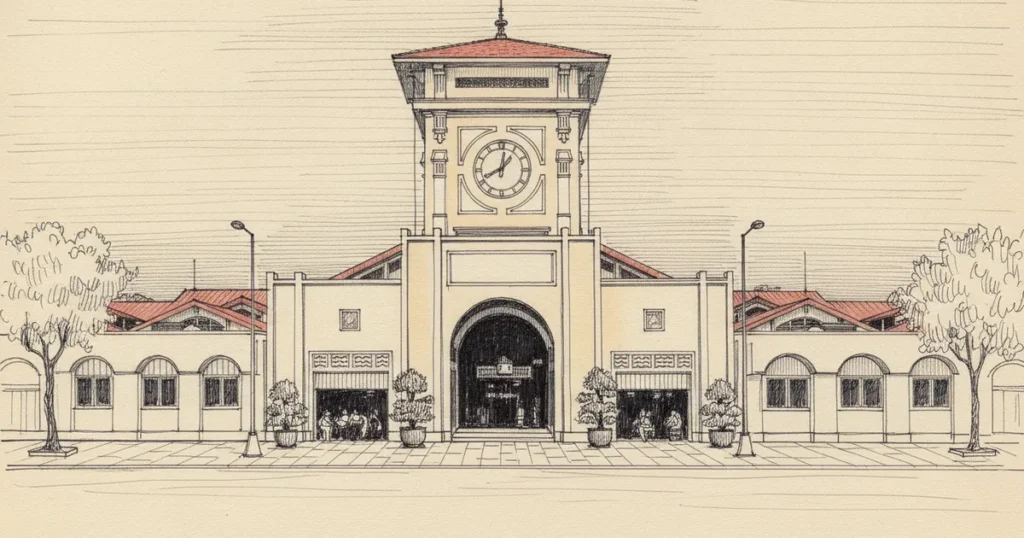
Ben Thanh Market offers a historic central market experience. It sits on Lê Lợi Street in District 1, Ho Chi Minh City. This market building ranks among the city’s earliest surviving structures. Visitors recognize it by its large clock tower at the main entrance. The market spans a 13,000-square-meter space. It occupies a major traffic intersection. Four main gates open onto different streets. Twelve sub-entrances also welcome visitors.

The current market building dates back to 1914. French contractors Brossard et Maupin completed its construction. This structure replaced an earlier market. Fire destroyed the previous market in 1870. The building saw a major renovation in 1985. Workers preserved its original French colonial architecture. The market’s name connects to the city’s past. ‘Bến’ means wharf and ‘Thành’ means citadel. This name references an old riverside market. That market once sat near the former Gia Định Citadel.

Inside, nearly 1,500 stalls sell a wide range of goods. The market splits into distinct zones for various products. Stalls offer textiles, áo dài, clothing, and handicrafts. They also sell souvenirs. Other sections focus on fresh produce, meats, dried foods, coffee, and spices. A dedicated food court area serves Vietnamese dishes. The South Gate on Lê Lợi Street leads to textiles and dried goods. The North Gate on Lê Thánh Tôn Street features fresh produce and flowers. The East Gate on Phan Bội Châu Street has cosmetics. The West Gate on Phan Chu Trinh Street sells shoes and souvenirs.

After the main building closes, a night market operates. It opens on the surrounding streets. Outdoor stalls and food vendors open from evening until late. These vendors sell clothing, souvenirs, and street food. The night market creates a different atmosphere. It differs from the daytime operations inside the main hall. The market serves as a major hub for city buses. It sits adjacent to the Ben Thanh metro station.

Open in Google Maps ↗

Đ. Lê Lợi, Phường Bến Thành, Quận 1, Thành phố Hồ Chí Minh, Vietnam

2 insider tips

Trip Moito · curator · Ben Thanh Market

This famous market is touristy yet functional. It offers a wide variety of Vietnamese goods. Look for food, handicrafts, and textiles.

Sol Life · curator · Ben Thanh Market

This market houses thousands of stalls. You can find clothes, accessories, and fresh produce. It offers a lively atmosphere for browsing.

1 / 2
30

Next, visit the Bitexco Financial Tower.

Bitexco Financial Tower

Landmark · District 1, Ho Chi Minh City

09:30-21:30 daily +842839156156

Bitexco Financial Tower is a 68-story skyscraper on Hải Triều Street in District 1, Ho Chi Minh City. The building stands 262.5 meters tall and was the tallest building in Vietnam upon its completion in 2010. Its design, by American architect Carlos Zapata, draws inspiration from a blooming lotus bud, Vietnam’s national flower. The tower’s curved facade consists of 6,000 individual glass panels. Vietnamese company Bitexco Group developed the tower, which officially opened on October 31, 2010.

The tower primarily contains office and retail space. The lower floors house the Icon68 shopping center. The upper floors provide office accommodations for numerous multinational corporations. A distinctive feature is the helipad on the 52nd floor. This structure cantilevers 22 meters from the main building at a height of 191 meters. The building’s high-speed elevators are among the fastest in Southeast Asia, traveling at 7 meters per second.

The most prominent public attraction is the Saigon Skydeck. This observation deck sits on the 49th floor, 178 meters above ground level. It offers 360-degree panoramic views of the city and the Saigon River. The Skydeck also features an Ao Dai Museum, which displays traditional Vietnamese dresses. The tower’s upper floors contain restaurants and bars, providing additional viewpoints of the urban landscape. The building is a major landmark on the city’s modern skyline.

Open in Google Maps ↗

2 Hải Triều, Bến Nghé, District 1, Ho Chi Minh City, Vietnam

1 insider tip

Trip Moito · curator · Bitexco Financial Tower

Go to the observation deck for panoramic views of Ho Chi Minh City. This helps visitors understand the city's layout. It shows rapid development.

31

For shopping, explore Saigon Square.

Saigon Square

District 1, Ho Chi Minh City

09:00-21:00 daily

Saigon Square is an indoor shopping center on Nam Kỳ Khởi Nghĩa Street in District 1, Ho Chi Minh City. The venue functions as an air-conditioned marketplace with numerous independent stalls. It first opened to the public in the year 2000. The shopping center offers a wide variety of goods. Shoppers can find clothing, footwear, bags, and fashion accessories.

The interior layout resembles a traditional market, with narrow aisles separating densely packed stalls. Unlike open-air markets, the entire space is enclosed and climate-controlled. The vendors occupy small, individual retail units spread across the building’s floors. This format creates a bustling, high-density retail environment. The center attracts both local residents and international tourists.

Saigon Square provides an alternative to traditional outdoor markets like the nearby Bến Thành Market. The product selection focuses heavily on trend-focused apparel and accessories. Prices are generally in the affordable to mid-range tier. Many shopkeepers communicate with customers in English. The center contains hundreds of separate stalls, creating a large and diverse selection of merchandise under one roof.

The building stands in a central part of District 1, close to other major city landmarks. Its location makes it an accessible destination within the city’s main commercial and tourist hub. The shopping center maintains a reputation for budget-friendly fashion. It operates daily and experiences high foot traffic, particularly on weekends and evenings.

Open in Google Maps ↗

77-89 Nam Kỳ Khởi Nghĩa, Bến Thành, Quận 1, Thành phố Hồ Chí Minh, Vietnam

1 insider tip

Trip Moito · curator · Saigon Square

This spot offers affordable fashion items. Find traditional Vietnamese crafts. It caters to various economic levels.

32

Nearby, visit Saigon Centre.

Saigon Centre

Landmark · District 1, Ho Chi Minh City

Shops: 09:30-21:30 (Monday-Thursday), 09:30-22:00 (Friday-Sunday); F&B: 10:00-22:00 (Daily) +842838294888

Saigon Centre is a mixed-use commercial complex on Lê Lợi Boulevard in District 1, Ho Chi Minh City. The development occupies a city block with frontages on Pasteur and Nam Kỳ Khởi Nghĩa streets. It combines a multi-level shopping mall with office towers, a hotel, and serviced apartments. The complex stands in the city’s central business district, near landmarks like the Opera House and Ben Thanh Market.

The retail area houses more than 400 international and local brands. Its anchor tenant is Takashimaya, a Japanese department store that opened its first Vietnam location here in 2016. The mall contains numerous luxury fashion houses, including Louis Vuitton, Cartier, and Chanel. It also features high-street brands such as Uniqlo and Zara. A wide selection of restaurants, cafes, and a food court operate across several floors, offering diverse dining options.

The complex was developed by Keppel Land in two main phases. Phase 1 finished in 1996 with a 25-storey tower that was Vietnam’s tallest building at the time. A major expansion marked Phase 2, which added a 43-storey second tower and a new retail podium. This second phase reached completion in 2017. The architecture of the newer tower features a modern, glass-clad international style.

Beyond retail, Saigon Centre provides extensive Grade A office space. These offices serve as a business address for many multinational corporations. The complex also includes hospitality components. The Sedona Suites offers luxury serviced apartments in Tower 2. Tower 1 contains the Fusion Original Saigon Centre hotel. The entire development functions as an integrated work, retail, and residential hub.

Open in Google Maps ↗

65 Lê Lợi, Bến Nghé, Quận 1, Thành phố Hồ Chí Minh, Vietnam

1 insider tip

Trip Moito · curator · Saigon Centre

This upscale destination offers international brands like Uniqlo. It also features local designers. This reflects evolving Vietnamese shopping habits.

33

Conclude your day at Turtle Pond.

Turtle Pond

Landmark · District 1, Ho Chi Minh City

Open 24 hours

Turtle Pond, officially International Square, sits at the intersection of Võ Văn Tần, Phạm Ngọc Thạch, and Trần Cao Vân streets in District 3. Locals know it as Hồ Con Rùa, translating to Turtle Lake. A large, octagonal fountain with a modernist monument defines its center. The site neighbors landmarks like the Reunification Palace and Notre Dame Cathedral.

This location has seen much urban transformation. In 1790, it hosted the Kham Khuyet Gate of the Bat Quai citadel. French colonial rule saw a water tower built here in 1878. It supplied water to the city. Authorities dismantled the tower in 1921. They replaced it with a small lake and monument. The current landmark opened between 1965 and 1967. Vietnamese architect Nguyễn Kỳ designed its modern structure.

A major renovation happened from 1970 to 1974. This work added the monument’s distinct features. Five tall, concrete columns rise from the center. They resemble spreading flower petals. Four spiral walkways lead to the central memorial area. The monument’s main tower reaches 34 meters high. The popular name, Turtle Lake, came from a bronze turtle statue. This statue once stood in the center. It carried a stone stele. Vandals destroyed it in 1976, but the name persists.

The roundabout functions as a well-known public space. It is a popular gathering spot. The area around the fountain offers many street food vendors. Numerous coffee shops also operate there. In 2023, the city developed the vicinity. It became a pedestrian-focused area. The site connects several key city districts. It remains one of Ho Chi Minh City’s most recognizable landmarks.

Open in Google Maps ↗

Công trường Quốc tế, Phường 6, Quận 3, Thành phố Hồ Chí Minh, Vietnam

2 insider tips

Trip Moito · curator · Turtle Pond

Observe locals exercising, relaxing, and socializing. This peaceful urban oasis offers a glimpse into authentic daily life. It is away from tourist areas.

What The Pho · curator · Turtle Pond

Observe the tall tower and octagonal pond. This roundabout was built in 1969. It is a popular spot for photos and evening gatherings.

1 / 2