Saigon On Film Book now: a private photo walk through Saigon's Chinatown →
This guide is based on a video

Saigon's Chinatown (Cholon) | Food, Markets & Everyday Life

by Qingchill Travels · Watch on YouTube ↗

Explore the vibrant culture and culinary delights of Chinatown

Cholon, Ho Chi Minh City’s Chinatown, offers a unique blend of markets, temples, and traditional eateries. This guide explores 18 places that capture the area’s morning energy and cultural heritage. Visitors can immerse themselves in daily life, taste local specialties, and witness ancient traditions.

A morning in Saigon’s Cholon provides many opportunities for exploration. The focus keyphrase of this guide is a morning in Saigon’s Cholon, highlighting its vibrant markets, serene temples, and diverse local eats.

The Pins

01

Start a morning in Saigon's Cholon at Trần Chánh Chiếu Market, a bustling neighborhood hub.

Trần Chánh Chiếu Market

Shopping · Ho Chi Minh City

Trần Chánh Chiếu Market sits on Trần Chánh Chiếu street. It is a traditional local market in District 5, Ho Chi Minh City. Locals also know it as Chợ Xóm Vôi. Its history dates back to the 1750s. The market sits near the former Bến xe Chợ Lớn bus station. It serves the daily needs of the nearby community.

This market once functioned as a vital wholesale hub. For centuries, it served as Saigon’s main rice market. Traders received rice and other goods from the Mekong Delta. They used the Bến Bình Đông wharf nearby. In 2008, authorities discontinued its wholesale status. Large-scale trade then moved to modern centers. The market then became a local retail market.

Vendors at Trần Chánh Chiếu Market sell many fresh products. Stalls offer fresh fruits, vegetables, and meat. Shoppers also find live seafood. The market offers an extensive selection of affordable tropical fruits. Patrons can also find prepared street food and dried goods. It also sells household necessities. The local Chinese-Vietnamese community strongly influences the market.

The market features a traditional, open-air format. Many vendors set up stalls along the main street. They also use surrounding alleyways. The area becomes a bustling center of activity. This is especially true during morning hours. It operates as a typical Vietnamese wet market. The market focuses on fresh ingredients for daily cooking. It offers a glimpse into Cholon district’s long commercial culture.

Open in Google Maps ↗

Đường Trần Chánh Chiếu, Phường 14, Quận 5, Thành phố Hồ Chí Minh, Vietnam

1 insider tip
02

Next, visit Chợ Bình Tây, one of Cholon's oldest wholesale markets.

Chợ Bình Tây (Bình Tây Market)

Landmark · District 5, Ho Chi Minh City

06:00-18:00 daily +84 28 3857 1512

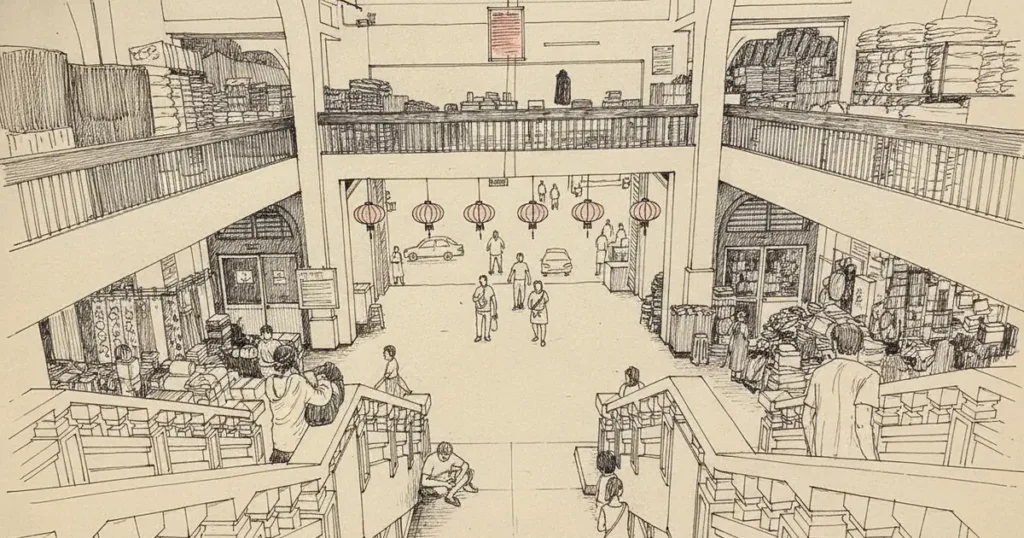
Chợ Bình Tây is a wholesale market on Tháp Mười street in District 6, Ho Chi Minh City. The market is a central landmark of Cholon, the city’s historic Chinatown. A Chinese businessman named Quách Đàm funded the market’s construction. The building work began in 1928 and finished in 1930. The market primarily serves wholesale traders and local residents.

The building’s design blends French colonial engineering with traditional Chinese architectural styles. It features a prominent clock tower above the main entrance. A large, open-air courtyard sits at the center of the market complex. This courtyard contains a memorial bust honoring the market’s founder, Quách Đàm. The structure has a symmetrical layout with high ceilings and wide corridors. The market has twelve entrance gates, both main and auxiliary.

Bình Tây Market contains more than 2,300 stalls spread across two levels. Vendors sell a wide variety of goods, with a focus on bulk items. Key product categories include dried seafood, spices, and preserved foods. Stalls also offer textiles, kitchenware, and household goods. Other sections feature traditional Chinese medicinal herbs, nuts, and confectionery. The market is a major distribution hub for goods throughout southern Vietnam.

The market building is recognized as an architectural and artistic monument. It occupies a large city block, surrounded by four streets. The area around the market also features numerous food stalls. These vendors sell local Vietnamese and Chinese-Vietnamese dishes. The market is a significant commercial and cultural center for the local community.

History

Founder
Quách Đàm
Style
Western concrete techniques with Chinese architectural forms
5 Things You Didn't Know About Chợ Bình Tây (Bình Tây Market)
From rag‑picker to the “king of Chợ Lớn”

Before he became the man who built Bình Tây Market, Quách Đàm (1863–1927) was a penniless immigrant from Chaozhou who wandered the alleys of Chợ Lớn buying scrap, duck feathers and old rags, sleeping under shop eaves and in market corners.
A local scholar later wrote that at noon he would rest on empty shop verandas, and once a rice porter stole his tax paper just to force him to pay a few coins to get it back; yet Quách Đàm bore no grudge and later even hired that same porter when he became rich.

A clever gamble that made him a legend

When news arrived from Singapore that rice prices were collapsing, while other merchants panicked Quách Đàm secretly ordered his agents in the six Mekong provinces to keep buying rice at the usual price, even slightly higher, so sellers would not deal with anyone else.
At the same time he sent a fake telegram from Singapore saying rice prices were about to soar; rival traders rushed in to buy at inflated prices, only to discover he had already quietly sold off his own stock at a profit, leaving them with the losses.
This kind of move cemented his reputation as a ruthless but brilliant strategist in the rice trade of southern Indochina.

“I’ll give you a new Chợ Lớn – but put my statue in the middle”

When the old Chợ Lớn market became too cramped and the colonial authorities started looking for a new site, Quách Đàm stepped in with a bold proposal: he would donate a large swampy plot in Bình Tây village and fund the construction of a modern market, on condition that he could build a few rows of shophouses around it and place a statue of himself in the central courtyard after his death.
The deal was accepted; he turned the marsh into buildable land, designed a huge market blending Western concrete techniques with Chinese architectural forms, and effectively “moved” Chợ Lớn to a new location through private capital rather than state planning.

A funeral like no other, and a statue that outlived regimes

Quách Đàm died in 1927, before the market was finished, but his funeral became one of Saigon’s most spectacular events: a flower‑decorated truck carried his coffin, fifty luxury cars followed, and crowds of Chinese and Vietnamese lined the streets, climbing onto roofs and trees to watch.
In 1930 his family erected a grand marble fountain in the market’s central courtyard, topped with a bronze statue of Quách Đàm in Manchu‑style robes, holding in one hand the deed donating the land and in the other a scroll listing his contributions to schools, markets and public works.
After 1975 the statue was removed and stored away; since 1992 it has stood in the courtyard of the Ho Chi Minh City Museum of Fine Arts, while a smaller bust now marks the original pedestal in Bình Tây, keeping his image alive in two different heritage spaces at once.

From “Quách Đàm Market” to a protected heritage symbol

Locals originally called the new complex “chợ Quách Đàm” or “Chợ Lớn mới,” and it quickly became the main wholesale hub for the whole south, sending goods across the Mekong Delta and even to Cambodia and Laos.
In 2015–2017 the city officially recognised its architectural and artistic value, ranking it as a municipal heritage site; a decade‑long restoration funded largely by stallholders’ rent carefully returned roofs, tiles, dragon sculptures and stone floors to their 1928 appearance.
Today, when people walk under its yin‑yang tiled roofs and past the central fountain, they are moving through a space that began as one immigrant’s audacious deal with a colonial city and grew into a symbol of Chợ Lớn’s Chinese‑Vietnamese commercial world.

Sources: Wikipedia ↗ · Viendongonline ↗ · Ngaynay ↗

3 video mentions
1 / 3
Open in Google Maps ↗

57A Tháp Mười, Phường 2, Quận 6, Thành phố Hồ Chí Minh, Vietnam

3 insider tips
1 / 3
03

For breakfast, stop at Phat Dat Noodle Shop inside Phung Hung Market.

Phat Dat Noodle Shop

Ho Chi Minh City

Phat Dat Noodle Shop is a local eatery on Sư Vạn Hạnh in District 10, Ho Chi Minh City, that serves Chinese-style noodle dishes. The shop operates from a location inside an alley, catering to customers early in the morning. It functions as a street food-style vendor, typical of the area. The primary seating is often simple, arranged for quick turnover.

The menu centers on noodle soups with a distinct Chinese flavor profile. One of the shop’s specific offerings is bánh lọt. This dish features short, thick rice flour noodles. The noodles have a characteristically soft and chewy texture. The kitchen prepares this dish as a mixed bowl with various toppings.

Each bowl of bánh lọt includes sliced pork and pieces of pork kidney. The broth is a key component of the dish. It provides a savory base for the noodles and toppings. The preparation follows traditional methods for this style of street food. The shop assembles each order for the individual customer.

The vendor is situated in a neighborhood known for its diverse food scene. It represents a type of specialized, family-run food stall common in Ho Chi Minh City. The focus on a specific dish like bánh lọt with offal is characteristic of many local noodle stalls. The shop provides a focused menu for a morning clientele.

Open in Google Maps ↗

433/10 Sư Vạn Hạnh, Phường 12, Quận 10, Ho Chi Minh City

1 insider tip

Qingchill Travels · curator · Phat Dat Noodle Shop

Order a mixed bowl of banh lot, which features rice flour noodles, pork, and kidney. The shop serves Chinese-flavored dishes early in the morning.

04

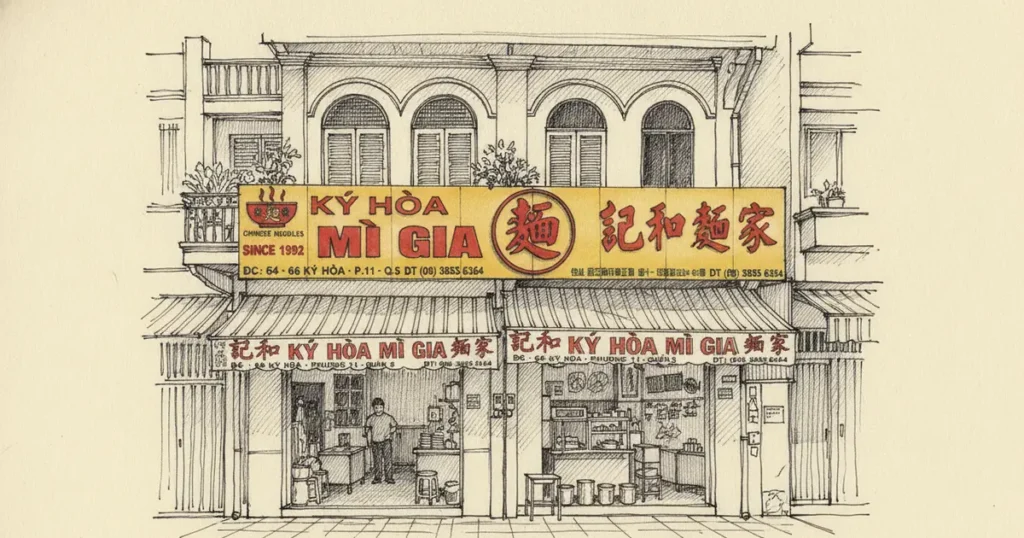
Continue your culinary journey at Ký Hòa Mì Gia, a long-standing Chinese noodle shop.

Ký Hòa Mì Gia

Ho Chi Minh City

Phúc Ký Mì Gia is a Chinese-style noodle shop located at Lô F of the Ngô Gia Tự apartment complex in District 10, Ho Chi Minh City. The eatery operates from a ground-floor space within the sprawling residential block, a noted hub for local food stalls. The venue specializes in traditional noodle and dumpling dishes, following a family-run format. Its menu centers on fresh egg noodles, hủ tiếu, and sủi cảo.

The shop prepares both soup-based and dry noodle variations. Core offerings include mì hoành thánh, featuring wonton dumplings, and dishes with xá xíu, a type of Cantonese barbecued pork. The kitchen assembles bowls with various toppings. The broth is a key component of its soup dishes. The setting is a simple, street-level shophouse typical of the apartment complex.

The Ngô Gia Tự apartment complex, where the shop is situated, was built before 1975. It is a large housing estate known for its extensive network of food and drink vendors. These businesses operate along the ground-floor corridors and open spaces between the different blocks, or ‘lô’. The area provides a high concentration of local, casual dining options. Phúc Ký Mì Gia serves the residents of the complex and visitors exploring the neighborhood’s food scene.

Open in Google Maps ↗

032 Lô F, Chung Cư Ngô Gia Tự, Phường 2, Quận 10, Ho Chi Minh City, Vietnam

1 insider tip
05

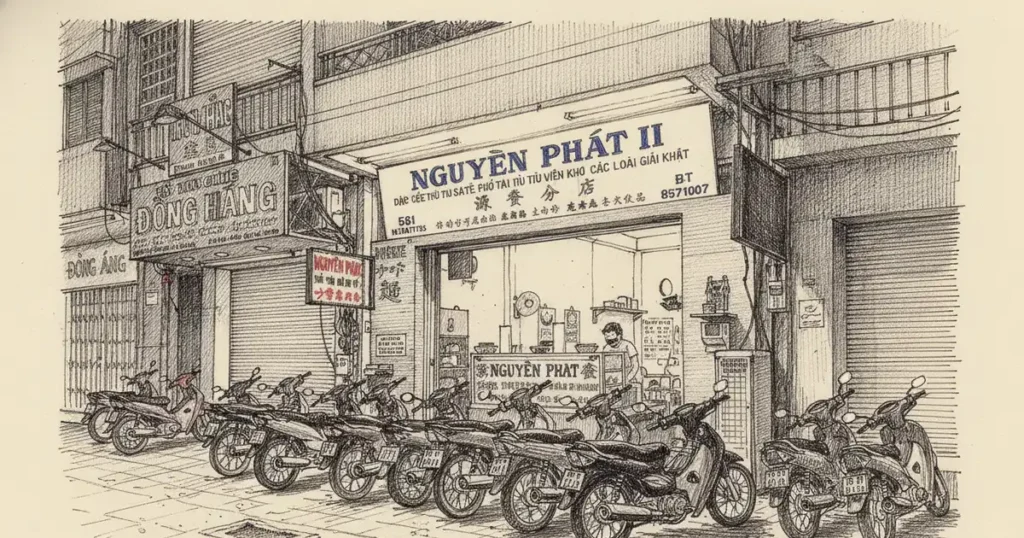
Visit Nguyen Phat Eatery, another long-standing Chinese restaurant.

Nguyen Phat Eatery

Ho Chi Minh City

07:00-11:00, 16:00-22:00 daily 02838571007

Nguyên Phát is a Vietnamese-Chinese eatery on Nguyễn Trãi street in District 5, Ho Chi Minh City. The restaurant specializes in hủ tiếu sa tế nai, or venison satay noodle soup, a dish associated with the city’s Chinese community. The establishment has operated for several decades, maintaining a recipe passed down through generations. It is located in the Chợ Lớn area, which is recognized as the city’s primary Chinatown.

The restaurant’s signature dish, hủ tiếu sa tế nai, features a thick, rich broth. The broth’s complex flavor comes from more than thirty ingredients, including coconut milk, ground peanuts, sate chili paste, and various spices. This gives the soup a savory, mildly spicy, and nutty profile. The kitchen serves the broth with tender, thinly sliced venison. Diners can choose from different types of noodles to accompany the dish.

Beyond the venison specialty, the menu also includes other variations. Patrons can find mì sa tế bò (beef satay noodles with egg noodles) and hủ tiếu viên (noodle soup with meatballs). The eatery operates from a simple, open-fronted space typical of traditional local restaurants. It has two street-facing sides, providing an airy setting with basic inox tables and chairs for seating.

The venue serves customers throughout the day with a split schedule, opening for a morning session and again for the evening. It is a long-standing food destination within District 5, drawing both local residents and visitors exploring the culinary heritage of Chợ Lớn. The preparation focuses on the traditional flavors of Teochew-style satay noodles.

Open in Google Maps ↗

581 Nguyễn Trãi, Phường 7, Quận 5, Thành phố Hồ Chí Minh

1 insider tip
06

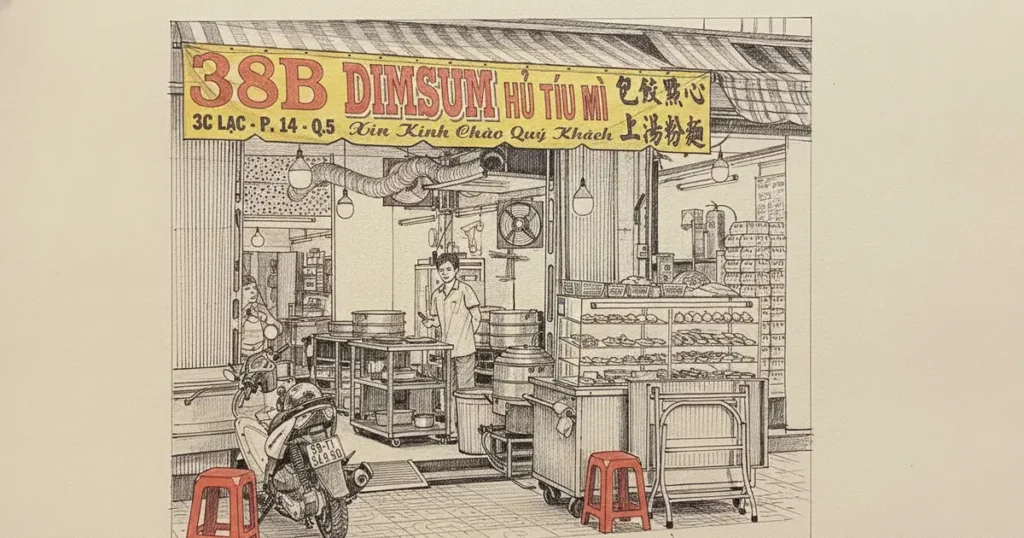
Next, head to Học Lạc Dimsum for a traditional breakfast.

Học Lạc Dimsum

Ho Chi Minh City

06:00-12:00, 15:00-21:00 daily

Học Lạc Dimsum offers Cantonese-style dim sum. The restaurant sits on Học Lạc Street in District 5. It operates from a street-front space. This location is within Ho Chi Minh City’s Chợ Lớn area. Locals also call this area Saigon’s Chinatown. The restaurant specializes in traditional, handmade dim sum.

The team steams dim sum fresh to order. They prepare it in bamboo baskets at the shop’s front. Học Lạc Dimsum is a family-run establishment. Locals know it for its casual atmosphere. The menu features a focused selection of classic dim sum. Offerings include shrimp dumplings (há cảo) and pork and shrimp dumplings (xíu mại).

The kitchen also prepares steamed chicken feet. Other popular dishes include salted egg buns. Diners can also enjoy baked egg tarts. Fried items sit in a glass display case. The staff serves steamed dishes directly from the steamers. The restaurant offers a simple setup. It has a small number of tables for dine-in customers.

Học Lạc Dimsum serves customers throughout the day. It follows a split schedule. The restaurant opens for morning service. It then reopens for a separate afternoon and evening service. This eatery is well-known within its neighborhood. It attracts a primarily local clientele. They seek traditional dim sum. Pricing positions it in the affordable tier. The establishment maintains a simple presentation. It focuses on food preparation at its entrance.

Open in Google Maps ↗

38B Đ. Học Lạc, Phường 14, Quận 5, Hồ Chí Minh, Vietnam

1 insider tip

Qingchill Travels · curator · Học Lạc Dimsum

Enjoy freshly made items like shrimp dumplings, siu mai, and rice rolls. Siu mai is also served with bread for breakfast here.

07

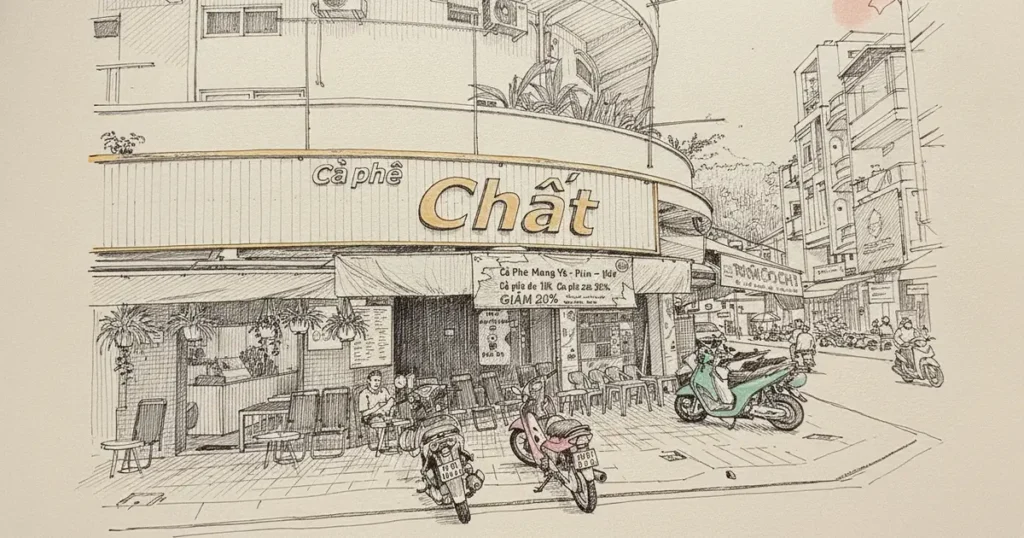
Afterward, relax at Chất Coffee, a small café on a corner.

Chất Coffee

Coffee · Ho Chi Minh City

Chất Coffee is a sidewalk coffee shop on Hùng Vương street in District 5, Ho Chi Minh City. The establishment primarily serves customers at small tables and chairs set up on the curb. This format allows patrons to observe the daily street life of the neighborhood. The menu focuses on traditional Vietnamese coffee preparations.

The cafe’s setup is open-air, directly facing the traffic and pedestrian activity of Hùng Vương. It operates as a simple, street-front venue without an indoor dining room. The focus is on quick service for guests who want to drink coffee in a typical local style. The business serves drinks like iced black coffee (cà phê đen đá).

The immediate area surrounding the coffee shop is a mix of residential buildings and local businesses. Its location on a main thoroughfare in District 5 places it within a busy, commercial part of the city. The shop caters to local residents and passersby looking for a casual coffee break. The seating arrangement is characteristic of many small coffee vendors in the city.

Open in Google Maps ↗

Hùng Vương, Phường 2, Quận 5, Thành phố Hồ Chí Minh, Vietnam

1 insider tip
08

Proceed to Tan Da Coconut Cake, where cakes are made on-site.

Tan Da Coconut Cake

Ho Chi Minh City

Bánh Bò Thốt Nốt Tấn Đạt sells palm sugar honeycomb cake. This street food vendor operates on An Dương Vương in District 5. It sits in Ho Chi Minh City. Locals know this cake as bánh bò thốt nốt. It is a traditional dessert from Vietnam’s Mekong Delta. The Khmer people of An Giang province created the cake. Palm sugar, or đường thốt nốt, gives it a special sweetness. It also provides a natural color.

The cake uses rice flour, tapioca starch, and coconut milk. This batter ferments. Fermentation creates the cake’s unique internal structure. People call this texture “rễ tre,” meaning bamboo roots. The finished cake offers a soft, spongy bite. Tapioca starch gives it a slightly chewy consistency.

Palm sugar gives bánh bò thốt nốt a golden or light brown color. The cake combines rich palm sugar sweetness. It also features the creamy taste of coconut milk. Vendors prepare the cake in various ways. Many steam it in molds. Others bake it in pans. Some versions cook on a pan over a charcoal fire.

This cake ranks as a popular snack across Southern Vietnam. Street vendors and local markets often sell it. Enjoy it warm. Some serve it with extra coconut cream sauce. Others top it with shredded coconut. The vendor typically sells it as a whole round. They also offer pre-cut slices for individual servings.

Open in Google Maps ↗

155 An Dương Vương, Phường 8, Quận 5, Thành phố Hồ Chí Minh, Vietnam

1 insider tip
09

Closer to noon, visit Tiệm Trà Di Phát, a long-standing Chinese tea shop.

Tiệm Trà Di Phát

Ho Chi Minh City

Tiệm Trà Di Phát, a traditional Chinese tea shop, sits on Phú Thọ street in District 11. A Chinese family from Triều Châu has operated the shop for over 70 years. The family maintains traditional, manual tea preparation methods. They specialize in loose-leaf teas, passing down techniques through generations. The family patriarch established the business in the 1950s. The second generation, Mr. Quách Huê, now manages the shop.

The shop’s interior retains a classic appearance. Aged wooden furniture, cabinets, and traditional tea containers fill the space. Workers process all teas by hand. They roast and scent the shop’s signature jasmine tea on-site. The family continues to dry tea leaves using charcoal. This adheres to their original techniques. This manual process forms a core part of the shop’s identity. It preserves the family’s heritage.

Tiệm Trà Di Phát offers a range of products. It includes Vietnamese teas from Thái Nguyên and Bảo Lộc. The shop also sources premium oolong teas from China. It imports Phượng Hoàng Đơn Tùng from the family’s ancestral home in Triều Châu. The shop sells teas by weight. Workers package them in paper to maintain freshness. It primarily serves regular customers. The shop also caters to those seeking traditionally made tea.

Beyond tea, the establishment provides items for traditional Chinese wedding ceremonies. Customers find a small selection of ceremonial goods. These include specific types of wedding cakes, such as bánh pía. The space functions as a retail shop. It does not have a dedicated seating area for drinking tea. The shop stands as a long-standing example of a traditional family-run business in Cholon.

Open in Google Maps ↗

122 Phú Thọ, Phường 2, Quận 11, Thành phố Hồ Chí Minh, Vietnam

1 insider tip

Qingchill Travels · curator · Tiệm Trà Di Phát

Experience a traditional tea shop preserved by the family of its original elderly owner. The shop maintains its traditional flavors.

10

For a refreshing break, stop at Vinh Khang Herbal Tea.

Vinh Khang Herbal Tea

Ho Chi Minh City

09:00-22:00 daily 0906766988

Vinh Khang Herbal Tea sits on Nguyễn Trãi Street. This street-front cart operates in District 5. It serves customers within Ho Chi Minh City’s Chợ Lớn area. Locals know Chợ Lớn as the city’s historic Chinatown. The cart offers traditional Chinese and Vietnamese herbal teas. The vendor prepares these teas for health purposes. Customers can only get takeaway drinks. It does not provide a seating area.

The menu features freshly prepared herbal drinks. Locals call these ‘nước sâm’. These beverages use various botanicals and roots. They also include other natural ingredients. The cart offers a 24-ingredient herbal tea. This popular drink is ‘sâm 24 vị’. Sugarcane tea is another frequent offering. It goes by the name ‘nước mía lau’. The vendor brews the teas daily. Customers receive them chilled from cart containers. They can buy drinks by the cup. Larger bottles are also available for takeaway.

This business continues a long tradition. Herbal drink vendors thrive in the Chợ Lớn neighborhood. This area holds many traditional medicine shops. It also features numerous food stalls. Vinh Khang operates from a simple wheeled cart. The vendor positions it on the pavement. This setup allows for quick service. It caters to pedestrians and vehicle traffic. The cart serves many regular local clients.

The teas follow recipes from the community’s cultural heritage. People consume these drinks for perceived cooling properties. They also seek restorative benefits. This business is one of several ‘Nước Sâm Vĩnh Khang’ locations. It maintains a consistent presence on this busy street. You find it in District 5.

Open in Google Maps ↗

827 Nguyễn Trãi, Phường 14, Quận 5, Thành phố Hồ Chí Minh, Vietnam

1 insider tip
11

Continue to Huu Duyen Herbal Tea, another shop with Chinese lettering.

Huu Duyen Herbal Tea

Ho Chi Minh City

09:00-22:00 daily

Hữu Duyên Herbal Tea is a long-standing traditional Chinese herbal tea shop on Nguyễn Trãi Street in District 5, Ho Chi Minh City. The shop serves various types of herbal teas, known locally as ‘nước sâm’. This establishment is recognized for its decades-long history in the Chợ Lớn area. The menu features both hot and cold beverages, prepared according to traditional recipes. Signature offerings include a cooling herbal tea and a more complex 24-flavor herbal tea. The drinks are brewed from a blend of natural roots, seeds, and plants. The shop operates from a simple, street-front setting. Its facade preserves a classic style reminiscent of 1990s Hong Kong. This look includes patterned floor tiles, a hand-painted sign, and a prominent stainless steel drink cart. The venue primarily offers takeaway service, with limited sidewalk seating available. Customers can purchase individual glasses or larger bottles to take home. The shop is a well-known destination for both local residents seeking traditional refreshments and visitors exploring the cultural heritage of the city’s Chinatown. The business has maintained its traditional methods of preparation and service for over fifty years. Another branch of Hữu Duyên operates on Ngô Quyền Street, also in District 5.

Open in Google Maps ↗

800 Nguyễn Trãi, Phường 11, Quận 5, Thành phố Hồ Chí Minh, Vietnam

1 insider tip
12

Next, find a moment of peace at Phước An Hội Quán - Chùa Minh Hương, an assembly hall.

Phước An Hội Quán – Chùa Minh Hương

Ho Chi Minh City

08:00-16:00 daily

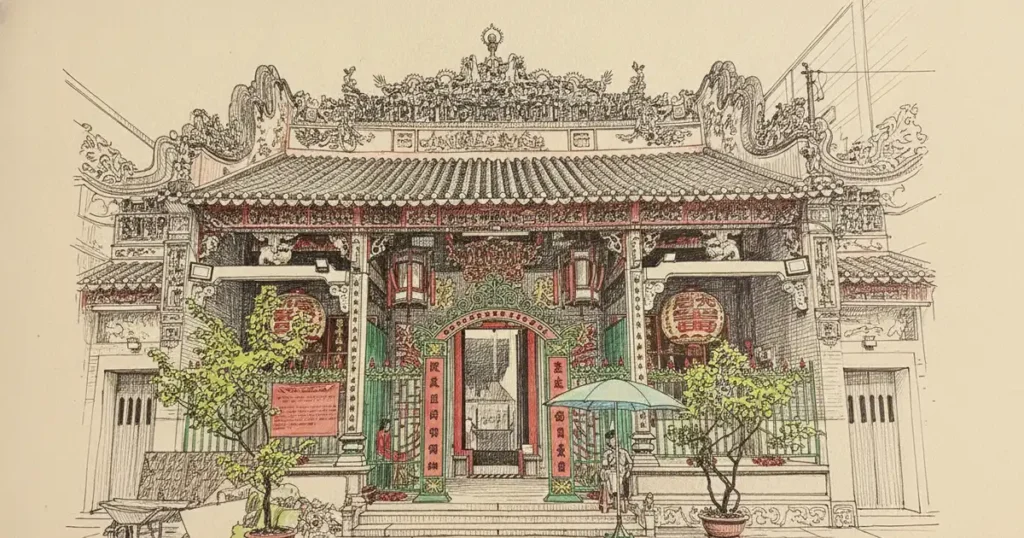
Phước An Hội Quán, also known as Chùa Minh Hương, is a Cantonese assembly hall and Taoist temple on Hồng Bàng Street in District 5, Ho Chi Minh City. The Minh Hương Chinese community, with origins from Guangdong, Fujian, and Zhejiang provinces, built the temple in 1902. It stands on the former site of the An Hòa shrine, which dated to 1865. The structure is a recognized artistic and architectural monument of the city, a status it received in 2009.

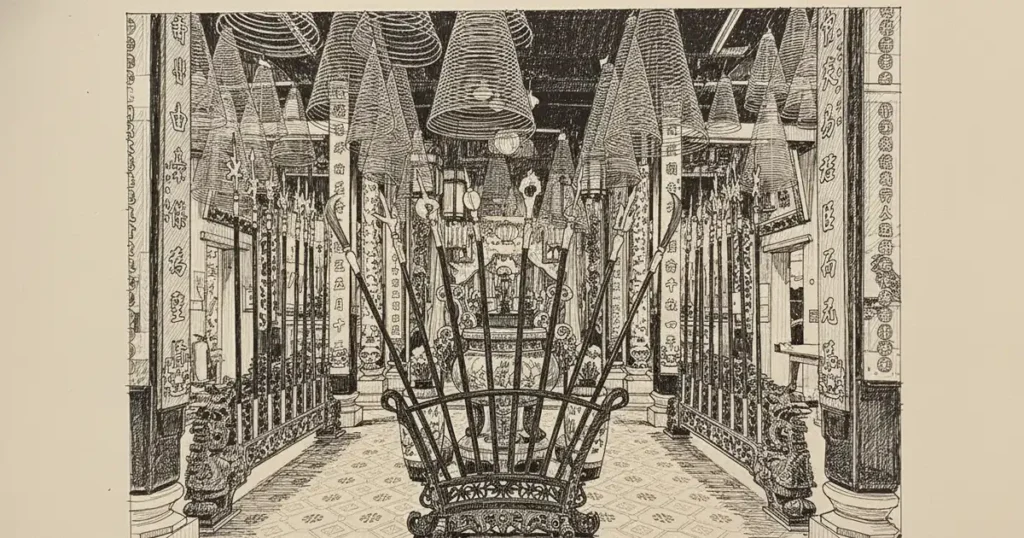
The temple’s architecture displays a traditional Fujian style. It features elaborate woodcarvings on altars, walls, and columns. The roof is decorated with detailed ceramic figurines depicting scenes from Chinese mythology. Inside, large spiral incense coils hang from the ceiling. The main hall contains intricate brass ritual ornaments, antique furniture, and finely crafted wooden lanterns. A life-size statue of the sacred horse of Quan Cong stands to the left of the entrance.

The main deity worshipped at the temple is Quan Cong, a deified Chinese general. The main altar holds a statue of him, surrounded by ornate carvings. Other shrines dedicate space to additional deities. These include Ong Bon, the guardian of happiness and wealth, and Quan The Am Bo Tat, the Goddess of Mercy. The temple also has an altar for the Ngũ Hành Nương Nương, the five goddesses representing the five elements.

The assembly hall occupies a space of nearly 1,000 square meters in the historic Chợ Lớn area. The layout includes a front courtyard, a pre-hall, a central hall, and a main sanctuary. East and west wings flank the central structures. The temple serves as a center for the local community’s spiritual and cultural life. It holds annual festivals celebrating the various deities worshipped within its halls.

Open in Google Maps ↗

184 Đ. Hồng Bàng, Phường 12, Quận 5, Thành phố Hồ Chí Minh, Vietnam

1 insider tip
13

Visit Thien Hau Pagoda, also known as Thien Hau Temple.

Thien Hau Pagoda

Ho Chi Minh City

06:00-17:30 daily

Thien Hau Pagoda is a Chinese-style temple on Nguyễn Trãi Street in District 5, Ho Chi Minh City. The temple honors Thiên Hậu, the Chinese goddess of the sea also known as Mazu. A group of Cantonese immigrants founded the pagoda around the year 1760. It stands as one of the oldest temples established by the city’s Chinese community. The site functions as a center for community and religious life in the Cholon area.

The temple’s architecture follows a traditional Chinese layout resembling the character for ‘nation’. It consists of four connected buildings that surround a central courtyard. This open-air courtyard, or ‘sky well’, allows natural light to enter the halls. It also lets smoke from incense escape. The roof features intricate porcelain dioramas. These small figures depict scenes from 19th-century Chinese life and legends. The structure uses traditional materials like wood and brick, with ornate tile work.

Inside, the main hall contains the central altar dedicated to Thiên Hậu. The main statue of the goddess was carved from a single block of wood. It stands one meter tall. Two other deities, Kim Hoa Nương Nương and Long Mẫu Nương Nương, flank the main statue. Large, conical incense coils hang from the ceilings throughout the temple. Worshippers purchase these coils and attach prayer notes. The pagoda also contains about 400 valuable antiques, including steles, statues, and bronze incense burners.

Thien Hau Pagoda is an active place of worship. Local residents visit daily to pray for health, safety, and prosperity. The government of Vietnam recognized the pagoda as a National Architectural and Artistic Heritage Site in 1993. Its historical and cultural value makes it a significant landmark within Ho Chi Minh City. The temple preserves the spiritual traditions of the Chinese-Vietnamese community.

Open in Google Maps ↗

710 Nguyễn Trãi, Phường 11, Quận 5, Thành phố Hồ Chí Minh, Vietnam

1 insider tip

Qingchill Travels · curator · Thien Hau Pagoda

Experience the bustling atmosphere, especially on a full moon day. People buy and light incense and candles for prayers, with large incense coils burning overhead.

14

Then, explore Hội quán Ôn Lăng - Chùa quan âm, another busy assembly hall.

Hội quán Ôn Lăng – Chùa quan âm

Ho Chi Minh City

06:15-17:00 daily +842838553543

Hội quán Ôn Lăng sits on Lão Tử street in District 5. This site is a Chinese assembly hall and pagoda. The Fujian Chinese community founded it in 1740. Locals know it as Chùa Quan Âm. The name Ôn Lăng refers to Quanzhou prefecture in Fujian province. This structure occupies the historic Cholon area. Vietnam recognized it as a National Architectural and Artistic Monument in 2002.

The building shows typical Fujian architectural style. Tube tiles cover its roof. Green glazed tiles edge the roof. Curved ridges decorate the roof. Colorful ceramic figurines adorn these ridges. They depict historical and legendary scenes. The layout occupies a rectangular plot. It measures about 1,800 square meters. A small front courtyard leads into the main structure. This main structure holds a fore hall, central hall, and main sanctuary. Three adjoining buildings form a U-shape. They surround a central courtyard.

The main hall venerates Thiên Hậu. She is the goddess of the sea. Worshippers pray to her for protection. They seek safety during sea voyages and travels. The temple also features a prominent altar. This altar dedicates itself to Quan Âm. She is the bodhisattva of compassion. Other deities here include Quan Đế and Bao Công. The interior displays many altars. It also has carved wooden panels. Lacquered boards with gold inlay adorn the space. Large, spiraling incense coils hang from the ceiling. Devotees attach prayer papers to them.

Vendors often sell flowers and incense. They also offer other items outside the main entrance. The temple remains an active worship place for the community. Visitors come to pray for health. They seek prosperity and safety. Its religious functions combine with distinct architecture. This makes it a significant cultural site in District 5.

Open in Google Maps ↗

12 Đ. Lão Tử, Phường 11, Quận 5, Thành phố Hồ Chí Minh, Vietnam

1 insider tip
15

Transition to a different corner of Cholon at Luu Xuan Tin Aquarium Street.

Luu Xuan Tin Aquarium Street

Ho Chi Minh City

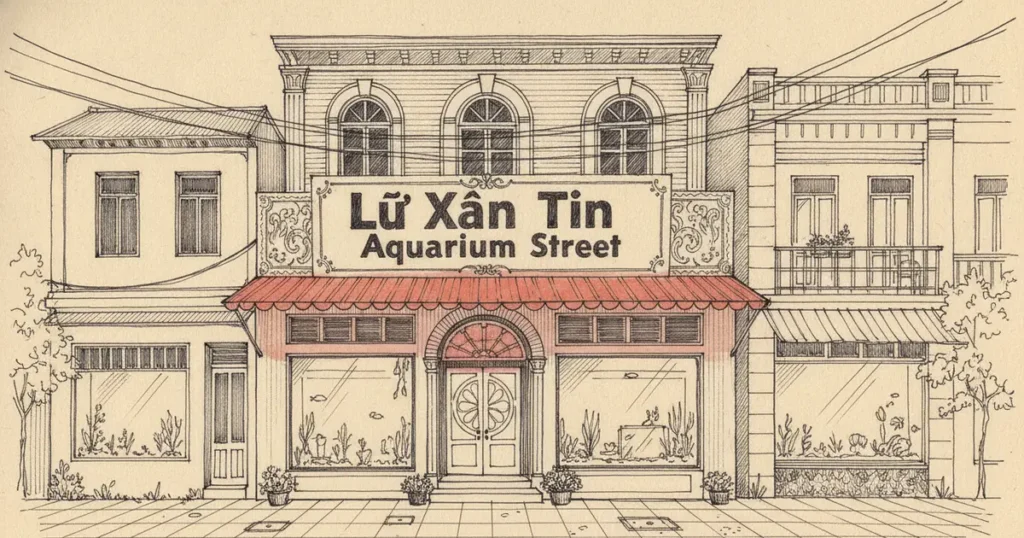
Lưu Xuân Tín Street sits in District 5, Ho Chi Minh City. This street market specializes in ornamental fish and aquarium supplies. The street spans about 500 meters. It hosts dozens of specialized shops. Locals recognize it as one of the city’s oldest aquarium trade centers. The market began organically before 1975. Fish farmers and traders gathered here. They created a central selling point near the busy Chợ Lớn area.

Shops along Lưu Xuân Tín Street sell diverse aquatic life. Fish range from common guppies and betta fish. They also offer valuable koi and flowerhorn fish. Vendors supply many aquatic plants. They also offer shrimp and snails. The street serves retail customers. It also attracts wholesale buyers. These buyers come from Ho Chi Minh City and nearby provinces. Many traders work directly on the pavement. They operate without permanent storefronts.

Businesses offer comprehensive aquarium equipment. They sell accessories beyond live animals. Products include glass tanks and filtration systems. They also have lighting and decorative items. Shoppers find driftwood and stones. This concentration of retailers makes the street a prime destination for hobbyists. Some shops operate during standard hours. A notable wholesale market activates early morning. It often opens from 3:00 AM.

The street features rows of tanks. They line storefronts. The constant sound of water filtration systems fills the air. Blue glows from aquarium lights are distinct features. The high density of shops creates a unique environment. It focuses entirely on the ornamental fish trade. It functions as a key hub for enthusiasts. It also serves professional traders in Vietnam’s aquatics industry.

Open in Google Maps ↗

Đường Lưu Xuân Tín, Phường 10, Quận 5, Thành phố Hồ Chí Minh, Vietnam

1 insider tip
16

For a late morning bite, visit 259 Dim Sum on Hong Bang Street.

259 Dim Sum

Ho Chi Minh City

05:00-11:00 daily

259 Dim Sum is a long-standing street-side dim sum vendor on Dương Tử Giang street in District 5, Ho Chi Minh City. The stall serves a daily selection of fresh, handmade Cantonese breakfast items. The business operates from a simple, open-air setup on the sidewalk. Customers sit at small tables arranged along the street front. The vendor is a well-known local establishment for morning diners.

The menu features classic dim sum dishes. Offerings include steamed shrimp dumplings, or há cảo, and pork dumplings, known as xíu mại. The stall also prepares fried dumplings and braised chicken feet in black bean sauce. Each dish is prepared on-site in steamers and on hot plates visible to patrons. The food reflects traditional Chinese-Vietnamese culinary styles common to the area.

The owner, Lý Hoàng Dung, has operated the stall for more than two decades. She prepares the dumpling fillings and dough each morning before service begins. The stall opens early to cater to the breakfast crowds. It is a family-run operation that maintains a consistent presence in the neighborhood. The pricing structure is simple, with most items sold at a fixed price per plate.

The location on Dương Tử Giang places it within a part of Ho Chi Minh City known for its vibrant street food culture. The area has a significant population of people of Chinese descent. This vendor is a representative example of the district’s traditional breakfast offerings. It attracts a regular clientele of local residents and workers.

Open in Google Maps ↗

259 Dương Tử Giang, Phường 15, Quận 5, Thành phố Hồ Chí Minh, Vietnam

1 insider tip

Qingchill Travels · curator · 259 Dim Sum

This neighborhood favorite is busy in the mornings. Order shrimp dumplings, siu mai, and a bowl of mixed noodle soup.

17

Continue your dim sum experience at Ha Cao & Xiu Mai Dim Sum.

Ha Cao & Xiu Mai Dim Sum

Ho Chi Minh City

06:00-10:00 daily

Ha Cao & Xiu Mai Dim Sum operates a street food stall. It sits on Vĩnh Viễn street in Ho Chi Minh City’s District 10. The stall offers classic Cantonese-style dim sum. Its main items are há cảo and xíu mại. Há cảo are shrimp dumplings. Xíu mại are pork dumplings. The stall steams these fresh on-site. Large bamboo baskets hold the steaming dim sum. A simple cart on the sidewalk serves customers. The stall mostly serves takeaway orders.

The menu lists a small selection of steamed dumplings. The há cảo features a shrimp filling. A thin, translucent wheat starch skin wraps the filling. The xíu mại contains seasoned ground pork. Sometimes it mixes with shrimp. A yellow wonton wrapper holds the filling. The stall typically serves dumplings in small portions. Condiments include soy sauce and chili sauce. Fresh herbs like rau răm also accompany dishes. The stall prepares its offerings for the morning breakfast crowd.

This format defines Saigon’s street food culture. A vendor manages steaming and serving. The setup is mobile. The stall offers no formal customer seating. Locals know the stall by its dishes. It lacks a formal registered name. This small-scale food business is common. It features in the city’s neighborhood culinary landscape. The food carries accessible prices for a daily meal.

This dim sum stall contributes to the Vĩnh Viễn street food scene. The area offers many local eateries and vendors. The stall’s location makes it convenient. Residents in the area stop here often. It represents a traditional Ho Chi Minh City breakfast service. Dishes are prepared quickly. An open-air counter sells the food. Steam from the baskets marks its presence on the street.

Open in Google Maps ↗

157 Vĩnh Viễn, Phường 4, Quận 10, Thành phố Hồ Chí Minh, Vietnam

1 insider tip
18

Conclude your morning at Ann's Cafe, another spot with tiny chairs by the curb.

Ann’s Cafe

Coffee · Ho Chi Minh City

06:30-22:00 daily 0909342233

Ann’s Coffee is a local coffee shop on Dương Tử Giang street in District 11, Ho Chi Minh City. The cafe, also known by its Chinese name 安咖啡, operates within the Cholon area. This neighborhood is the city’s historic and cultural center for the Chinese-Vietnamese community. The shop serves a menu of coffee and other drinks. Its pricing is in the affordable, local range.

The establishment occupies a street-front space. Directory listings describe the interior as spacious and airy. It is a casual venue, categorized as a “quán cà phê bình dân,” or a local-style cafe. The shop provides a simple setting for patrons. Seating is available for individuals and small groups. The cafe is situated on a street known for its activity and numerous food vendors.

Dương Tử Giang street contains many other small businesses. These include food stalls and other local eateries. Ann’s Coffee is part of this active neighborhood fabric. The shop opens early in the morning. It continues to serve guests until late in the evening. This allows it to cater to a wide range of customers throughout the day. The cafe offers both takeaway and on-site consumption.

The coffee shop sits among a dense network of streets in District 11. The area is characterized by its blend of residential and commercial life. Ann’s Coffee serves the local community. It provides a straightforward place for traditional Vietnamese coffee. The venue maintains a consistent presence in a dynamic part of the city.

Open in Google Maps ↗

209 Dương Tử Giang, Phường 4, Quận 11, Thành phố Hồ Chí Minh, Vietnam

1 insider tip