

New this week: 3 bars you won't find on Google Maps →
Landmark

Independence Palace

📍 135 Nam Kỳ Khởi Nghĩa, Phường Bến Thành, Quận 1, Thành phố Hồ Chí Minh, Vietnam

Overview

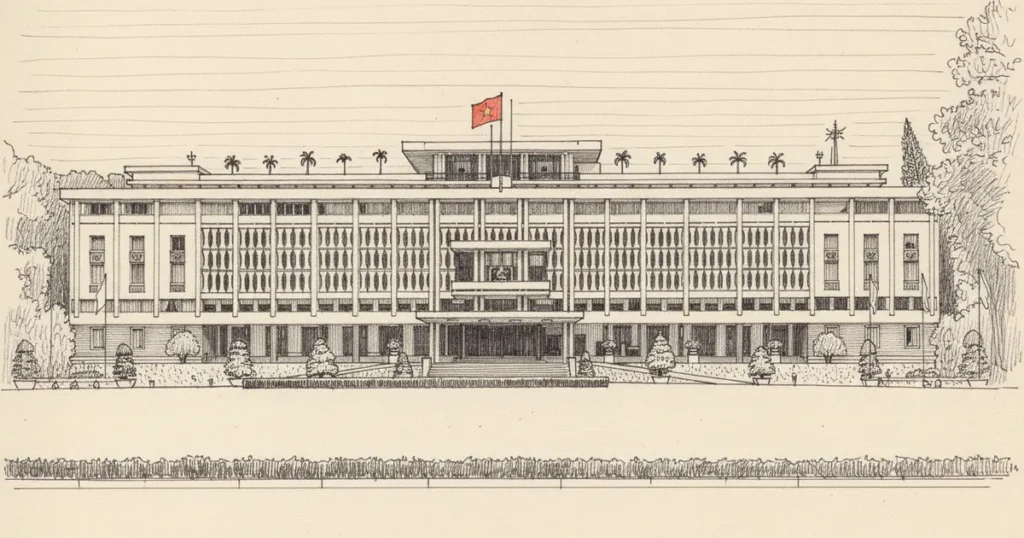
Independence Palace is a historic landmark. It sits on Nam Kỳ Khởi Nghĩa Street in District 1. Locals also call it Reunification Convention Hall. The palace grounds encompass four major streets. These include Nguyễn Thị Minh Khai and Nguyễn Du. It occupies the former site of Norodom Palace. French builders originally constructed that structure.

The current building opened its doors in 1966. Architect Ngô Viết Thụ created its design. He worked after the original palace suffered a bombing in 1962. His vision blends modernist architecture. It also incorporates traditional Eastern philosophy. The palace housed the president of South Vietnam. It served as both a residence and workplace. Presidential reception halls are inside. Government meeting rooms also feature. A basement command bunker networks tunnels. It contains war rooms and vintage communications equipment. A helipad occupies the building’s roof.

The palace holds major historical significance for Vietnam. It marked the end of the Vietnam War. This event occurred on April 30, 1975. North Vietnamese army tanks crashed through its gates. This moment signaled the Fall of Saigon. It brought about the reunification of North and South Vietnam. The palace now displays two original tanks. Visitors find them on the palace lawns. After reunification, the building became Reunification Hall.

Today, Independence Palace functions as a public museum. It also hosts government functions. The building and its rooms remain preserved. They appear as they did in 1975. Vietnam’s government designated it a Special National Monument. The site ranks among Ho Chi Minh City’s prominent historical attractions. It sits near the Notre Dame Cathedral. The Central Post Office is also nearby.

Seen on YouTube

1 insider tip

Questions & Answers

Where is Independence Palace located?

Independence Palace is located at 135 Nam Kỳ Khởi Nghĩa, Phường Bến Thành, Quận 1, Thành phố Hồ Chí Minh, Vietnam, in District 1 of Ho Chi Minh City.

What are the opening hours for Independence Palace?

Independence Palace is open daily from 08:00 to 15:30, allowing visitors to explore this historic landmark.

What is Independence Palace known for?

Independence Palace is known as a historic landmark in Ho Chi Minh City, famous for its role as the former presidential palace of South Vietnam and the site where the Vietnam War officially ended on April 30, 1975.

What historical event took place at Independence Palace?

Independence Palace was the site where North Vietnamese army tanks crashed through its gates on April 30, 1975, marking the Fall of Saigon and the reunification of North and South Vietnam.

What can visitors see inside Independence Palace?

Visitors to Independence Palace can see preserved presidential reception halls, government meeting rooms, a basement command bunker with war rooms, and vintage communications equipment, appearing as they did in 1975.

Are there any tanks displayed at Independence Palace?

Yes, Independence Palace displays two original tanks on its lawns, commemorating the historic moment they crashed through its gates in 1975.

Who designed the current Independence Palace building?

The current Independence Palace building was designed by architect Ngô Viết Thụ, who blended modernist architecture with traditional Eastern philosophy.

What is the phone number for Independence Palace?

You can contact Independence Palace by phone at 028 3822 3652 for inquiries.

Is Independence Palace near other attractions in Ho Chi Minh City?

Yes, Independence Palace is situated near other prominent historical attractions in Ho Chi Minh City, including the Notre Dame Cathedral and the Central Post Office.

What was Independence Palace called after reunification?

After the reunification of Vietnam, Independence Palace became known as Reunification Hall, although it is still widely referred to by its original name.