

A proper travel route planner has three distinct jobs to perform when you want to explore on foot. It must choose stops that sit close to each other, put them in a sensible order, and provide turn-by-turn directions. Do this once you step outside. Most applications excel at the final task while ignoring the first two entirely. They can navigate any street you name. Yet they leave you to guess which sights actually belong on the same afternoon walk. Local guides bridge that gap by grouping destinations by real walking distance rather than arbitrary map coordinates.
How to Plan a Walking Route From Any Hotel
Planning a route in an unfamiliar city becomes straightforward when you follow a repeatable method. You can build a workable half-day excursion using a few simple constraints. These keep you out of traffic jams and midday heat.
- Anchor your route at your hotel so you always know where you begin and end.
- Set a strict time budget of three to four hours to keep the pace relaxed.
- Pick one primary sight to anchor the middle of your walk.
- Add only secondary stops that sit within a ten to fifteen minute walk of each other.
- Loop your path back toward your starting point instead of walking in a straight line.
- Plan around local weather patterns, such as sudden afternoon rain, and check operating hours beforehand.
Comparing Popular Route Planners
Different applications serve different moments of a journey. Google Maps works exceptionally well for live navigation and for saving custom lists of pins. But it requires you to know where you want to go before you build a route. Trip itinerary planner tools manage complex multi-day schedules across multiple cities. That makes them cumbersome for a simple afternoon stroll from your lobby. Route plotter tools focus heavily on hiking trails and outdoor elevation profiles rather than dense urban streets. PinGuide handles the local discovery phase by tying walks directly to your hotel. However, it covers only Ho Chi Minh City, relies on manual ordering rather than automated route optimization, and hands off to Google Maps for the final turn-by-turn directions.
Why District 1 Works Well for Walking
Saigon packs a remarkable concentration of colonial landmarks, grand boulevards, and markets into a compact area. Many of the city’s finest sights sit within a short walk of the major District 1 hotels. That makes a hotel-based route entirely practical. Still, the environment demands respect. The midday heat can be punishing, the wet season brings sudden downpours, and busy sidewalks often overflow with parked motorbikes. Crossing traffic requires a steady pace and deliberate intent rather than sudden hesitation.
Step by Step: Planning a Route From the Park Hyatt
We can test this method on a real afternoon walk starting from Lam Son Square. Here is how you build a route using PinGuide’s tools.
First, open the hotel-anchored guide for the Park Hyatt Saigon to see nearby sights grouped by real walking distance. Next, pick the Ho Chi Minh City Opera House right next door as your first stop, open its place page, and use the nearby places feature to find what sits close by. This includes Nguyen Hue Walking Street and the People’s Committee building. Keep chaining your stops forward using the same tool to reach the Saigon Central Post Office, Notre Dame Cathedral, and Ho Chi Minh City Book Street. Continue down to Independence Palace and Ben Thanh Market. Tap save on each location as you go, then open the interactive map. Verify that your pins form a sensible loop. Finally, tap any pin to launch Google Maps walking directions for that specific leg of the journey.
Park Hyatt Saigon
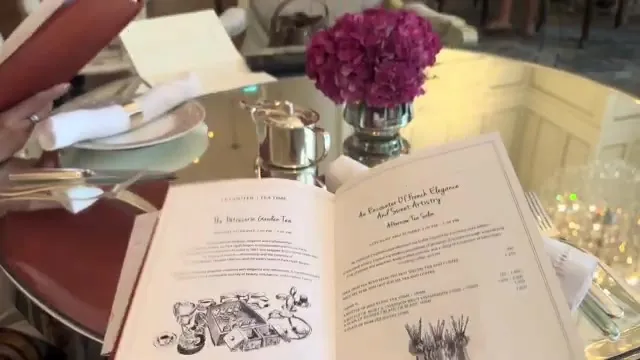
Set directly on Lam Son Square, this luxury establishment faces the municipal theatre across a bustling stretch of District 1. Opened in 2005, the property channels French colonial design through its 245 guestrooms and suites. The building occupies the former site of the historical Brinks Hotel. Gastronomy remains a notable focus here. Square One serves Vietnamese and French plates with Michelin recognition, while Opera offers trattoria-style Italian dining. The 2 Lam Son bar pours cocktails, and the Pastry Boutique handles fresh baked goods. Meanwhile, Park Lounge hosts an afternoon tea featuring assorted sweets and premium teas. Guests can also visit Xuan Spa, use the third-floor fitness center, or swim in the outdoor 20-meter pool.
Ho Chi Minh City Opera House
Also known as the Municipal Theatre of Ho Chi Minh City, this grand venue has anchored Lam Son Square since January 1900. Eugène Ferret designed the building under the French Third Republic, borrowing stylistic cues from the Petit Palais in Paris. The elevated stone structure features intricate reliefs and stone-carved statues that were crafted from materials shipped directly from France. Inside, the auditorium is shielded from street noise by its unique positioning. Over the decades, the building has shifted roles, even serving as the Lower House of the National Assembly from 1955 to 1975 before returning to its original cultural purpose.
Nguyen Hue Walking Street
Stretching roughly 670 meters toward the Saigon River, this broad pedestrian boulevard replaced the old Charner Canal after French administrators filled the waterway in 1887. The paved square plays host to public celebrations, street performances, and massive floral displays during the annual Lunar New Year. Flanked by commercial towers, hotels, and the famed Cafe Apartment building at number 42, the corridor draws large crowds of evening strollers. Fountains and public seating line the central path, creating a wide-open plaza beneath the city skyline.
People’s Committee of Ho Chi Minh City
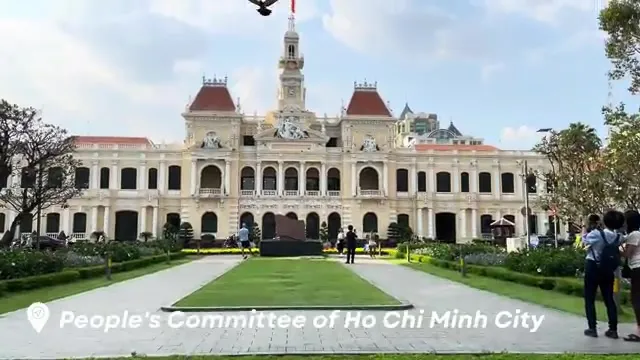
Guarding the northwestern terminus of the pedestrian boulevard, this administrative palace displays a striking pastel yellow and white facade. Paul Gardès designed the structure between 1898 and 1909, channeling Parisian city halls with a distinct blend of Renaissance Revival and Beaux-Arts details. A central clock tower and ornate sculptural work define the exterior. Because the building functions daily as the active headquarters for the city government, tourists cannot wander freely through the interior halls, though the illuminated facade draws steady crowds after sunset.
Saigon Central Post Office
Constructed between 1886 and 1891, this architectural landmark blends Gothic, Renaissance, and French colonial sensibilities across a bright yellow facade with green shutters. The grand interior recalls a 19th-century railway terminal, complete with a high vaulted ironwork ceiling and patterned tile floors. Visitors still queue beneath a massive portrait of Ho Chi Minh to mail letters from original wooden telephone booths. Two vast, hand-painted maps adorn the side walls, detailing historic telegraph lines and regional geography from a bygone era of empire.
Notre Dame Cathedral of Saigon
Standing opposite the central post office, this red-brick basilica was designed by architect J. Bourard and opened in April 1880. All original building materials arrived from France, including the naturally weathering Marseille bricks that form the exterior walls. Twin bell towers, added by architect Gardes in 1895, lift the structure to a height of 60.5 meters. A granite statue of Our Lady of Peace anchors the front square. While ongoing renovations currently bar general tourists from entering, the cathedral remains an active house of worship holding daily mass.
Ho Chi Minh City Book Street
Shaded by mature trees along Nguyen Van Binh Street, this 140-meter pedestrian corridor gathers more than 20 independent book stalls in an open-air literary hub. Major local publishers like Kim Dong and Nha Nam operate small shops here, offering diverse Vietnamese titles alongside select foreign language editions. Wooden benches and small cafes provide quiet spots for reading away from the city traffic. The lane frequently hosts cultural gatherings, including public author signings and open-air book launches.
Independence Palace
Also known as Reunification Hall, this sprawling modernist compound served as the presidential residence and workplace during the Vietnam War. Architect Ngo Viet Thu designed the current structure after a 1962 bombing, weaving together contemporary architecture and traditional Eastern philosophy. Visitors can explore preserved reception rooms, government meeting halls, and a subterranean network of command bunkers housing vintage communications gear. The site holds immense historical weight as the exact spot where North Vietnamese tanks crashed through the gates on April 30, 1975.
Ben Thanh Market
Recognizable by its iconic clock tower, this sprawling 13,000-square-meter marketplace has anchored a busy District 1 intersection since 1914. Nearly 1,500 stalls occupy the interior grid, separated into distinct zones for textiles, traditional garments, crafts, and regional spices. A dedicated food hall serves hot local dishes throughout the day. When the main building closes its doors at dusk, a lively night market spills onto the surrounding streets to trade outdoors until late.
The Sample Half-Day Route
Heading out early in the morning or late in the afternoon helps you avoid the harshest heat. Here is how the finished route unfolds across District 1. Begin at the municipal theatre on Lam Son Square, where French colonial architecture sets the tone. Admire the stone-carved facade before walking down toward the boulevard. Step onto the broad pedestrian promenade of Nguyen Hue Walking Street. Watch the city life unfold between the grand hotels and cafes. At the top of the boulevard stands the pastel yellow People’s Committee headquarters. Pause in the park space outside to view the grand architectural monument. Continue north toward the historic post office, a grand 19th-century communications hub where you can still send a postcard beneath vaulted iron ceilings. Directly across the square stands the red-brick cathedral. While interior access is currently restricted due to ongoing renovations, the exterior and surrounding square remain essential stops on any architecture walk. Slip down the shaded pedestrian lane of Book Street next door to browse independent stalls and shaded reading benches. Walk onward to the historic presidential palace, keeping in mind its operating hours. Explore the vintage war rooms and command bunkers. Conclude your walk at the sprawling central market to browse textile stalls and local spices. Check opening hours before you head out.
Share Your Route or Keep It on Your Phone
Once you finish tapping save on your chosen stops, you can publish your selections as a shareable list microsite. This generates a private link that opens directly on a map and can be pinned to your phone home screen for easy reference. That proves especially handy when you want to send the route to a travel partner before heading out. Ready-made itineraries by theme are coming soon to help you plan further.
Tips to Make Your Walking Route Work
- Carry a bottle of water to stay hydrated through the humid afternoon heat.
- Keep a backup indoor stop in mind for sudden rain showers.
- Check specific opening hours for historic sites before you start walking.
- Allow time for coffee breaks at local cafes along the way.
- Use a taxi or rideshare to skip any particularly long or exposed stretches of asphalt.
- Do not overpack your schedule with too many stops in a single afternoon.
Open PinGuide’s hotel-anchored guide for your District 1 hotel, tap Save on the places you want to walk to, and open the interactive map. See them in walking order. It is free and needs no account.
Frequently asked questions
Are the walking stops in District 1 close enough to walk between without transport?
Yes, major landmarks like the Opera House, post office, cathedral, and book street sit within a ten to fifteen minute walk of each other.
What time of day is best to start a walking route in District 1?
Starting early in the morning or late in the afternoon helps avoid the harshest midday heat and humidity.
Do I need to create an account to save places or view maps on PinGuide?
No account is required to use PinGuide’s hotel-anchored guides, save places, or view the interactive map.
Is interior access currently available at the Notre Dame Cathedral of Saigon?
No, the cathedral is closed to tourists for ongoing renovation, though it remains open for daily mass services.
Can I enter the People’s Committee building as a tourist?
No, the interior does not offer public access for tourism because it functions as an active government office.
See these places on video
9 of these places appear in travel videos. Each clip starts at the moment the place is on screen.
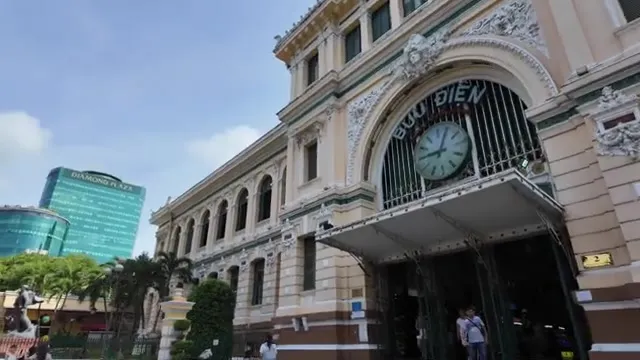 9:45

Saigon Central Post Office
SAIGON VLOG | The Cafe Apartment, Streetwear Shopping, Local Food, & MORE!
▶ Watch from 9:45 · in 17 videos
Found by Liann
 5:51

Ben Thanh Market
ho chi minh city vlog 🇻🇳 | a few days in saigon
▶ Watch from 5:51 · in 15 videos
Found by Esther Loh
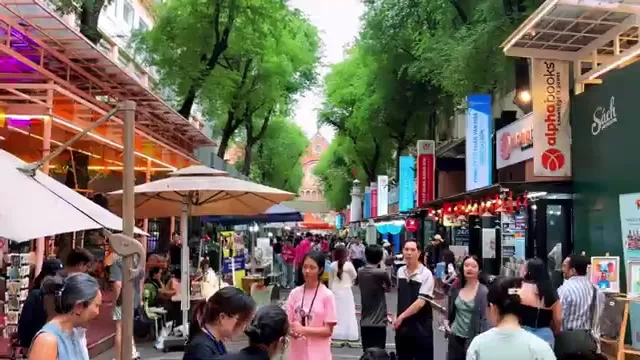 9:00
Ho Chi Minh City Book Street
ho chi minh city vlog 🇻🇳 | a few days in saigon
▶ Watch from 9:00 · in 11 videos
Found by Esther Loh
 9:40

Notre Dame Cathedral of Saigon
a weekend away in ho chi minh city vietnam | saigon itinerary, local eats, cafes | travel vlog
▶ Watch from 9:40 · in 9 videos
Found by Wander Notes
 14:50

Independence Palace
4 Days in Ho Chi Minh City 🇻🇳 | Cafes, Best Food, Shopping, Museums & Vietnam's National Day
▶ Watch from 14:50 · in 6 videos
Found by Delton John
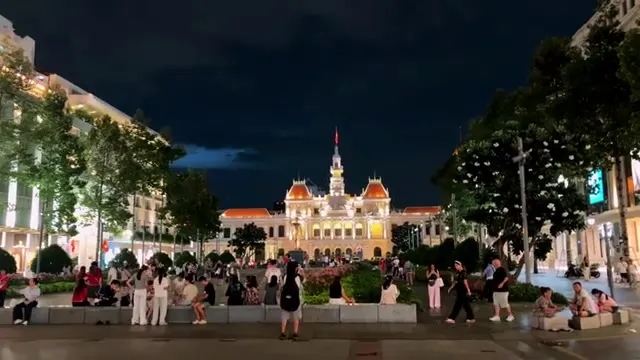 10:13
Nguyen Hue Walking Street
ho chi minh city vlog 🇻🇳 | a few days in saigon
▶ Watch from 10:13 · in 6 videos
Found by Esther Loh
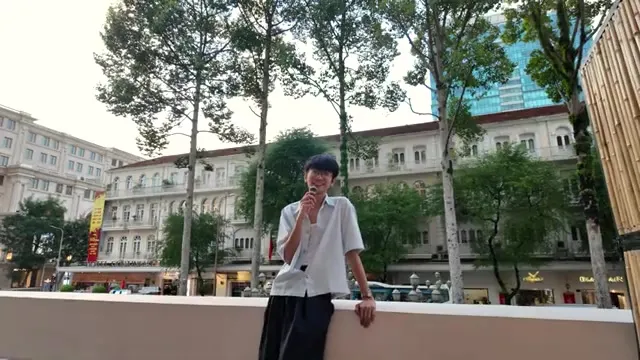 18:06

Ho Chi Minh City Opera House
Ho Chi Minh Cafe Apartment, Opera House, Shopping | Vietnam Solo Travel Vlog
▶ Watch from 18:06 · in 2 videos
Found by Kahlil Alcala
 7:03

People’s Committee of Ho Chi Minh City
1 DAY IN HO CHI MINH CITY | Best Things To Do In Saigon | Vietnam Travel Vlog 4K
▶ Watch from 7:03 · in 2 videos
Found by NALBA TRAVELS
 16:46

Park Hyatt Saigon
Ho Chi Minh City Travel Guide 🇻🇳 Part 2 | Vintage Shopping, Chinatown, Park Hyatt & Pizza 4P’s
Found by Vadhel Vergara