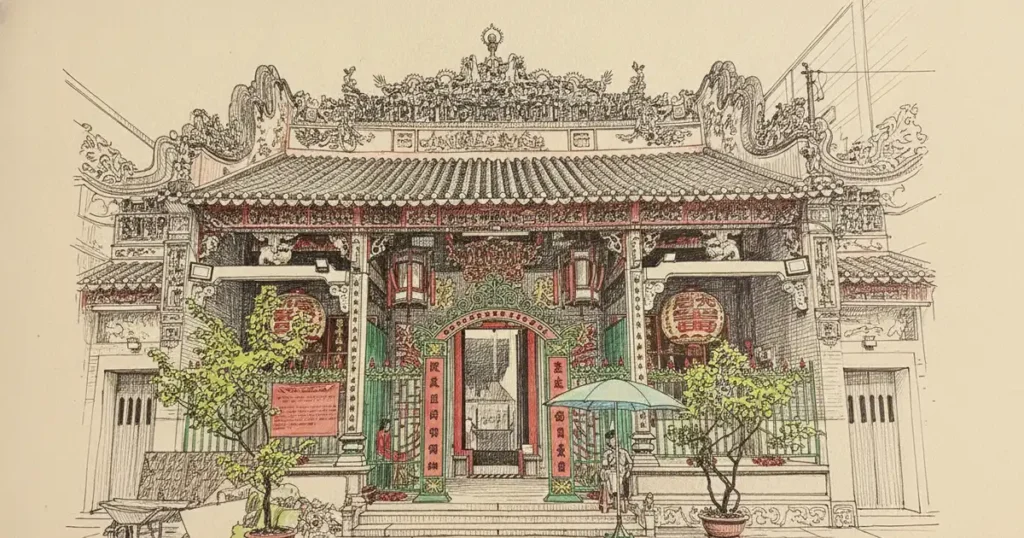
Phước An Hội Quán, also known as Chùa Minh Hương, is a Cantonese assembly hall and Taoist temple on Hồng Bàng Street in District 5, Ho Chi Minh City. The Minh Hương Chinese community, with origins from Guangdong, Fujian, and Zhejiang provinces, built the temple in 1902. It stands on the former site of the An Hòa shrine, which dated to 1865. The structure is a recognized artistic and architectural monument of the city, a status it received in 2009.
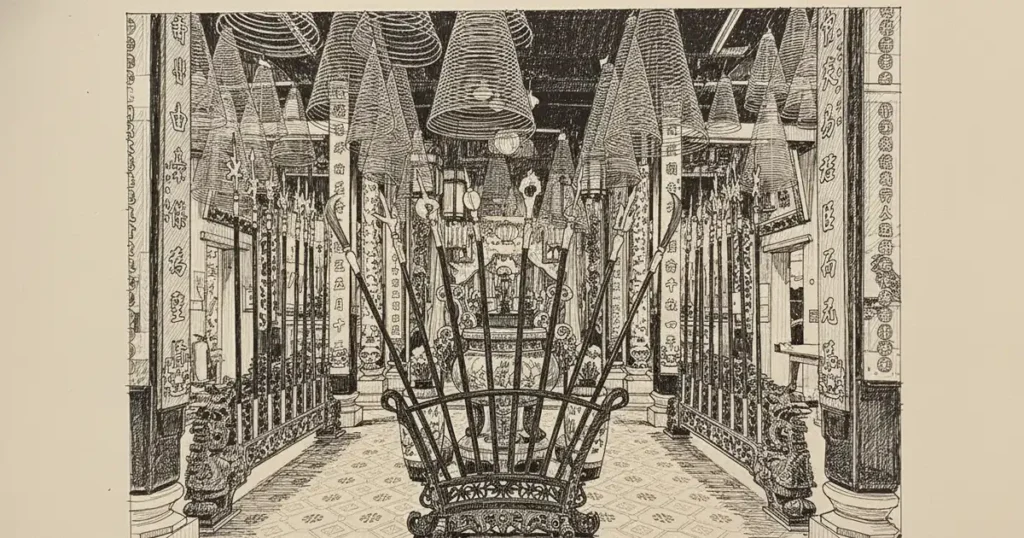
The temple’s architecture displays a traditional Fujian style. It features elaborate woodcarvings on altars, walls, and columns. The roof is decorated with detailed ceramic figurines depicting scenes from Chinese mythology. Inside, large spiral incense coils hang from the ceiling. The main hall contains intricate brass ritual ornaments, antique furniture, and finely crafted wooden lanterns. A life-size statue of the sacred horse of Quan Cong stands to the left of the entrance.
The main deity worshipped at the temple is Quan Cong, a deified Chinese general. The main altar holds a statue of him, surrounded by ornate carvings. Other shrines dedicate space to additional deities. These include Ong Bon, the guardian of happiness and wealth, and Quan The Am Bo Tat, the Goddess of Mercy. The temple also has an altar for the Ngũ Hành Nương Nương, the five goddesses representing the five elements.
The assembly hall occupies a space of nearly 1,000 square meters in the historic Chợ Lớn area. The layout includes a front courtyard, a pre-hall, a central hall, and a main sanctuary. East and west wings flank the central structures. The temple serves as a center for the local community’s spiritual and cultural life. It holds annual festivals celebrating the various deities worshipped within its halls.