Tip from Qingchill Travels

Observe vendors preparing for the day; some open as early as 6 AM for wholesale buyers. Others set up later for regular customers.


57A Tháp Mười, Phường 2, Quận 6, Thành phố Hồ Chí Minh, Vietnam
Open in Google Maps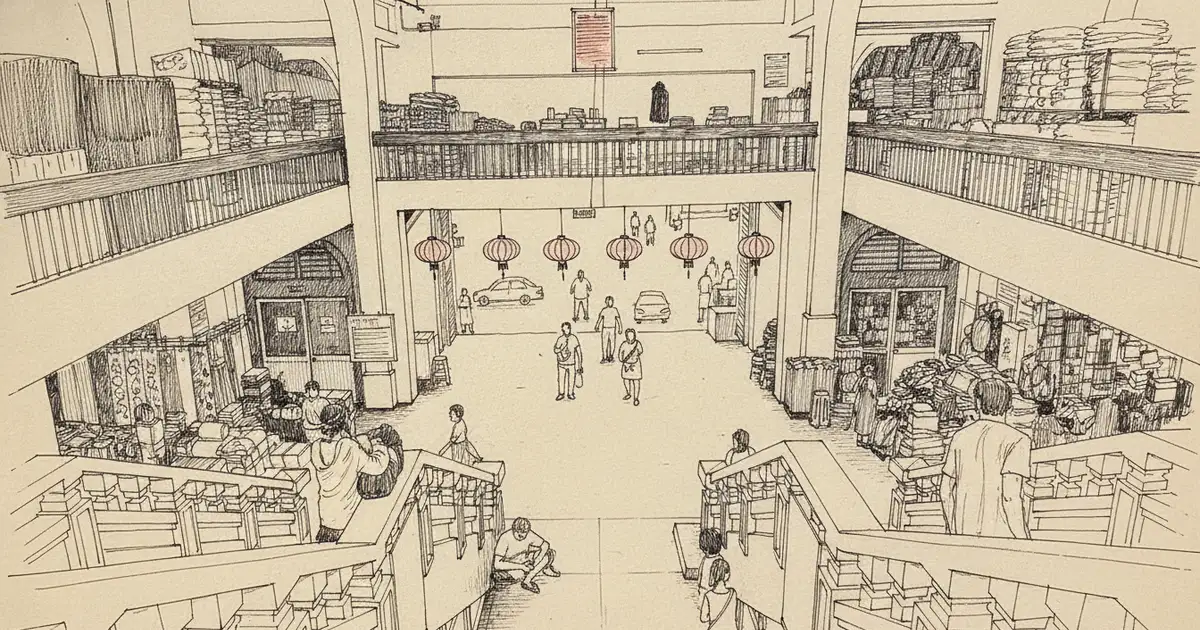
Chợ Bình Tây is a wholesale market on Tháp Mười street in District 6, Ho Chi Minh City. The market is a central landmark of Cholon, the city’s historic Chinatown. A Chinese businessman named Quách Đàm funded the market’s construction. The building work began in 1928 and finished in 1930. The market primarily serves wholesale traders and local residents.
The building’s design blends French colonial engineering with traditional Chinese architectural styles. It features a prominent clock tower above the main entrance. A large, open-air courtyard sits at the center of the market complex. This courtyard contains a memorial bust honoring the market’s founder, Quách Đàm. The structure has a symmetrical layout with high ceilings and wide corridors. The market has twelve entrance gates, both main and auxiliary.
Bình Tây Market contains more than 2,300 stalls spread across two levels. Vendors sell a wide variety of goods, with a focus on bulk items. Key product categories include dried seafood, spices, and preserved foods. Stalls also offer textiles, kitchenware, and household goods. Other sections feature traditional Chinese medicinal herbs, nuts, and confectionery. The market is a major distribution hub for goods throughout southern Vietnam.
The market building is recognized as an architectural and artistic monument. It occupies a large city block, surrounded by four streets. The area around the market also features numerous food stalls. These vendors sell local Vietnamese and Chinese-Vietnamese dishes. The market is a significant commercial and cultural center for the local community.
Reviewers frequently highlight Chợ Bình Tây for its historic architecture, authentic trading atmosphere, and significantly lower wholesale and retail prices compared to central tourist markets. Visitors appreciate the vast range of goods available, spanning dried foods, spices, clothing, and housewares, along with the calm central courtyard and onsite food options. While some note that the narrow aisles can feel cramped and overwhelmingly busy during peak morning hours, the vendor culture is widely described as unpushy and welcoming.
Chợ Bình Tây (Bình Tây Market) is rated 4.4 out of 5 on Google from 6,406 reviews. Summary written by PinGuide from Google reviews, figures as of 19 Sep 2026. Read on Google ↗
Observe vendors preparing for the day; some open as early as 6 AM for wholesale buyers. Others set up later for regular customers.

Plan your visit to Bình Tây Market for before 5 PM, as it closes in the late afternoon. The market is quiet in the evenings.

Navigate this massive wholesale trading center. It has over 2,700 stalls. The market sells everything from herbs to electronics.
Sources: Wikipedia ↗ · Viendongonline ↗ · Ngaynay ↗
57A Tháp Mười, Phường 2, Quận 6, Thành phố Hồ Chí Minh, Vietnam
Chợ Bình Tây is located at 57A Tháp Mười, Phường 2, Quận 6, Thành phố Hồ Chí Minh, Vietnam. It is a central landmark in Cholon, Ho Chi Minh City's historic Chinatown.
Chợ Bình Tây is open daily from 06:00 to 18:00.
Chợ Bình Tây primarily sells a wide variety of wholesale and bulk items, including dried seafood, spices, preserved foods, textiles, kitchenware, household goods, traditional Chinese medicinal herbs, nuts, and confectionery.
Chợ Bình Tây is a historically significant wholesale market funded by Chinese businessman Quách Đàm, with construction starting in 1928 and finishing in 1930. The market building is recognized as an architectural and artistic monument blending French colonial engineering with traditional Chinese styles.
Yes, the area around Chợ Bình Tây features numerous food stalls selling local Vietnamese and Chinese-Vietnamese dishes.
Quách Đàm was a Chinese businessman who funded the construction of Chợ Bình Tây, which began in 1928 and finished in 1930. A memorial bust honoring him is located in the market's central courtyard.
Chợ Bình Tây's architecture blends French colonial engineering with traditional Chinese architectural styles, featuring a prominent clock tower above the main entrance and a large, open-air courtyard at its center.
Chợ Bình Tây contains more than 2,300 stalls spread across two levels.
Chợ Bình Tây primarily serves as a wholesale market for traders and local residents, functioning as a major distribution hub for goods throughout southern Vietnam.
Yes, you can contact Chợ Bình Tây by phone at +84 28 3857 1512.