

Most visitors land in Ho Chi Minh City with one sandwich on their list: banh mi. That is the right place to start, but the Saigon sandwich story is bigger. The city bakes more bread, in more styles, than anywhere else in Southeast Asia, and its sandwich culture runs from sidewalk baguettes filled with pâté to sizzling pan breakfasts to New York style bagels in District 1.
This guide covers where the tradition came from, the banh mi styles worth knowing, the best Vietnamese and Western sandwich spots, and one delivery option that handles both.
In this guide
- A Short History of Bread in Vietnam
- Types of Banh Mi in Saigon
- Best Banh Mi Spots in Saigon
- Western Sandwiches in Saigon
- Best Delivery Option
- More Saigon Sandwich Spots
- Saigon Sandwich FAQ
A Short History of Bread in Vietnam
French colonial rule brought wheat bread to Vietnam in the second half of the 19th century, after French forces took Saigon in 1859. Baguettes first served French residents, and the Vietnamese word for them, bánh mì, simply means “wheat bread.”
Local bakers reshaped the loaf for the tropical climate. The Vietnamese baguette has a thin, crackling crust and an airy, light crumb, which makes it better suited to stuffing than the denser French original.
The filled banh mi most people know took shape in Saigon in the 1950s. After 1954, migrants from northern Vietnam arrived in the south, and bakeries such as Hòa Mã, opened in 1958, began selling bread filled with cold cuts, pâté and pickled vegetables as a quick meal.
Wheat bread never became a staple in most of Southeast Asia, where rice and noodles dominate every meal. In Vietnam, bread became daily food, sold from street carts at dawn and eaten at breakfast, lunch and late night. That long relationship with bread is why the Saigon sandwich is a category of its own, not a single dish.
In 2011, the Oxford English Dictionary added “banh mi” as an entry, a sign of how far the Saigon sandwich had traveled.
Types of Banh Mi in Saigon
- Bánh mì thịt: the classic cold cut sandwich with pâté, butter or mayonnaise, Vietnamese ham, pickled carrot and daikon, cucumber, chili and cilantro.
- Bánh mì chảo: a pan breakfast of fried eggs, pâté, sausage and meatballs served sizzling in a small iron skillet, with bread on the side for dipping.
- Bánh mì xíu mại: bread paired with pork meatballs in tomato sauce.
- Bánh mì heo quay: roast pork belly with crackling skin.
- Bánh mì ốp la: fried egg banh mi, a common street breakfast.
- Bánh mì que: a thin, crisp stick baguette with pâté and chili, originally from Hải Phòng.
- Bánh mì chả cá: fish cake banh mi, popular along the coast.
Best Banh Mi Spots in Saigon
Bánh Mì Huỳnh Hoa
Bánh Mì Huỳnh Hoa is a banh mi shop on Lê Thị Riêng, District 1, Ho Chi Minh City, known for one of the most heavily filled sandwiches in the city. Each loaf holds thick layers of pâté, several kinds of cold cuts and pork floss. The shop opens in the afternoon and draws long queues of locals, delivery riders and tourists. Huỳnh Hoa is widely regarded as the benchmark for the classic Saigon sandwich.
Bánh Mì Hồng Hoa
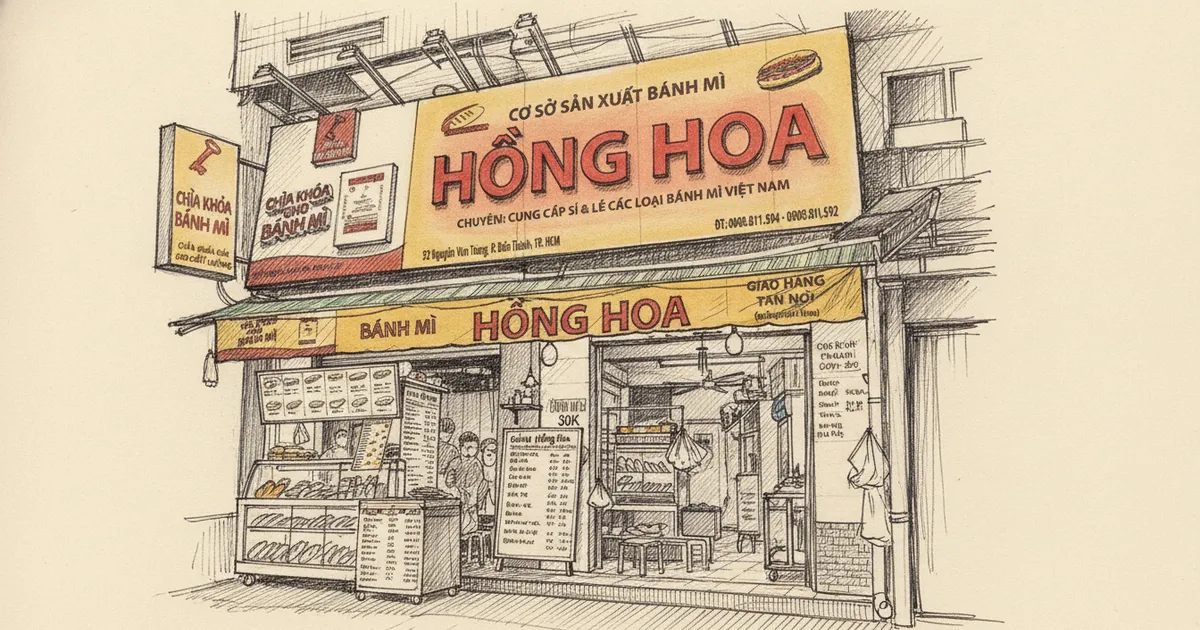
Bánh Mì Hồng Hoa is a family banh mi shop on [street], [District], Ho Chi Minh City, serving the traditional bánh mì thịt. The bread is baked for a thin, crisp crust, and the fillings follow the classic Saigon balance of pâté, cold cuts and pickles. Hồng Hoa is a strong alternative for travelers who want a traditional banh mi without the Huỳnh Hoa queue.
Bánh Mì Bà Huynh (Madam Win)
Bánh Mì Bà Huynh, also called Madam Win, is a banh mi spot on [street], [District], Ho Chi Minh City. [Add signature filling and one detail that sets it apart.]
Bánh Mì Chảo Dì Nụ
Bánh Mì Chảo Dì Nụ is a bánh mì chảo restaurant on [street], [District], Ho Chi Minh City, serving the Saigon pan breakfast of eggs, pâté and meats in a hot iron skillet. The dish is eaten with a knife, fork and torn pieces of baguette. Bánh mì chảo is a morning meal in Saigon, and most pan banh mi shops are busiest before 10am.
Bánh Mì Chảo Huế Dưới Cổ Lễ
Bánh Mì Chảo Huế Dưới Cổ Lễ is a bánh mì chảo spot on [street], [District], Ho Chi Minh City. [Add what the Huế influence means on the plate, e.g. spice level or specific toppings.]
Western Sandwiches in Saigon
The Saigon sandwich scene also includes European bakeries and deli style counters, especially in District 1. These spots serve expats, business travelers and anyone who wants sourdough, bagels or a club sandwich after a week of banh mi.
Antico Fornaio at Union Square
Antico Fornaio is an Italian bakery and café inside Union Square on Đồng Khởi, District 1, Ho Chi Minh City. The menu covers focaccia and panini style sandwiches alongside Italian pastries and coffee. The Union Square location places it steps from Nguyễn Huệ Walking Street and the Opera House.
Bagel Brothers
Bagel Brothers is a bagel shop on [street], [District], Ho Chi Minh City, serving boiled and baked bagels with cream cheese, deli meats and breakfast fillings. It is one of the few places in Saigon focused specifically on North American style bagels.
Barterls at Sonatus
Barterls is a café and sandwich spot inside the Sonatus building on Lê Thánh Tôn, District 1, Ho Chi Minh City. [Add signature sandwich and bread style.] Its office tower location makes it a lunch stop for the business district around Lê Thánh Tôn and Hai Bà Trưng.
Best Delivery Option: Banh Mi and Western Sandwiches
Central Parc Banh Mi
Central Parc Banh Mi is a delivery only sandwich kitchen in Ho Chi Minh City that serves both Vietnamese banh mi and Western style sandwiches. It is the only delivery option in this guide that covers both sides of the Saigon sandwich menu in a single order, which makes it practical for hotel rooms, offices and mixed groups.
For more options delivered to the door, see the full guide to the top sandwich delivery places in Ho Chi Minh City.
More Saigon Sandwich Spots
This list focuses on the essentials. The complete roundup of the top sandwich spots in Ho Chi Minh City covers more bakeries, banh mi stalls and cafés across the city.
Saigon Sandwich FAQ
What is a Saigon sandwich?
A Saigon sandwich usually refers to banh mi, the Vietnamese baguette sandwich that took its modern form in Saigon in the 1950s. In Ho Chi Minh City, the term also covers bánh mì chảo, stick banh mi and Western sandwiches from the city’s bakeries.
Where is the most famous banh mi in Saigon?
Bánh Mì Huỳnh Hoa on Lê Thị Riêng, District 1, is the most widely known banh mi shop in Ho Chi Minh City.
When do locals eat banh mi?
Banh mi is eaten all day in Saigon, but it is most popular as a breakfast food. Bánh mì chảo is almost always a morning dish.
Why is bread so common in Vietnam?
French colonists introduced wheat bread in the 19th century, and Vietnamese bakers adapted it into a lighter, crisper baguette that became everyday street food.