

Tip from Trip Moito
Experience the incense-filled atmosphere. Locals pray to Guanyin, the goddess of mercy. The temple blends Buddhist and Taoist practices.
📍 12 Lão Tử, Phường 11, Quận 5, Thành phố Hồ Chí Minh, Vietnam
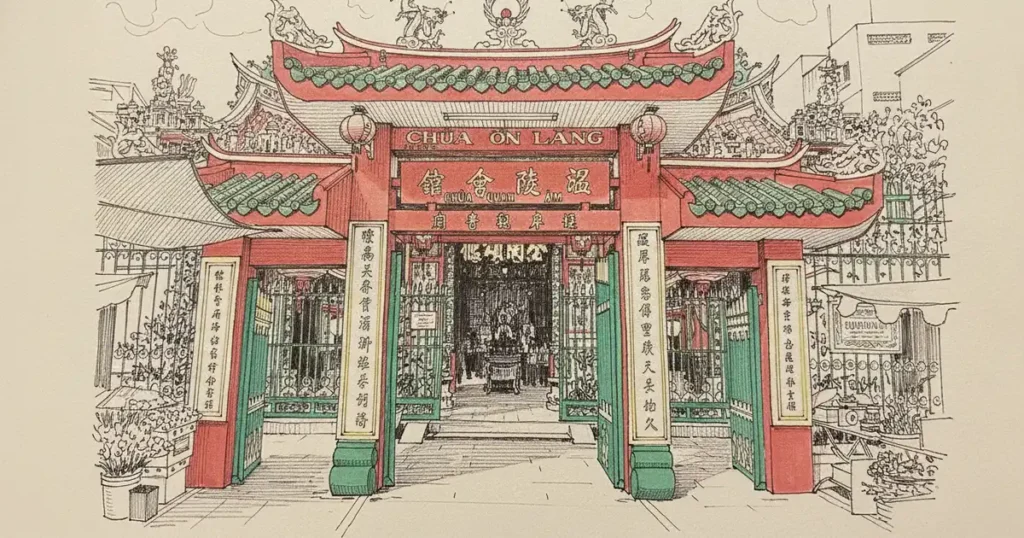
Quan Âm Pagoda sits on Lão Tử Street in Ho Chi Minh City’s District 5. This Chinese-style Buddhist temple is also Ôn Lăng Assembly Hall. It makes its home in the historic Cholon area. The temple primarily venerates Quan Âm. This bodhisattva of compassion is known as Guanyin in Chinese. Chinese immigrants from Fujian province established the pagoda. Its architecture reflects traditional Fujianese style. The complex features curved rooflines. Detailed ceramic fragments decorate them. These fragments depict scenes from Chinese folklore. The interior contains intricate carvings, statues, and altars. The layout creates a space for worship and community gathering.
The temple’s spiritual life blends multiple traditions. It incorporates Pure Land Buddhism. This focuses on Amitabha Buddha. Taoist deities and folk figures are also venerated in the halls. Worshippers pray to Thien Hau. She is the goddess of the sea. Thien Hau is a key figure for seafaring communities. This syncretism reflects the layered belief systems. They belong to the Chinese-Vietnamese community in Cholon. The air inside often smells of incense. Visitors and devotees light incense coils and sticks as offerings.
The pagoda serves as a significant cultural and religious center. It supports the local community. It hosts daily rituals. Major festivals occur throughout the lunar calendar. The structure features vibrant colors. These include red, gold, and green. Ornate decorations include lacquered panels. Carved wooden lotus flowers and traditional lanterns adorn the space. The temple has undergone several restorations. This preserved its historic character over the centuries. Vietnam recognizes it as a National Architectural Heritage Site. The space offers a quiet contrast. It stands apart from the busy Chinatown district streets.
Quan Âm Pagoda is located at 12 Lão Tử, Phường 11, Quận 5, Thành phố Hồ Chí Minh, Vietnam, within the historic Cholon area of District 5.
Quan Âm Pagoda is open daily from 06:15 to 17:00, allowing visitors to experience its spiritual and architectural heritage throughout the day.
Quan Âm Pagoda, also known as Ôn Lăng Assembly Hall, is primarily known as a Chinese-style Buddhist temple venerating Quan Âm (Guanyin), the bodhisattva of compassion, and for its Fujianese architectural style in Ho Chi Minh City's Cholon district.
Quan Âm Pagoda exhibits traditional Fujianese architectural style, characterized by curved rooflines decorated with detailed ceramic fragments depicting scenes from Chinese folklore.
Quan Âm Pagoda primarily venerates Quan Âm, the bodhisattva of compassion, but also incorporates veneration of Pure Land Buddhism's Amitabha Buddha, Taoist deities, folk figures, and Thien Hau, the goddess of the sea.
Yes, Quan Âm Pagoda serves as a significant cultural and religious center for the Chinese-Vietnamese community in Cholon and is recognized by Vietnam as a National Architectural Heritage Site.
The interior of Quan Âm Pagoda features intricate carvings, statues, altars, vibrant colors like red, gold, and green, ornate lacquered panels, carved wooden lotus flowers, and traditional lanterns.
The atmosphere inside Quan Âm Pagoda is generally quiet and spiritual, often filled with the smell of incense from offerings, providing a contrast to the busy streets of the surrounding Chinatown district.
Yes, Quan Âm Pagoda hosts daily rituals and major festivals throughout the lunar calendar, reflecting its role as a spiritual and community hub.
Quan Âm Pagoda was established by Chinese immigrants from Fujian province, which is reflected in its traditional Fujianese architectural style.