
New this week: 3 bars you won't find on Google Maps →

Experience authentic HCMC culture through food and history

This PinGuide features nine places in Ho Chi Minh City’s District 3. The district offers a mix of old and new, and it blends Eastern and Western influences. This guide provides a less touristy experience. It highlights colonial architecture, local markets, and street food.

Explore District 3 Ho Chi Minh City to find its unique character. This area contains leafy boulevards and various cultural spots. Each stop offers insight into local life and history.

🎬 Guide based on a video by What The Phowatch the video

The Pins

01

Start your day with a unique coffee experience.

Là Việt Coffee, Tu Xuong St.

Coffee · Ho Chi Minh City

07:00-22:00 daily +84 342 565 748

Là Việt Coffee is a specialty coffee shop on Tự Xương street in District 3, Ho Chi Minh City. The cafe occupies a two-story white villa set back from the street. It focuses on a “tree-to-cup” philosophy, using high-quality Arabica beans sourced from Vietnam’s Đà Lạt region. Founder Trần Nhật Quang established the brand in 2013. His goal was to elevate the standing of Vietnamese Arabica coffee.

The Tự Xương branch features a bright and spacious interior. Floor-to-ceiling glass doors and windows maximize natural light. The design combines light color schemes with wooden furniture and accents. A veranda filled with greenery surrounds the building. The space provides a quiet environment for work or meetings. Seating is available across its two floors.

The menu offers a range of coffee preparations. Baristas make traditional Vietnamese phin coffee, pour-overs, and espresso-based drinks. The cafe also serves unique signature beverages. These include a Phở Coffee, which incorporates spices like cinnamon and star anise. Another specialty is the Kumquat mocktail coffee. The company roasts its own beans, ensuring control over the final product’s flavor profile.

Là Việt Coffee operates as part of a movement to promote Vietnamese specialty coffee. The brand works directly with farmers in the Lâm Đồng province. This direct trade model supports the cultivation of high-quality coffee varietals. The cafe serves as an urban outpost for the Đà Lạt-based company. It showcases the region’s agricultural products to a city audience.

Open in Google Maps ↗

57A Tự Xương, Phường Võ Thị Sáu, Quận 3, Thành phố Hồ Chí Minh, Vietnam

2 insider tips

What The Pho · curator · Là Việt Coffee, Tu Xuong St.

Order the signature Kumquat mocktail coffee. Alternatively, try the Pho Coffee for a blend of herbs and spices. The cafe sources high-quality Arabica beans from Da Lat.

Mr.Pin · curator · Là Việt Coffee, Tu Xuong St.

Là Việt Coffee is situated within a two-story white villa on Tự Xương street in District 3. Its location, set back from the main road, provides a more secluded environment for coffee enthusiasts. The cafe emphasizes a 'tree-to-cup' philosophy, which guides its focus on sourcing and preparing high-quality beans for each serving.

1 / 2
02

Next, visit a significant spiritual site.

Xa Loi Buddhist Temple

Ho Chi Minh City

08:00-11:00, 14:00-19:00 daily 02839300114

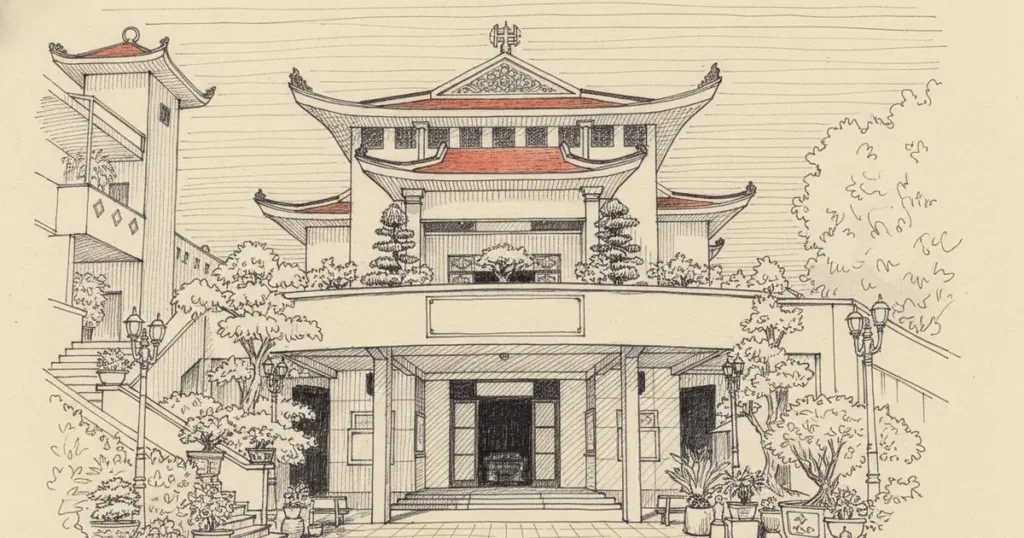
Xa Loi Buddhist Temple is a modern pagoda on Bà Huyện Thanh Quan Street in District 3, Ho Chi Minh City. The temple’s name, Xá Lợi, is the Vietnamese term for śarīra, or sacred Buddhist relics. Construction on the pagoda began in August 1956. Architects Nguyễn Văn Dương and Đỗ Bá Vinh designed the structure. The temple complex covers an area of 2,500 square meters. Its modern design places the main worship hall on an upper floor. A lecture hall and offices occupy the ground floor.

A prominent seven-story bell tower stands within the temple grounds. The tower rises 32 meters, ranking it among the tallest in Vietnam. The temple inaugurated the tower in 1961. Each of its seven octagonal floors venerates a different Buddha. A large bronze bell hangs on the highest floor. This bell weighs two tons and was modeled after the bell at Thiên Mụ Pagoda in Huế. The tower is a major landmark of the temple.

The main hall features a large, gilded statue of Sakyamuni Buddha. Artists from the Biên Hòa School of Fine Arts originally crafted the statue. A series of 15 large painted panels decorates the walls. These panels depict the life of the Buddha from his birth to his entry into nirvana. A jade tower shaped like a bodhi leaf sits high above the main statue, enshrining the sacred relics for which the temple is named.

Xa Loi Pagoda holds significant historical importance in the city. It served as the headquarters for the South Vietnam Buddhist Association. The temple became a center of Buddhist resistance during the 1963 political crisis. Forces loyal to President Ngô Đình Diệm raided the pagoda in August of that year. This event solidified the temple’s role as a key site in the country’s modern history.

Open in Google Maps ↗

89 Bà Huyện Thanh Quan, Phường Võ Thị Sáu, Quận 3, Thành phố Hồ Chí Minh, Vietnam

2 insider tips

What The Pho · curator · Xa Loi Buddhist Temple

Observe the temple's modern architectural style. It combines traditional Vietnamese elements with contemporary design. Look for the seven-story bell tower.

Trip Moito · curator · Xa Loi Buddhist Temple

Explore peaceful meditation halls. Monks protested here during the 1960s. This offers insight into Vietnamese spiritual life.

1 / 2
03

Explore a dense community area afterward.

Nguyễn Thiện Thuật Apartment Complex

Landmark · Ho Chi Minh City

The Nguyễn Thiện Thuật Apartment Complex sits on Nguyễn Thiện Thuật street. This multi-block residential community is in District 3, Ho Chi Minh City. The government constructed the complex in 1968. It rehoused residents displaced by a major Tet Offensive fire. Some sources indicate it first housed military personnel. They housed their families here too. The complex exemplifies functionalist urban development. It represents mid-20th-century wartime architecture.

The community includes eleven separate four-story blocks. The buildings do not have elevators. Their architecture features simple, box-like concrete structures. External corridors connect the units. Many residents added metal enclosures to balconies. Locals call these ‘tiger cages.’ They provide security and extra space. The complex sits next to Bàn Cờ Market. This large local wet market is on Nguyễn Đình Chiểu street. The buildings show decades of use. Inhabitants have adapted them over time.

The apartment blocks’ ground floors offer a lively commercial hub. They contain numerous small businesses. Local food stalls, cafes, and service shops operate here. This mix of commerce and residence creates a self-contained urban environment. The surrounding Nguyễn Thiện Thuật street is famous for musical instrument shops. This commercial activity serves residents and visitors alike.

The complex’s aged appearance contrasts with modern Ho Chi Minh City. It remains a densely populated community. Many working-class families live here. Longtime residents also call it home. The city government has proposed demolition plans. Officials consider the structures seriously deteriorated. Yet, they continue to function as a vertical village. The complex maintains a distinct community life.

Open in Google Maps ↗

Nguyễn Thiện Thuật, Phường 1, Quận 3, Thành phố Hồ Chí Minh, Vietnam

1 insider tip
04

For lunch, try a local favorite.

Bánh Mì Chảo Huế Duệ Cô Lệ

Vietnamese Cuisine · Ho Chi Minh City

06:00-14:00 daily +84772072270

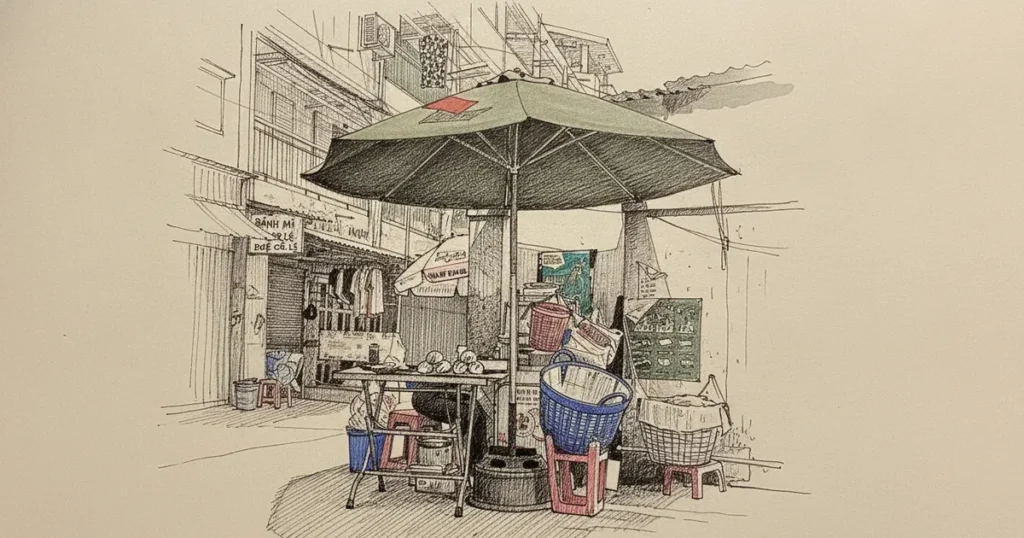
Bánh Mì Chảo Huế Duệ Cô Lệ operates within the Nguyễn Thiện Thuật apartment complex. This District 3, Ho Chi Minh City stall offers deconstructed bánh mì chảo. Customers receive a hot skillet for breakfast. A fresh baguette accompanies each order. The vendor uses a small cart. Guests sit at a few tables. This open-air common area provides the dining space.

The main dish is a sizzling pan. It holds a variety of ingredients. A standard serving includes fried eggs, sausage, and pâté. Diners can add canned sardine in tomato sauce. Cheese is also an option. The stall prepares two egg styles in one pan. It combines both fried and scrambled eggs. A portable stove cooks each pan to order.

The stall serves local residents. It caters to the apartment block and nearby areas. It operates during mornings and early afternoons. The setting is simple and basic. It sits on the ground floor of the old building. Cô Lệ, the vendor, prepares dishes at her cart. Customers watch her cook.

This eatery provides a complete meal in a pan. It differs from a traditional stuffed baguette. The format lets diners assemble their own bites. They use the bread for dipping. The vendor also makes a special salt seasoning. Customers add this to their meal. Locals know this spot for its unique skillet-style breakfast.

Open in Google Maps ↗

004 Lô E, Hẻm 213 Nguyễn Thiện Thuật, Phường 1, Quận 3, Thành phố Hồ Chí Minh

2 insider tips

Mr.Pin · curator · Bánh Mì Chảo Huế Duệ Cô Lệ

If you are interested in a different style of bánh mì for breakfast, Bánh Mì Chảo Huế Duệ Cô Lệ offers a deconstructed version. Located within the Nguyễn Thiện Thuật apartment complex, this stall provides a hot skillet with various components alongside a fresh baguette. It is an interesting option for those seeking a warm, customizable morning meal in District 3.

1 / 2
05

Continue your journey with a market visit.

Chợ Bàn Cờ (Bàn Cờ Market)

Landmark · Ho Chi Minh City

05:30-13:00 daily

Chợ Bàn Cờ is a local market on Nguyễn Thiện Thuật Street in District 3, Ho Chi Minh City. The market’s name translates to “Chessboard Market.” This name reflects the grid-like network of narrow, intersecting alleys that define its layout. The market operates primarily within these laneways, with vendors setting up stalls in front of local residences. It serves as a daily shopping destination for the surrounding community.

The market is widely recognized for its extensive selection of secondhand goods. Vendors offer a large variety of used items. These include clothing, shoes, handbags, and accessories. Many stalls specialize in these affordable fashion products. This section of the market attracts shoppers looking for unique or low-cost apparel. The goods range from casual wear to vintage pieces.

Alongside secondhand fashion, Chợ Bàn Cờ functions as a traditional wet market. Stalls sell fresh produce, meats, and live seafood. Shoppers can also find household goods and other daily necessities. The market is also a destination for street food. Numerous small eateries and food stalls operate within the alleys. They serve a range of classic Vietnamese dishes to local residents and visitors.

The market’s structure creates a busy and enclosed atmosphere. Motorbikes and pedestrians navigate the tight corridors throughout the morning. The market formed organically over time, growing into a dense commercial hub. It remains a key part of daily life in its District 3 neighborhood, retaining a traditional character.

Open in Google Maps ↗

242/58 Nguyễn Thiện Thuật, Phường 3, Quận 3, Thành phố Hồ Chí Minh, Vietnam

1 insider tip
06

Seek an indoor activity next.

Southern Women’s Museum

Landmark · Ho Chi Minh City

07:30-11:30, 13:30-17:00 daily +84 28 3932 7130

The Southern Women’s Museum is a history museum on Võ Thị Sáu Street in District 3, Ho Chi Minh City. The museum documents the contributions of women in southern Vietnam to national culture, defense, and development. It opened on April 29, 1985, marking the 10th anniversary of the end of the Vietnam War. The institution occupies the former residence of a Republic of Vietnam police official.

The museum’s collection contains over 31,000 artifacts, documents, and photographs. Permanent exhibitions focus on specific themes. These include the role of women in political and military struggles. Other displays cover traditional crafts, clothing, and the worship of female deities. One notable collection showcases the history and evolution of the Áo Dài, the traditional Vietnamese dress. The exhibits use text in Vietnamese, English, and French.

The institution began as the Southern Women’s Tradition House. A research group of female revolutionaries initiated its creation in 1983. The museum has since expanded its facilities and collections. It incorporates modern technology into its displays. Some exhibits feature 3D holographic projections and virtual reality experiences to show artifacts. The museum does not charge an entrance fee for visitors.

The displays are organized across multiple floors with several distinct exhibition halls. The collection includes items related to women’s roles in diplomacy, life in colonial prisons, and traditional weaving. The museum serves as a cultural and educational center. It preserves the history and heritage of women from the southern regions of the country.

Open in Google Maps ↗

202 Võ Thị Sáu, Phường Võ Thị Sáu, Quận 3, Thành phố Hồ Chí Minh, Vietnam

1 insider tip

What The Pho · curator · Southern Women’s Museum

See the collection of traditional Vietnamese outfits, especially the Ao Dai. Explore exhibits on women in politics, military, and crafts. The museum offers 3D holographic and VR experiences. Avoid visiting during lunchtime, as staff may be on break from 11 AM to 1:30 PM.

07

Afterward, visit a historic church.

Nhà Thờ Giáo Xứ Tân Định

Film Photography · District 1, Ho Chi Minh City

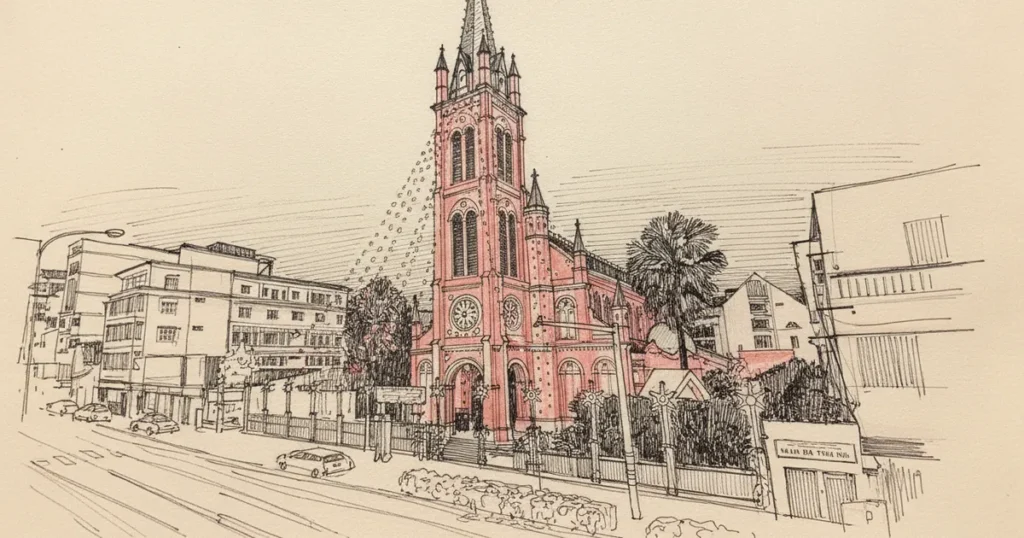
Tân Định Parish Church sits on Hai Bà Trưng Street. This Roman Catholic church is in District 3, Ho Chi Minh City. Locals know its official name as the Church of the Sacred Heart of Jesus. Its distinctive pastel-pink exterior and interior draw many visitors. Construction began in 1870. Workers completed the original structure in 1876. The building blends Romanesque, Gothic, and Renaissance styles.

A major renovation in 1957 gave the church its vibrant pink facade. White decorative details highlight its architectural features. The main facade features a prominent central tower. Two smaller bell towers flank it. The main tower reaches 52.6 meters high. It houses five bells. Arched windows and intricate carvings adorn the exterior. The church ranks as the second largest in Ho Chi Minh City. The Saigon Notre-Dame Basilica is larger.

Father Donatien Éveillard supervised the initial construction. This occurred during the French colonial period. The structure saw a significant reconstruction from 1896 to 1898. Further renovations in 1928 added the large front tower. Inside, two rows of Gothic-style columns guide eyes to the main altar. The interior space features high vaulted ceilings. The church remains an active worship place for local Catholics.

The parish grounds sit near the Tân Định Market. The church also established an orphanage and a school early on. Its founder, Father Éveillard, rests within the church nave. The site serves as a significant religious and historical landmark. It stands on a busy street. Its pink facade makes it a recognizable neighborhood feature.

Open in Google Maps ↗

289 Hai Bà Trưng, Phường 8, Quận 3, Thành phố Hồ Chí Minh, Vietnam

3 insider tips
1 / 3
08

Next, stop at a well-known urban landmark.

Turtle Pond

Landmark · District 1, Ho Chi Minh City

Open 24 hours

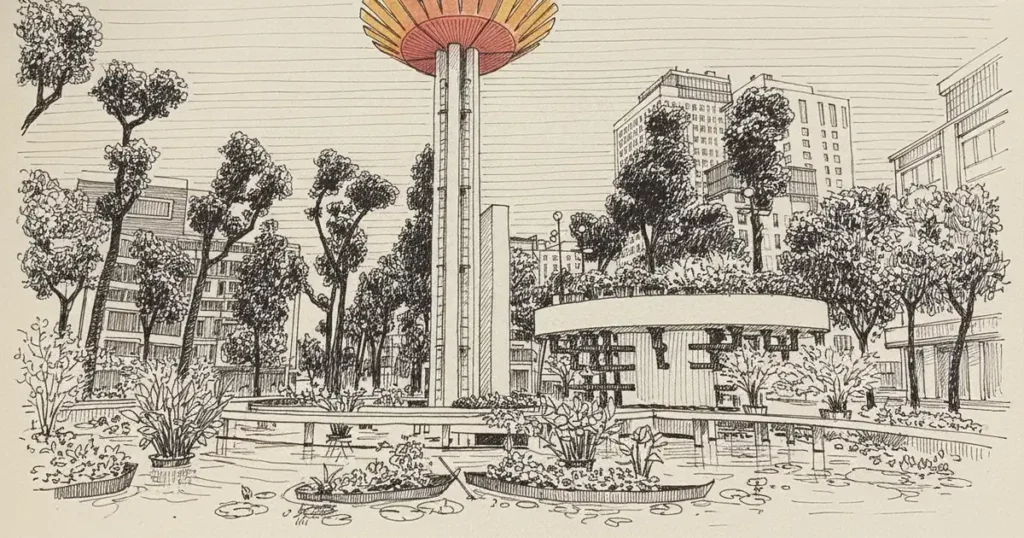
Turtle Pond, officially International Square, sits at the intersection of Võ Văn Tần, Phạm Ngọc Thạch, and Trần Cao Vân streets in District 3. Locals know it as Hồ Con Rùa, translating to Turtle Lake. A large, octagonal fountain with a modernist monument defines its center. The site neighbors landmarks like the Reunification Palace and Notre Dame Cathedral.

This location has seen much urban transformation. In 1790, it hosted the Kham Khuyet Gate of the Bat Quai citadel. French colonial rule saw a water tower built here in 1878. It supplied water to the city. Authorities dismantled the tower in 1921. They replaced it with a small lake and monument. The current landmark opened between 1965 and 1967. Vietnamese architect Nguyễn Kỳ designed its modern structure.

A major renovation happened from 1970 to 1974. This work added the monument’s distinct features. Five tall, concrete columns rise from the center. They resemble spreading flower petals. Four spiral walkways lead to the central memorial area. The monument’s main tower reaches 34 meters high. The popular name, Turtle Lake, came from a bronze turtle statue. This statue once stood in the center. It carried a stone stele. Vandals destroyed it in 1976, but the name persists.

The roundabout functions as a well-known public space. It is a popular gathering spot. The area around the fountain offers many street food vendors. Numerous coffee shops also operate there. In 2023, the city developed the vicinity. It became a pedestrian-focused area. The site connects several key city districts. It remains one of Ho Chi Minh City’s most recognizable landmarks.

Open in Google Maps ↗

Công trường Quốc tế, Phường 6, Quận 3, Thành phố Hồ Chí Minh, Vietnam

2 insider tips

What The Pho · curator · Turtle Pond

Observe the tall tower and octagonal pond. This roundabout was built in 1969. It is a popular spot for photos and evening gatherings.

Trip Moito · curator · Turtle Pond

Observe locals exercising, relaxing, and socializing. This peaceful urban oasis offers a glimpse into authentic daily life. It is away from tourist areas.

1 / 2
09

End your evening at a creative hub.

Yoko Cafe

Ho Chi Minh City

Yoko Cafe sits on Nguyễn Thị Diệu Street. This District 3 spot is in Ho Chi Minh City. The space operates as a cafe in the daytime. It transforms into a bar each night. Locals know it for its nightly musical performances. The cafe bears the name of artist Yoko Ono. It welcomed its first guests in the early 2000s.

Its performance schedule features many musical genres. Visitors enjoy rock, pop, and jazz. Indie and acoustic sets also play here. The venue presents both Vietnamese and international artists. It offers a vital platform for local musicians. The cafe regularly hosts open mic nights. This supports aspiring performers.

The space features a loft-style layout. It offers two levels of seating. This design gives clear views of the stage. The interior includes comfortable chairs and couches. The venue serves a diverse drink menu. This includes various cocktails. Patrons can also order from a food menu.

Yoko Cafe ranks among Saigon’s long-standing music venues. It draws a diverse crowd. Locals and expatriates frequent the spot. The venue provides an intimate performance setting. It maintains its place in the city’s nightlife. This has continued for over two decades.

Open in Google Maps ↗

22A Nguyễn Thị Diệu, Phường 6, Quận 3, Thành phố Hồ Chí Minh, Vietnam

1 insider tip

What The Pho · curator · Yoko Cafe

Enjoy live music, from acoustic to rock nights. The cafe is on Nguyễn Đình Chiểu Street. Check their schedule for specific music genres.